
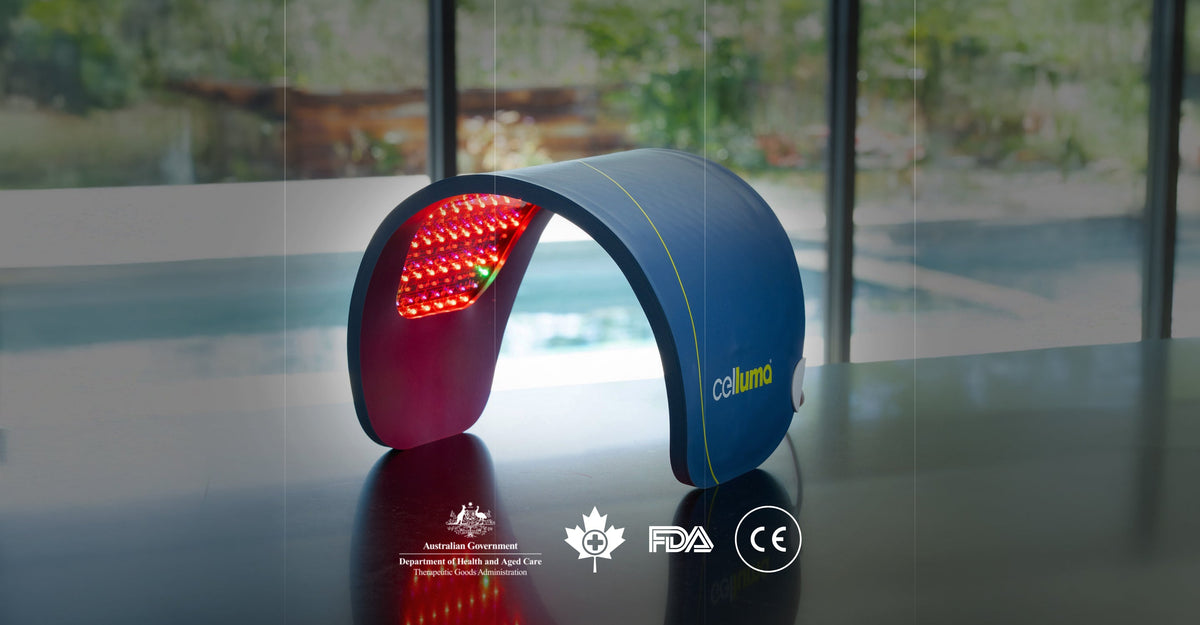
Featured image: Image from the Celluma collection.
The Celluma Journal · Updated
With red light therapy, the right dose is the one designed for the device and application; extra exposure does not automatically improve the result. The practical approach is to use the intended mode, positioning, session length and schedule together. A well-designed programme removes the need to experiment with your skin's exposure.
Dose is more than brightness
Two devices can look equally bright while delivering different light exposure. Wavelength describes the type of light; irradiance describes the light power reaching an area; session duration contributes to the total energy delivered. Coverage, pulse settings and the distance used for measurement also matter.
Energy density is often expressed in joules per square centimetre. It is a useful technical measure, but it is not a complete prescription. The same number applied with a different wavelength, power distribution or treatment schedule does not establish the same clinical effect.
What the biphasic response really means
Photobiomodulation research describes a biphasic dose response: increasing an exposure can stop improving a biological response and may reduce it under some conditions. The appropriate range depends on the device, tissue, application and treatment conditions. One pair of numerical cut-offs cannot define effectiveness or safety for every LED product.
Laboratory experiments, animal studies and human treatment protocols use different conditions. Their thresholds cannot be transferred to every home device. A study about cells in a dish also cannot show that a properly used facial device will accelerate someone's ageing.
Why many Celluma programmes last 30 minutes
Session time is one part of the device's designed light delivery. Many Celluma programmes use a 30-minute cycle so the selected mode delivers its intended exposure in a repeatable way. The controller manages the programme while you follow its positioning and use instructions.
This does not mean all LED treatments must last 30 minutes, or that a shorter programme on another validated device cannot work. It means you should use the duration established for the device in front of you. Read the Celluma model manual rather than borrowing a schedule from a different panel.
Longer, closer and more frequent are separate changes
Extending a session changes total exposure. Moving a device changes light distribution. Increasing weekly frequency changes the treatment course. Making all three changes together produces a different protocol, even if each change seems small.
Use the support and placement method designed for your model. A flexible panel can help you position light around a treatment area, but forcing it against skin is not a universal rule. The Series 2 panel manual includes a gap for air circulation. For a closer look at setup, read our guide to positioning and treatment distance.
Make consistency easy
Choose a time when you can complete the programmed session without rushing. Keep a simple record of the mode and days used. If you miss a session, resume the instructed routine instead of doubling the exposure to catch up. If the plan is difficult to maintain, ask for help choosing a more practical device format.
Comfort is also useful information. Persistent redness, uncomfortable heat or an unexpected skin reaction are reasons to stop and review the instructions, not signs that a stronger treatment is working. Human safety studies examine particular devices and exposures; they support following tested conditions instead of assuming every dose has the same risk profile.
Choose repeatable treatment
Celluma's pre-programmed modes are a practical advantage: you select the intended application and follow a defined session. That makes a routine easier to repeat and discuss with your provider. Explore the PRO II or ask Celluma Asia to match the programmes and coverage to your goals before you choose.
Frequently asked questions
Does red light therapy damage DNA?
The research cited here does not establish that correctly used red light therapy accelerates skin ageing or damages DNA. Use a suitably tested device and follow its labelled protocol; a universal numerical cut-off is not a reliable safety guide.
Should I turn the power up for faster results?
Use the settings and programme intended for your application. A higher number on a specification sheet does not, by itself, establish a faster or better clinical result.
Can I use Celluma every day?
Schedules vary by application and model. Follow the current instructions supplied with your device instead of applying one daily-use rule to every programme.
What if my session is interrupted?
Use the pause or restart instructions for your controller. Do not improvise additional full sessions to compensate without checking the manual or support team.


留言
此網站已受到 hCaptcha 保護,且適用 hCaptcha 隱私政策以及服務條款。