

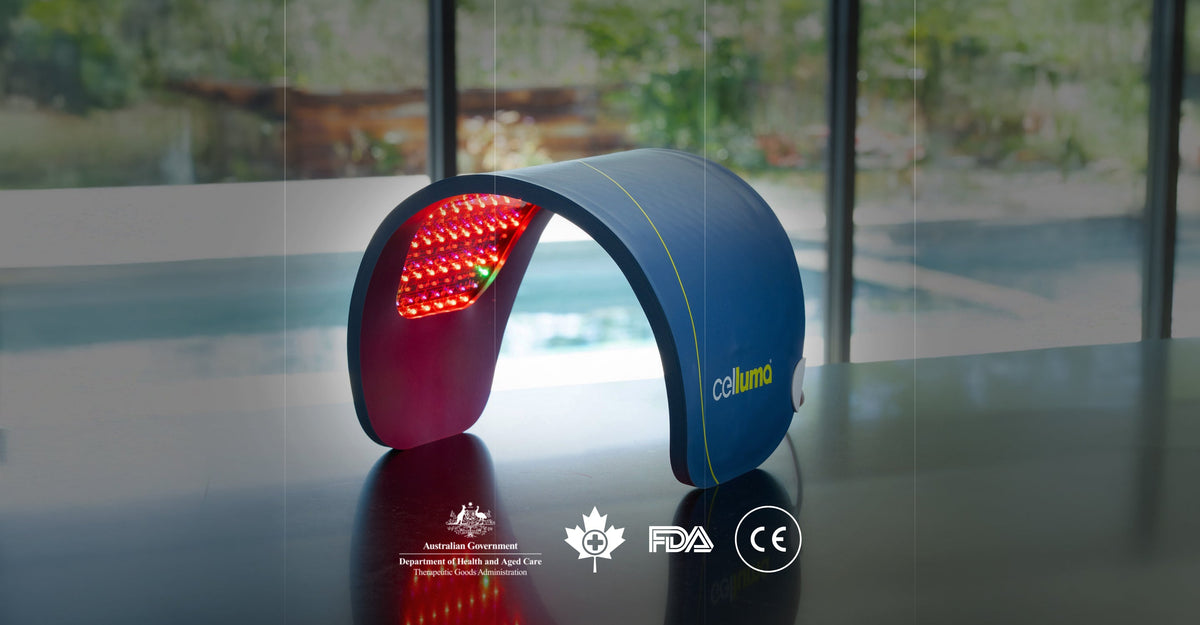
Featured image: Image from the Celluma collection.
The Celluma Journal · Updated
At-home red light therapy offers convenience and repeatable access, while clinic treatment adds professional assessment and support. The better choice depends on your condition, the device and the routine you can maintain. Frequency matters, but it is one part of a successful plan alongside treatment selection, positioning and follow-through.
What home treatment does well
Owning a suitable device makes it easier to fit sessions around work, family and travel. You can create a regular appointment with yourself and use the same setup each time. This is particularly useful when your chosen programme calls for repeated sessions across several weeks.
The practical benefit is control over scheduling. It does not mean you should use the device more often than directed or that every home model performs the same as every clinic system. Match the model to the intended concern and follow its current instructions.
What a clinic adds
A practitioner can help identify the concern, decide whether LED belongs in the plan and review progress alongside other treatment. That is valuable when a condition is severe, changing or uncertain. Professional care also helps when you are combining procedures or medicines and need advice about timing.
Clinic devices may offer a different treatment area or workflow. A larger professional system can make coverage convenient, while a home panel may suit a particular face, scalp or body area. Compare the actual models rather than assuming the setting alone determines effectiveness.
Why consistency matters without the hype
Clinical studies use defined courses so outcomes can be assessed. Regular use helps you follow the plan and gives you a fair basis for judging change. It does not establish that collagen production resets to zero between appointments or that ATP must remain constantly elevated for a treatment to work.
Celluma's published protocols differ by application. Hair treatment, for example, follows a longer course than a simple first review of a skin routine. The relevant schedule is the one in the manual for your model, adapted by a treating professional when appropriate. Adding sessions is not automatically the only safe or useful way to improve results.
Compare the daily experience
Before choosing, imagine the session itself. Where will you sit or lie? Can you support the device comfortably? Does the treatment area fit? Will you have time to finish the programmed cycle? A demonstration can resolve these questions quickly.
- Choose home use when you have a suitable indication, understand the setup and want easy access to the instructed course.
- Choose professional supervision when you need diagnosis, have a complex treatment plan or want a practitioner to review progress.
- Combine the two when a clinician establishes the plan and an appropriate home device helps you carry it through.
The right approach can change over time. A person may begin with guided sessions, become confident with home use and return for a review when their goal changes.
Select modes rather than assuming one panel treats everything
Different Celluma models offer different programme combinations. PRO II includes Acne, Wrinkles and Pain, while HOME II includes Wrinkles and Pain. Hair and Contour require models with those specific programmes. A family sharing a device should check suitability and cleaning instructions for each user.
Make progress review part of the plan
Agree what improvement means before you start. For skin, use photographs in the same light and position. For a pain concern, discuss a suitable functional measure with your provider. For hair, allow the course time to develop and keep the same scalp views.
Celluma Asia can help you compare device coverage, mode combinations and the practicalities of home use. Explore PRO II and read the device buying guide to turn a broad interest in red light therapy into a routine that fits your needs.
Frequently asked questions
Is home red light therapy the same as a clinic session?
It can use the same treatment technology, but the model, coverage, protocol and professional input may differ. Compare those details rather than assuming identical outcomes.
Is frequency the only thing that matters?
No. The intended application, device settings, coverage, positioning, suitability and adherence all contribute. More frequent use does not automatically mean a better result.
Can I start at home without a consultation?
Many devices are designed for home use within their labelled indications. Seek a clinical assessment when the diagnosis is uncertain, symptoms are severe or your current treatment needs coordination.
What makes a home device easier to use consistently?
A comfortable setup, appropriate coverage, simple mode selection and accessible support all help. Choose the format around the routine you can realistically maintain.


留言
此網站已受到 hCaptcha 保護,且適用 hCaptcha 隱私政策以及服務條款。