
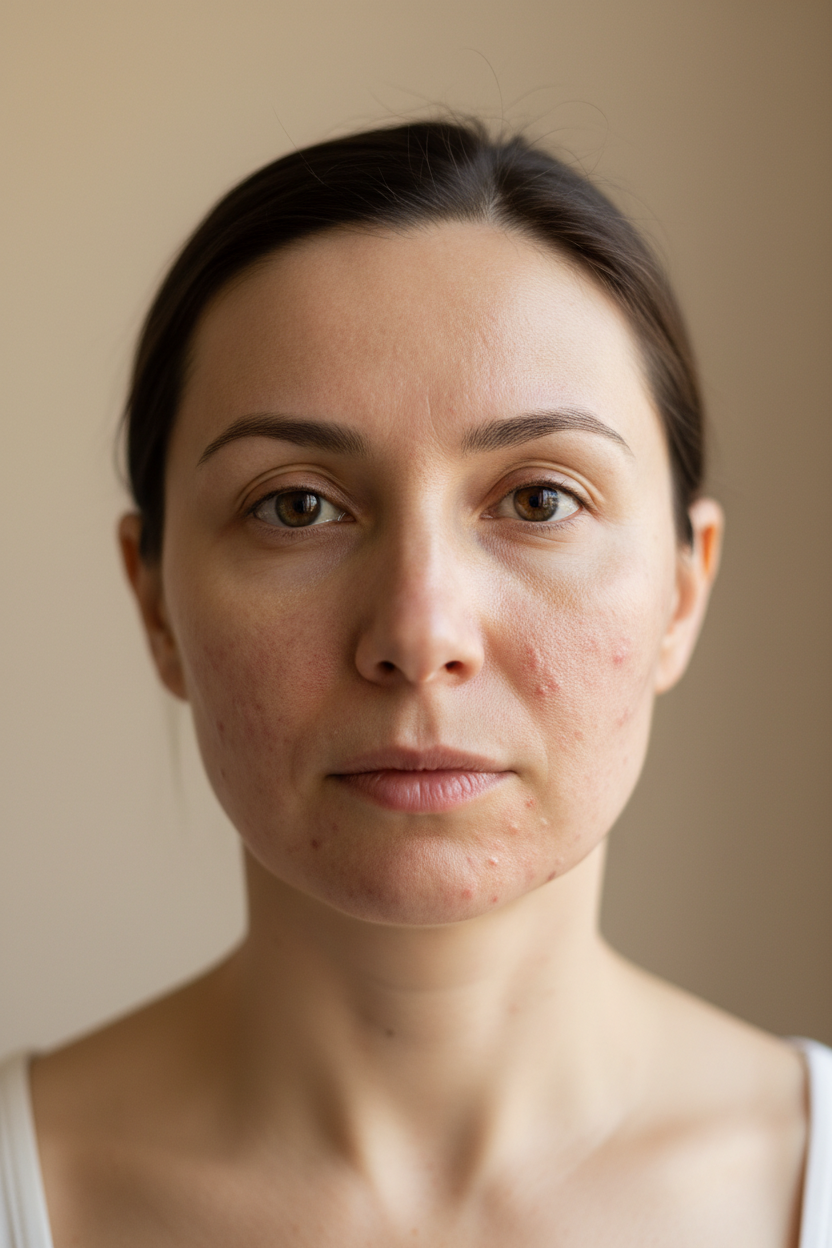
Adult acne after 25 has specific causes different from teenage acne: hormonal shifts, chronic stress cortisol, comedogenic products, dietary changes, and age-related mitochondrial decline reducing skin barrier integrity. The treatment approach must also differ — gentler actives and LED therapy are better suited to adult skin than the harsh protocols designed for oily teenage skin.
Why Adult Acne Is Different (And Harder)
Teenage acne is primarily hormonal surge + high sebum + fast cell turnover. Adult acne is more complex: hormonal fluctuations happening against a backdrop of thinner, slower-repairing skin with declining collagen and mitochondrial energy. Adult skin has less tolerance for aggressive treatments, heals more slowly, and scars more readily. It requires a fundamentally different approach.
Menstrual cycle, perimenopause, PCOS, contraceptive changes. Androgen sensitivity in sebaceous glands often increases with age.
Adult life brings sustained cortisol elevation — unlike episodic teenage stress. Persistent sebum overproduction maintains a constant bacterial food supply.
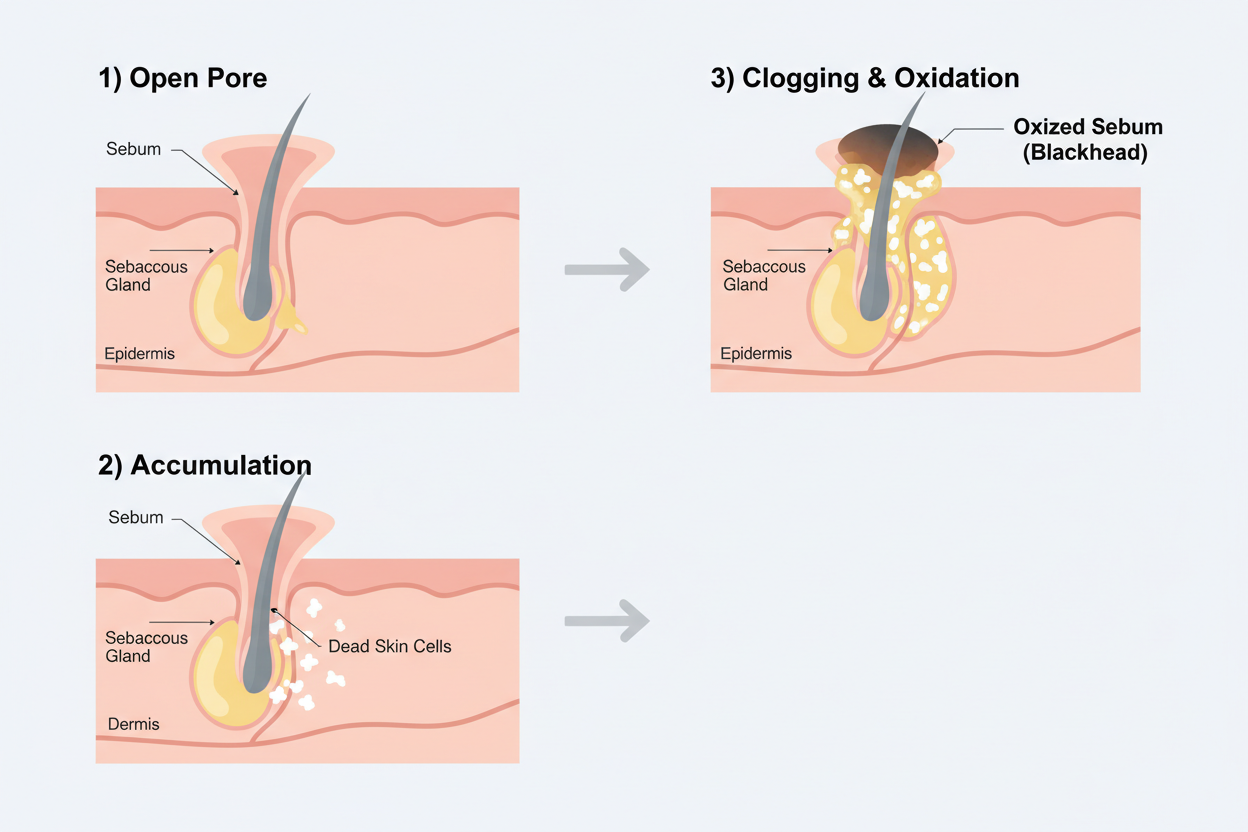
Switching to richer moisturisers for ageing skin often introduces comedogenic occlusive ingredients. The 'anti-ageing' aisle is full of pore-cloggers.
Skin cells produce less ATP with age — reducing barrier repair capacity, ceramide synthesis, and the energy needed to fight P. acnes colonisation.
Dietary IGF-1 and androgen triggers become more impactful with age as the skin's repair capacity decreases.
Over-cleansing and strong actives strip the adult barrier more severely than teenage skin — triggering rebound sebum and worsening acne.
The Adult Skin Acne Protocol
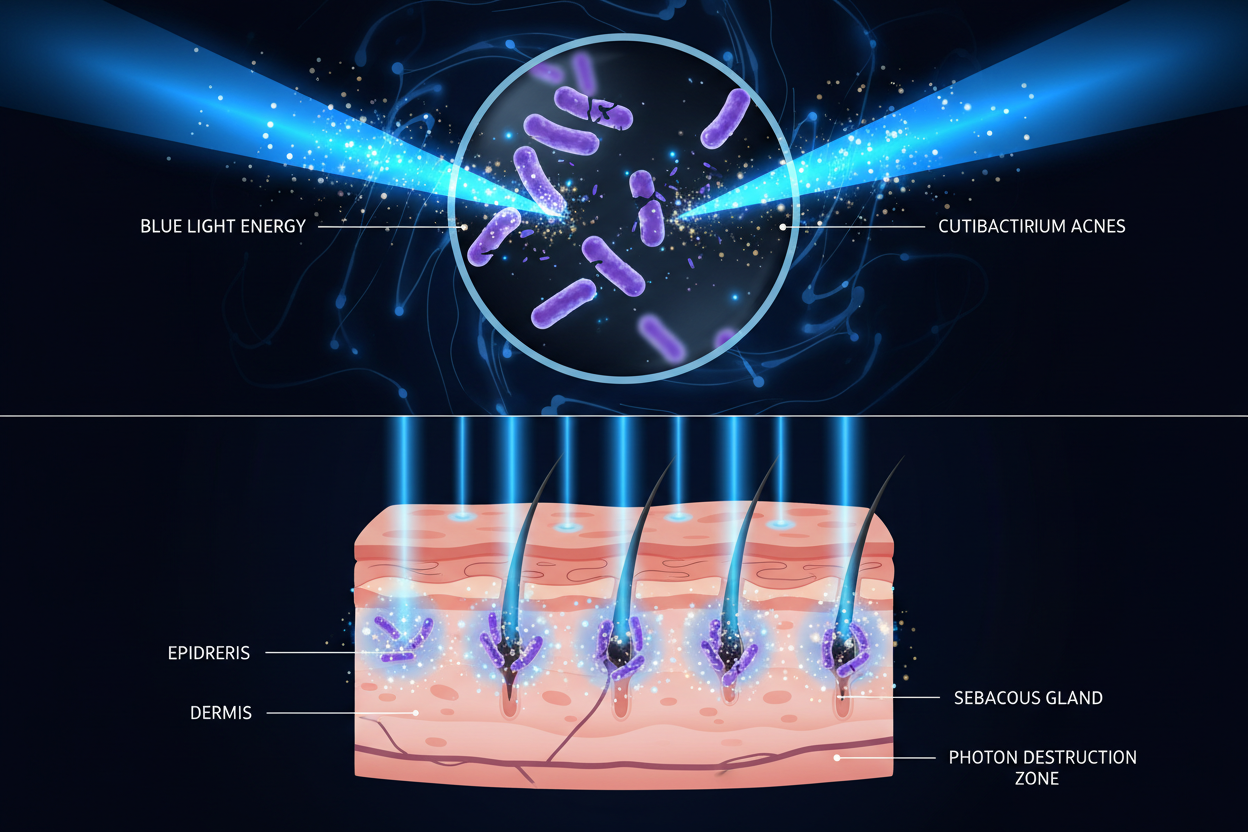
The dual benefit of Celluma for adult acne: it simultaneously addresses the bacterial/inflammatory acne problem (465nm + 640nm) AND the collagen/anti-ageing concern (640nm rebuilds dermal collagen). One device, two of the most common concerns for adults in their 30s and 40s. See the collagen science here.
Questions & Answers
Yes — adult acne is increasingly common and affects an estimated 15-30% of women and 5-10% of men over 25. In women, the primary driver is often hormonal fluctuation (menstrual cycle, perimenopause, PCOS, contraceptive changes). In men, adult acne is more likely triggered by stress, skincare product changes, or dietary factors. Adult acne that appears for the first time after 25 with no prior history usually has an identifiable trigger.
Common causes of new-onset adult acne: (1) hormonal shift — new contraceptive, perimenopause, PCOS, stopping/starting hormonal medications; (2) stress increase — cortisol elevates sebum; (3) new comedogenic skincare or makeup; (4) dietary change to high GI or high dairy; (5) climate change (moving to Singapore's humidity); (6) mitochondrial decline with age — skin cells have less energy for barrier maintenance. Adult acne on the jaw/chin is typically hormonal; forehead/cheeks more likely product or environmental.
Adult skin is thinner, drier, and has less repair capacity than teenage skin — making it more sensitive to harsh acne treatments. Strong benzoyl peroxide and retinol concentrations that teenage skin tolerates can cause significant barrier disruption in adult skin. Additionally, adult acne often has a deeper hormonal or mitochondrial root cause that surface treatments can't fully address. Lower concentrations, gentler formulations, and LED therapy (which strengthens rather than strips the skin barrier) are better suited to adult skin.
Yes — stress-related acne has a proportionally larger impact in adults because adult life typically involves more chronic, sustained stress (work, financial, relationship) rather than the acute episodic stress of adolescence. Chronic elevated cortisol maintains a persistent elevated sebum state, creating a sustained environment for P. acnes. Adults also have less rapid skin cell turnover to compensate. Stress management alongside LED therapy produces better adult acne outcomes than LED therapy alone.
Adult acne-prone skin needs gentle, effective actives: niacinamide 5-10% (sebum regulation without irritation), azelaic acid 10% (antibacterial, anti-inflammatory, brightening — ideal for adult skin), low-concentration retinol 0.25-0.5% (cell turnover, collagen, acne prevention — used 2-3x per week), and blue + red LED therapy (kills bacteria and reduces inflammation without any chemical contact with the skin barrier). Avoid high-concentration benzoyl peroxide (over 2.5%) and strong physical exfoliants on adult skin.
Yes — particularly for adult acne because it addresses the deeper root causes: (1) blue 465nm kills P. acnes bacteria; (2) red 640nm reduces pro-inflammatory cytokines, regulates sebaceous activity, and importantly rebuilds collagen that adult skin needs; (3) the mitochondrial ATP boost from 640nm addresses the age-related cellular energy decline that contributes to adult barrier dysfunction and slow healing. Unlike harsh topicals, LED therapy strengthens adult skin rather than stripping it — making it particularly suitable for this skin type.

Tinggalkan komentar
Situs ini dilindungi oleh hCaptcha dan berlaku Kebijakan Privasi serta Ketentuan Layanan hCaptcha.