

Red Light Therapy for Muscle Recovery: The Science of Faster Repair After Training
Red light therapy reduces creatine kinase, DOMS and oxidative stress after training. Pre or post-exercise — FDA-cleared Celluma devices accelerate muscle repair and reduce soreness.
The limiting factor in any training programme is not how hard you can train — it is how fast you can recover. The window between sessions, the quality of repair that occurs in that window, and the inflammatory load your body carries into the next session all determine your actual progress. Red light therapy addresses the cellular mechanics of muscle repair directly, reducing the time, soreness, and performance cost of exercise-induced damage without blunting the adaptive signals that make training productive.
What Actually Happens to Muscle During Exercise
Intense or novel exercise causes Exercise-Induced Muscle Damage (EIMD). Sarcomeres — the contractile units of muscle fibres — sustain micro-tears. The Z-disc (the structural scaffold of the sarcomere) is disrupted. This damage is the signal that triggers the adaptive repair process, producing stronger, denser muscle fibres in recovery.
However, EIMD also triggers an inflammatory cascade: macrophages and neutrophils flood the damaged tissue, releasing reactive oxygen species (ROS) and pro-inflammatory cytokines including IL-6, TNF-alpha and IL-1β. This is Delayed Onset Muscle Soreness (DOMS). The inflammatory phase is necessary for initiating repair — but if it is excessive or prolonged, it extends the recovery window, reduces force output in subsequent sessions, and accumulates as training fatigue over a programme.
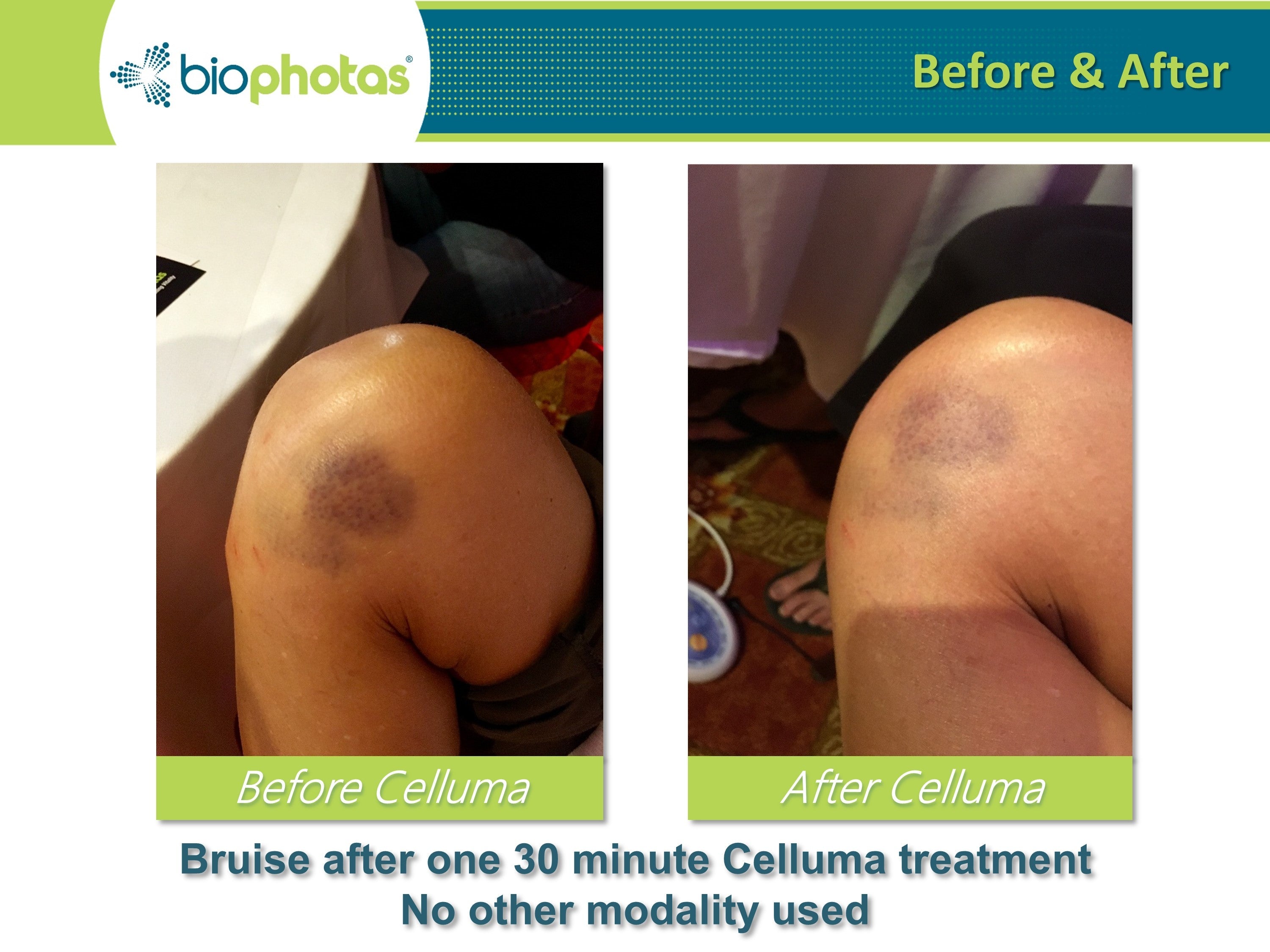
PBM reduces EIMD markers — particularly creatine kinase (CK), the blood marker of muscle damage — and modulates the inflammatory response without blunting the adaptive signal. By activating Cytochrome c Oxidase in muscle mitochondria, it restores ATP in energy-depleted post-exercise cells, reduces oxidative stress (ROS), and downregulates excessive IL-6 and TNF-alpha production. The result: faster clearance of the inflammatory phase, faster return to baseline force output, and less soreness between sessions.
The Creatine Kinase Evidence
Creatine kinase is an enzyme that leaks from damaged muscle fibres into the bloodstream — its blood level is the clinical marker of muscle damage magnitude. Multiple randomised trials measuring CK levels after exercise with and without PBM consistently show significantly lower CK at 24, 48 and 72 hours post-exercise in the PBM group. Lower CK = less structural muscle damage = faster functional recovery.
The mechanism: ATP restoration enables satellite cells (muscle stem cells) to begin the repair synthesis earlier, reducing the duration of the inflammatory phase. Mitochondrial biogenesis (PGC-1α activation from repeated PBM sessions) also increases the oxidative capacity of muscle fibres, making them more damage-resistant in subsequent sessions.
Pre-Exercise vs Post-Exercise — Which Timing Works Better?
Pre-exercise PBM increases baseline ATP in muscle mitochondria before the training demand arrives. Studies show improved time to fatigue, increased force output, and reduced CK accumulation during the session. The muscle has more energy to resist damage as it occurs.
Post-exercise PBM targets the inflammatory phase directly — reducing excessive ROS, modulating cytokine overproduction, and restoring ATP in damaged cells to accelerate repair initiation. Most clinical trials on recovery use post-exercise protocols. Both are effective; combination pre+post produces the best outcomes.
The Long-Term Adaptation — Mitochondrial Biogenesis
Beyond the immediate session effect, consistent PBM use triggers PGC-1α activation — the master regulator of mitochondrial biogenesis. This produces measurably more mitochondria per muscle cell over weeks of regular use. More mitochondria = greater oxidative capacity = more ATP available during exercise = less damage per unit of work = faster recovery from each subsequent session.
This is a compounding adaptation. Athletes who use PBM consistently over a training block do not just recover faster from individual sessions — their muscles become structurally more resistant to damage over time.
Protocol for Muscle Recovery
Celluma Devices for Muscle Recovery
Frequently Asked Questions
Yes. Multiple randomised controlled trials measuring creatine kinase (CK — the clinical marker of muscle damage), DOMS scores, and force output recovery consistently show that PBM produces significantly faster recovery than control groups. Studies show reduced CK at 24, 48 and 72 hours post-exercise, reduced pain scores, and faster return to baseline force output. The mechanism — ATP restoration via Cytochrome c Oxidase activation — directly addresses the energy deficit in damaged muscle cells.
Both produce measurable benefits through different mechanisms. Pre-exercise (15–30 min before) increases baseline ATP in muscle mitochondria, improving performance endurance and reducing damage accumulation during the session. Post-exercise (within 2 hours) targets the inflammatory phase directly — reducing CK, oxidative stress and cytokine overproduction. Most clinical trials use post-exercise protocols. For maximum benefit, pre+post combination produces the best outcomes.
DOMS is caused by the inflammatory response to exercise-induced muscle damage — specifically the release of IL-6, TNF-alpha, and reactive oxygen species by neutrophils and macrophages flooding the damaged tissue. PBM activates Cytochrome c Oxidase in muscle mitochondria, producing ATP that modulates NF-κB and downregulates excessive IL-6 and TNF-alpha production. It also reduces oxidative stress directly. The result is a shorter, less intense inflammatory phase and significantly reduced soreness at 24–72 hours.
Clinical trials typically show meaningful CK reduction within 24 hours of post-exercise PBM. Perceived soreness (DOMS) is measurably lower at 24, 48 and 72 hours. Return to baseline force output is typically 24–48 hours faster with PBM than without for trained individuals. Over a training block (4+ weeks of consistent use), mitochondrial biogenesis begins to increase muscle oxidative capacity, producing compounding recovery improvements.
Yes. PBM has been adopted in elite sport including football, cycling, martial arts, and athletics. Celluma devices are used by professional athletic teams and physical therapists. The interest is driven by the combination of clinical evidence for recovery acceleration, safety profile (no banned substances, no systemic side effects), and the PGC-1α mitochondrial biogenesis effect that builds structural recovery capacity over a training season.
880nm near-infrared is the primary wavelength for muscle recovery due to its deep penetration (6–30mm) reaching the muscle tissue where repair is needed. 640nm red provides secondary benefit by improving surface circulation and reducing connective tissue inflammation. Celluma's pain mode is 880nm dominant — optimal for muscle recovery. Using anti-aging mode simultaneously (combined 640nm + 880nm) addresses both deep muscle and surface connective tissue.
30 minutes is the standard clinical session length for muscle recovery — sufficient to deliver a therapeutic dose to deep muscle tissue without entering the zone of diminishing returns. Shorter sessions (10–15 min) deliver partial dose and produce weaker effects. Longer sessions beyond 45 minutes do not proportionally increase benefit and may introduce mild biphasic inhibition in some tissue types. 30 minutes post-exercise on the primary working muscle groups is the optimal protocol.
Yes, through multiple mechanisms. Acutely: pre-exercise PBM increases muscle ATP, improving time to fatigue and maximum force output. Chronically: consistent PBM activates PGC-1α, driving mitochondrial biogenesis — increasing the oxidative capacity of trained muscle over weeks. This means more ATP available during exercise, less damage per session, faster recovery between sessions, and greater training volume tolerated per week. The performance gains compound over a training block.
Experience Clinical Results.
FDA-cleared devices for real conditions.
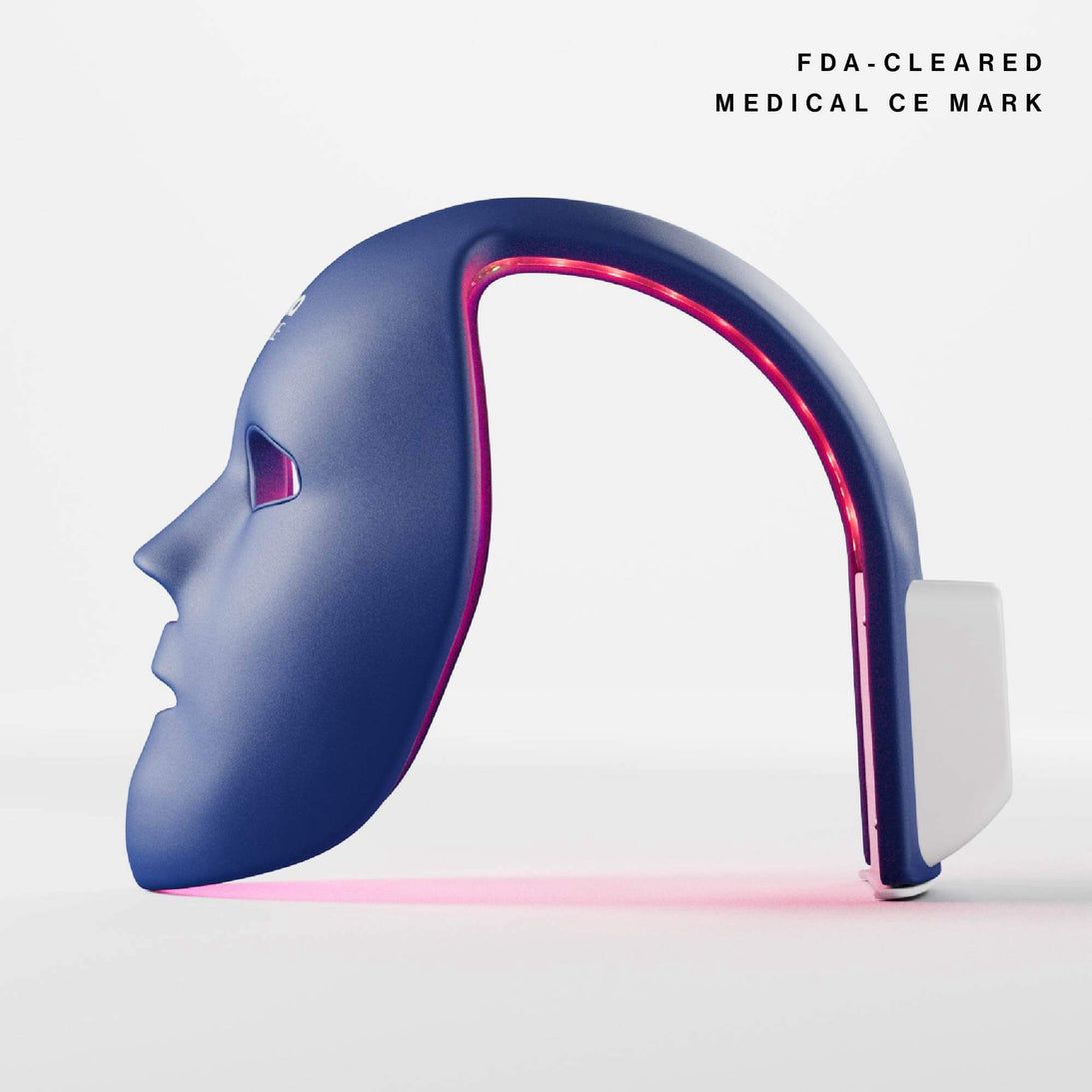
Explore Celluma — calibrated to the exact wavelengths your cells respond to.

Leave a comment
This site is protected by hCaptcha and the hCaptcha Privacy Policy and Terms of Service apply.