

Reversing Follicular Miniaturisation:
Which Types of Hair Loss
Actually Respond to Red Light Therapy?
Not all hair loss responds to red light therapy the same way. Androgenetic alopecia, telogen effluvium, alopecia areata, and post-transplant recovery all involve different biological mechanisms — and each has a different response profile to PBMT. This guide maps every major hair loss type against the clinical evidence, so you know exactly what to expect before starting treatment.
Androgenetic alopecia and telogen effluvium show the strongest response to PBMT. Both involve metabolically suppressed but anatomically intact follicles that respond well to ATP restoration via Cytochrome c Oxidase activation. Alopecia areata has emerging evidence. PBMT is also effective as a post-transplant recovery protocol. Scarring alopecias — where follicles have been replaced by fibrotic tissue — are not indicated. The earlier treatment begins on the hair loss timeline, the higher the proportion of reactivatable follicles.
Hair loss is not a single condition. It is a category that encompasses at least a dozen distinct biological processes — from hormonal miniaturisation to autoimmune attack to nutritional deficiency to surgical trauma. Understanding which mechanism is causing your hair loss is not just diagnostically useful — it directly determines whether red light therapy will produce the results you're expecting, and on what timeline. A treatment that is transformative for one type of hair loss may be ineffective for another. This guide maps the evidence for each major type.
How PBMT Reverses Follicular Miniaturisation — The Core Mechanism
Regardless of hair loss type, PBMT works through a single molecular mechanism that benefits any metabolically compromised follicle. The key target is the dermal papilla cell — the specialised cell cluster at the base of the follicle that controls the entire hair growth cycle.
Red Light (650nm) Penetrates the Scalp
650nm red light penetrates 4–6mm below the scalp surface — reaching the dermal papilla cells at the follicle base where the growth cycle is controlled. This depth is inaccessible to topical treatments.
Cytochrome c Oxidase Activated in Papilla Mitochondria
Photons are absorbed by Cytochrome c Oxidase in papilla cell mitochondria, displacing inhibitory nitric oxide and restoring electron transport chain efficiency. ATP production surges 200–400%.
Anagen Phase Extended — Follicle Diameter Restored
Restored ATP gives papilla cells the energy to sustain a longer anagen (growth) phase — reversing the progressive shortening driven by DHT or other miniaturising triggers. Over 16–24 weeks, follicle diameter progressively increases.
Vasodilation — Nutrients Delivered to Follicle
Nitric oxide released during the process dilates local scalp capillaries, improving delivery of oxygen, amino acids, and growth factors to the dermal papilla. This nutritional perfusion supports the energy-intensive protein synthesis needed for hair shaft production.
Anti-Inflammatory Effect — Perifollicular Inflammation Reduced
Near-infrared (880nm) downregulates pro-inflammatory cytokines and perifollicular inflammation that physically constricts follicles and contributes to miniaturisation independent of DHT. This is particularly relevant in alopecia areata and telogen effluvium where inflammation is a significant driver.
Hair Loss Types — Clinical Response to PBMT
Androgenetic Alopecia (Male & Female Pattern)
DHT-driven follicular miniaturisation — the most common hair loss typeThe best-evidenced indication for PBMT. DHT shortens the anagen phase with each cycle; PBMT restores papilla cell ATP to counter this directly. Multiple RCTs confirm measurable increases in hair count and shaft diameter at 16–26 weeks. FDA-cleared for both male and female androgenetic alopecia. Most effective in early-to-moderate loss where follicles are miniaturised but still active. Results: 16–24 weeks minimum, maintained with ongoing treatment.
Telogen Effluvium (Stress / Nutritional / Post-Partum)
Diffuse shedding from systemic shock — follicles enter resting phase simultaneouslyHighly responsive to PBMT. Telogen effluvium occurs when a systemic shock (emotional stress, nutritional deficiency, illness, surgery, childbirth) pushes a large proportion of follicles into telogen simultaneously. Follicles are intact and healthy — they simply need energy to re-enter anagen. PBMT's ATP restoration is directly what is needed. Results typically faster than androgenetic alopecia: 8–12 weeks. Address the underlying trigger (nutritional deficiency, stress) alongside PBMT for best results.
Alopecia Areata
Autoimmune — immune system attacks hair folliclesEvidence for PBMT in alopecia areata (AA) is emerging and promising but less definitive than for androgenetic or telogen alopecia. AA is autoimmune — the immune system targets follicles, causing patchy or total hair loss. PBMT's anti-inflammatory action (downregulating cytokines and perifollicular inflammation) may reduce the immune response at the follicle and support regrowth. Case studies show variable but sometimes significant response. AA cases should always involve a dermatologist alongside any LED protocol.
Post-Hair Transplant Recovery
Graft shock and recovery following FUT/FUE proceduresPBMT is an excellent post-transplant adjunct. After FUT/FUE, grafts experience transplant shock — ATP depletion during the removal, preparation, and implantation process. PBMT's CCO activation restores graft ATP during the critical integration period. It also reduces post-operative scalp inflammation and accelerates tissue repair around the implant sites. Typically recommended starting 1–2 weeks post-procedure (once initial healing is complete). May improve graft take rates and reduce shock loss duration.
Traction Alopecia
Mechanical damage from chronic pulling (tight hairstyles)PBMT may support recovery in early-stage traction alopecia where follicles remain viable but have been mechanically stressed. The anti-inflammatory effects can reduce perifollicular inflammation from repeated tension. However, the primary requirement is removing the traction cause — PBMT cannot reverse damage if the source of traction continues. Late-stage traction alopecia with significant follicular scarring is unlikely to respond.
Scarring Alopecia (Lichen Planopilaris, FFA, CCCA)
Permanent follicular fibrosis — follicles replaced by scar tissuePBMT is not indicated for scarring alopecias. In conditions like lichen planopilaris (LPP), frontal fibrosing alopecia (FFA), and central centrifugal cicatricial alopecia (CCCA), the dermal papilla and follicular structure are progressively replaced by fibrotic scar tissue. Once a follicle has been fibrosed, no non-surgical intervention — including PBMT — can restore function. Dermatologist-led treatment to halt progression is the priority for these conditions.
Post-Transplant Recovery — How PBMT Supports Graft Survival
Hair transplantation (FUT or FUE) is a surgical procedure — but the success rate depends heavily on what happens in the biological window immediately after. Graft survival is determined primarily by how quickly implanted follicles can re-establish metabolic function and integrate into the scalp's blood supply.
The Clinical Home Protocol — 4 Steps for Any Hair Loss Type
frequency
phase
duration
requirement
Scalp Stimulation & Micro-Exfoliation
During washing, use a silicone scalp brush with gentle circular motions. This clears follicular debris, removes sebum plugs that block follicle openings, and increases surface-level circulation before treatment. A clear follicle opening allows more direct photon access to the papilla.
Completely Dry the Scalp Before Treatment
Blow-dry thoroughly or wait at least 20 minutes after washing. Water on the scalp creates a refractive barrier — photons scatter and are partially absorbed by water molecules before reaching the dermal papilla at 4–6mm depth. Even damp hair can reduce effective irradiance at the follicle by a significant margin. This is the most commonly skipped step and one of the most important.
30-Minute Hair Mode Session — Direct Scalp Contact
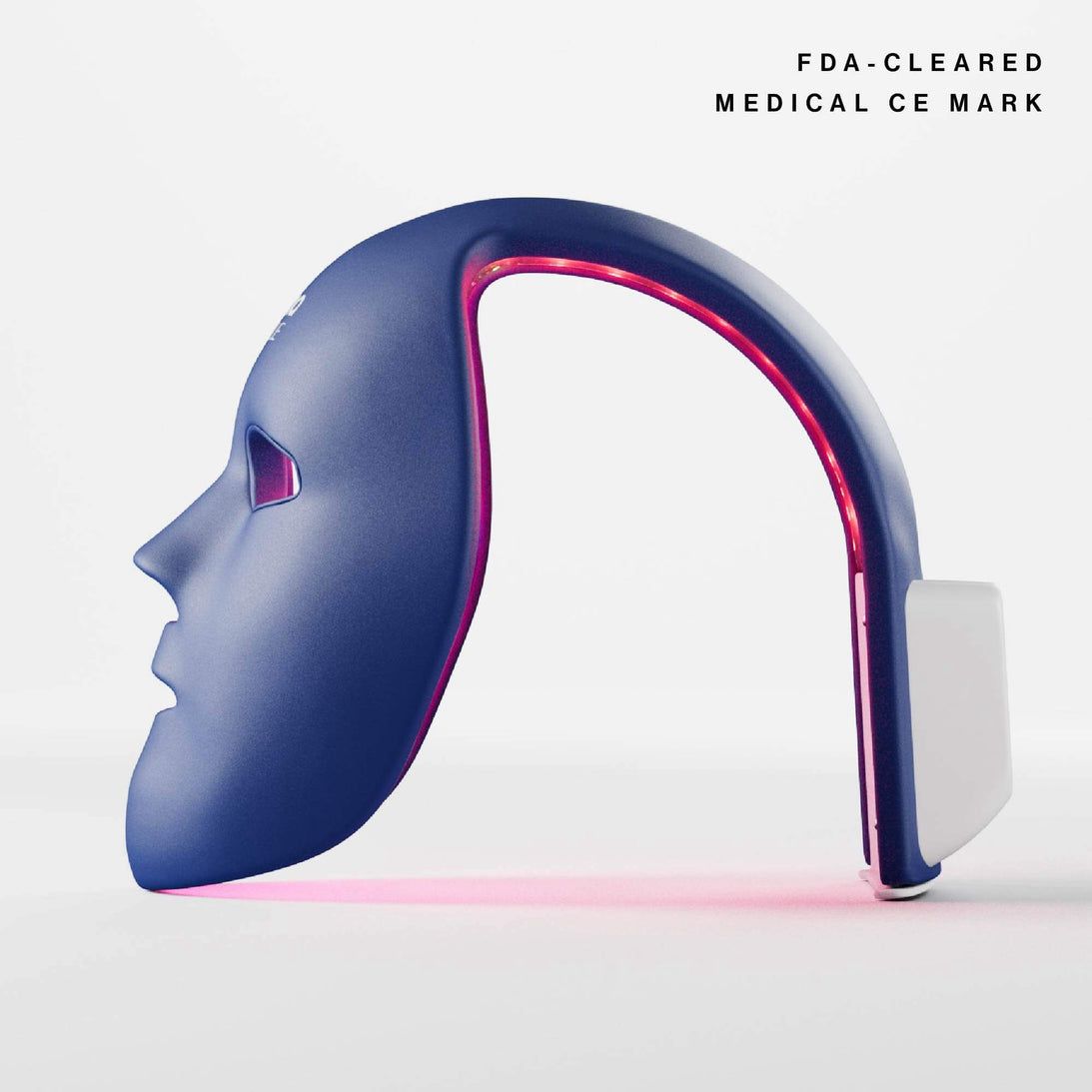
Select Hair Mode (650nm primary + 880nm near-infrared). Position the panel in direct contact with the scalp over areas of active thinning. For the MYSTIQUE, the scalp arm positions naturally. For flat panels, press gently against the scalp at each treatment area. Allow the full 30-minute session — the therapeutic response builds through the session duration with peak papilla activation at the 20–30 minute mark.
Apply Hair Serum During the Vasodilation Window
Immediately post-session, LED-induced vasodilation has opened scalp capillaries around the dermal papilla. Apply Celluma RESTORE Hair Serum directly to the scalp and massage in with fingertips. The 30–60 minute post-session window of elevated blood flow significantly improves absorption of growth factors and peptides to the follicular level — making this the optimal time for any active hair treatment application.
The Synergy Stack — Amplifying Your PBMT Results
Results Timeline Across All Hair Loss Types
Celluma Devices for Hair Loss Treatment in Singapore
Frequently Asked Questions
Androgenetic alopecia (FDA-cleared) and telogen effluvium show the strongest, most consistent response. Both involve metabolically compromised but intact follicles that respond well to ATP restoration. Post-partum hair loss typically shows faster results (8–12 weeks) than androgenetic alopecia (16–24 weeks). Alopecia areata has emerging evidence. Scarring alopecias (follicles replaced by fibrosis) are not indicated.
Follicular miniaturisation is DHT progressively shrinking follicles by shortening the anagen phase each cycle until only fine vellus hair is produced. PBMT reverses this by activating Cytochrome c Oxidase in dermal papilla cell mitochondria — producing an ATP surge that restores the metabolic function DHT suppresses. Anagen duration increases and follicle calibre progressively restores over 16–24 weeks of daily sessions.
Evidence for PBMT in alopecia areata is emerging but less definitive than for androgenetic alopecia. AA is autoimmune — PBMT's anti-inflammatory effects may reduce the immune response at the follicle and support regrowth in some cases. Results are more variable than with androgenetic alopecia. AA cases should be managed with a dermatologist alongside any LED protocol — PBMT works best as an adjunct, not a standalone treatment.
Yes — PBMT is an excellent post-transplant recovery adjunct. After FUT/FUE, grafts experience metabolic stress (ATP depletion during harvesting and implantation). PBMT's CCO activation restores graft ATP during the critical integration period, reduces post-operative scalp inflammation, and may improve graft take rates and reduce shock loss duration. Begin 1–2 weeks post-procedure once cleared by your surgeon.
Telogen effluvium: 8–12 weeks. Androgenetic alopecia: 16–24 weeks minimum. Weeks 2–4 may show increased shedding (positive sign — telogen hairs pushed out as anagen reactivates). New growth visible at weeks 8–12. Significant density measurable at 16–24 weeks of daily 30-minute sessions. Consistency is the primary driver — missed sessions break the cumulative anagen extension effect.
Four steps: (1) Scalp brush during washing to clear follicular debris; (2) Blow dry completely — water scatters photons and reduces irradiance at the papilla; (3) 30-minute Hair Mode session in direct scalp contact; (4) Apply hair serum post-session during the vasodilation window for enhanced absorption. Frequency: daily for 16-week induction, then 3–5 sessions per week for maintenance.
Water molecules create a refractive barrier that scatters and absorbs photons before they reach the dermal papilla at 4–6mm depth. Even damp hair reduces effective irradiance at the follicle significantly. Blow-dry completely or wait 20+ minutes after washing. The same rule applies to styling products, serums, and oils — apply all products after the session, not before.
Biotin supplements only produce noticeable effects in people with an actual biotin deficiency. PBMT provides cellular energy; biotin provides keratin raw materials. For telogen effluvium, check for common deficiencies (iron, zinc, vitamin D, biotin) via blood test first — targeted supplementation based on deficiency is more effective than routine supplementation. Always consult a healthcare professional before adding new supplements.
Consistent Recovery Starts Now.
Know Your Type. Start the Right Protocol.
Explore FDA-cleared Celluma devices with dedicated Hair Mode — or WhatsApp our clinical team for guidance on your specific hair loss type and protocol.

Leave a comment
This site is protected by hCaptcha and the hCaptcha Privacy Policy and Terms of Service apply.