
Energy as the
Currency of Life:
Mitochondria & Red Light
Every biological process in your body runs on ATP — the energy currency produced by your mitochondria. When production declines with age, everything slows: collagen, repair, recovery. Red light therapy directly recharges the source.
To understand why medical-grade LED therapy is so effective, you first have to understand where your body needs energy the most. ATP is not optional — it is the universal fuel that powers every single cell in the human body. No ATP, no repair. No repair, no recovery. And no recovery means the visible signs of ageing, pain, and slow healing that most people accept as inevitable but which are, at the cellular level, largely a problem of energy supply.
The Cells That Need Energy the Most
Not all cells are created equal. The number of mitochondria in a cell reflects exactly how much energy that cell requires to do its job. The more demanding the function, the denser the mitochondrial power grid.
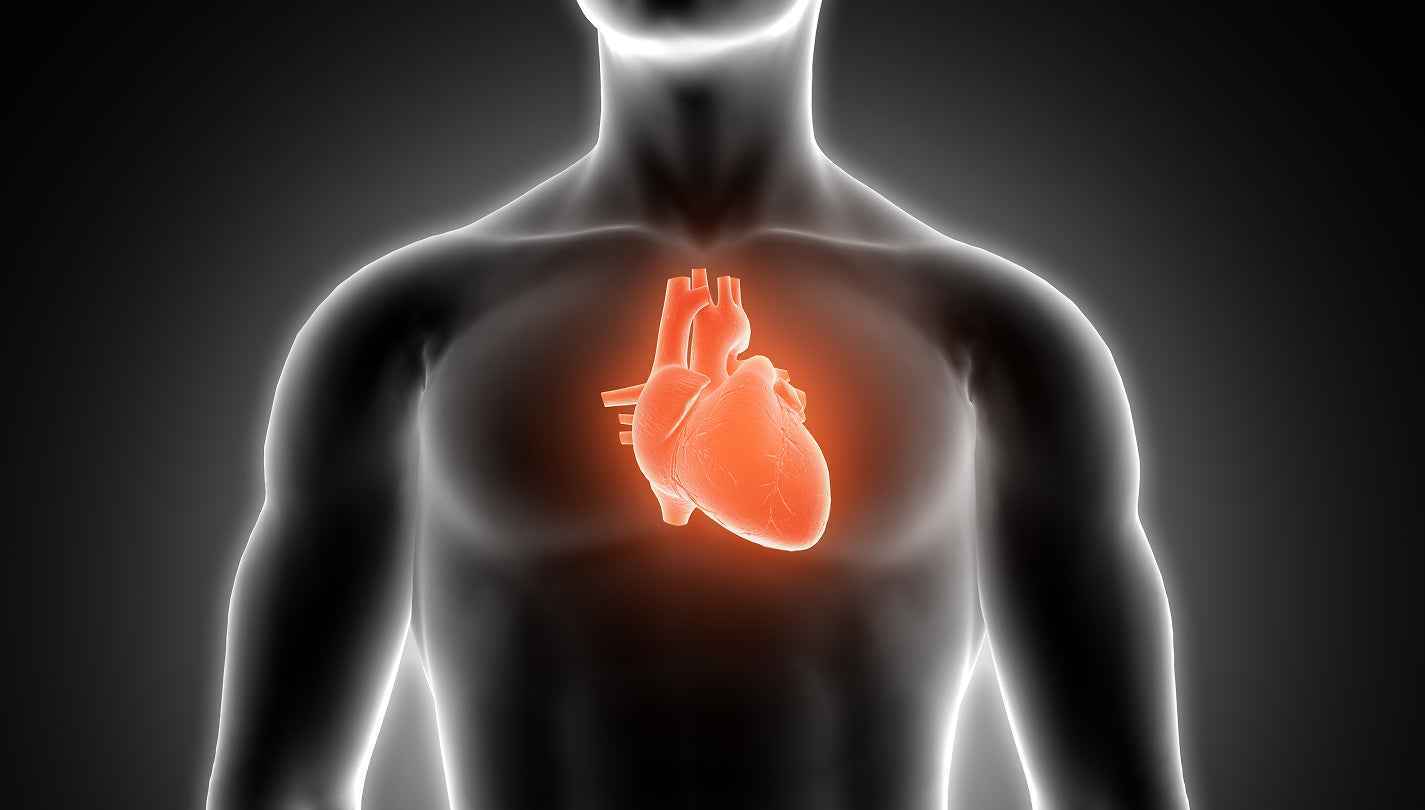
Heart Muscle (Cardiomyocytes)
The highest mitochondrial density in the human body. Mitochondria occupy nearly 40% of each heart cell's volume — because the heart never rests, even for a single second, and requires a constant high-speed ATP supply to sustain continuous contractions.
The Brain (Neurons)
Despite comprising only 2% of body weight, the brain consumes approximately 20% of total energy output. Neurons rely on a dense mitochondrial network for synaptic transmission, memory consolidation, and continuous cellular repair.
Skeletal Muscle
Packed with mitochondria to fuel sustained physical activity. More importantly for recovery, muscle mitochondria drive the post-workout repair cycle that rebuilds micro-damaged fibres — without them, you don't recover, you just fatigue.
Skin Fibroblasts
The cells responsible for producing collagen and elastin. Fibroblasts are highly mitochondria-dependent — collagen synthesis is an energy-intensive process. When fibroblast mitochondria decline, so does the skin's structural matrix.
How Mitochondrial Function Declines with Age — and What It Looks Like
Here is the mechanism behind why you look and feel older as the years pass. It is not just time — it is energy supply. Starting in your 30s, mitochondrial function begins to measurably decline. By 60, ATP production in many cell types may be 30–50% below peak levels. This is not abstract — it has direct, visible consequences.
How Photobiomodulation Recharges the Mitochondria
This is where Celluma and the science of photobiomodulation converge. The mechanism is not metaphorical — it is a specific, documented photochemical process with a named molecular target.
640nm Red Photons Penetrate to the Dermis and Muscle
Red light at 640nm passes through skin and reaches tissue depth of 4–6mm — far enough to access dermal fibroblasts, superficial muscle tissue, and joint structures. Near-infrared at 880nm penetrates to 6–10mm, reaching deeper muscle and joint tissue.
Absorbed by Cytochrome c Oxidase (CCO)
These photons are absorbed by Cytochrome c Oxidase — the terminal enzyme in the mitochondrial respiratory chain. CCO has specific absorption peaks at 640nm and 880nm. This is not coincidence — these are the precise wavelengths Celluma uses, chosen because CCO is where the clinical effect originates.
Photochemical Reaction → ATP Surge
CCO absorption triggers a photochemical cascade that temporarily boosts the mitochondria's ability to produce ATP. This is not a heat effect — it is a specific molecular response. The result: treated cells have significantly more energy available for whatever their primary function is.
Cells Use ATP for Their Highest Priority Function
In fibroblasts: the ATP surge fuels collagen and elastin synthesis. In muscle cells: it accelerates repair and reduces inflammation. In pain-affected joints: it modulates inflammatory cytokines and reduces MMP activity. The ATP goes where it is most needed — which is why Celluma addresses multiple conditions with the same mechanism.
Clinical Protocol: How to Use Celluma for Mitochondrial Support
Photobiomodulation is cumulative — each session builds on the last. The mitochondrial stimulus compounds over time, which is why consistency outperforms intensity every time.
Clinical Placement Guide
Position the Celluma device in zero-gap contact with the skin. Any air gap reduces irradiance via the Inverse Square Law. The flexible panel is specifically engineered to conform to body curves for consistent delivery.
- ⚡ Face & Neck: Anti-aging mode (640nm) directly over the skin surface. Targets dermal fibroblasts for collagen and elastin synthesis. 30 minutes daily or 5 times weekly for compounding results.
- ⚡ Joints & Muscles: Pain mode (880nm) over the affected area. Penetrates 6–10mm to reach inflamed tissue, reduce cytokine activity, and accelerate repair cycle. Position panel flat against the skin.
- ⚡ Lower Back & Core: NIR mode for deep muscle and connective tissue support. Improves local circulation and mitochondrial activity in the lumbar muscle group.
- ⚡ Consistency: 30 minutes per session, 3–5 times weekly is the clinical standard. Results compound over 4–12 weeks — the longer the protocol, the more sustained the mitochondrial improvement.
Continue Your Research
Related Clinical Articles
Is Your Red Light Device Actually Working? Wavelength Science → How Red Light Builds Collagen via Fibroblasts Anti-Aging → FDA Cleared vs FDA Approved — The Critical Difference Buyer's Guide → Buying Celluma in Singapore: Local vs Import Set Singapore →Frequently Asked Questions
Red light (640nm) and near-infrared (880nm) photons are absorbed by Cytochrome c Oxidase — the terminal enzyme in the mitochondrial respiratory chain. This triggers a photochemical reaction that temporarily boosts ATP (adenosine triphosphate) production. The ATP surge gives treated cells significantly more energy for their highest-priority functions: collagen synthesis in fibroblasts, inflammation reduction in joint tissue, and repair acceleration in muscle cells.
Cytochrome c Oxidase (CCO) is the key enzyme at the end of the mitochondrial electron transport chain — the final step in producing ATP from oxygen and nutrients. CCO has specific absorption peaks at approximately 640nm (red) and 880nm (near-infrared). When medical-grade LED light at these exact wavelengths reaches CCO, it enhances enzyme activity and increases ATP output. This is why wavelength precision is non-negotiable — devices using different nm values cannot trigger this response.
Yes. Mitochondrial function naturally declines beginning in the 30s, in a process called mitochondrial dysfunction. By the 60s, ATP production in many cell types may be 30–50% below peak levels. The visible consequences: slower collagen production (wrinkles), reduced muscle repair (weakness), slower wound healing, and reduced cognitive performance. Red light therapy addresses this by directly stimulating mitochondrial ATP production in treated tissue.
Heart muscle cells (cardiomyocytes) have the highest mitochondrial density — approximately 40% of the cell's volume — because the heart requires continuous, uninterrupted ATP to sustain every heartbeat. Neurons (brain cells) are next, consuming 20% of total body energy. Skeletal muscle fibres and skin fibroblasts (which produce collagen) also have high mitochondrial concentrations. This is why red light therapy is particularly effective for pain relief, anti-aging, and muscle recovery — it targets the most energy-intensive cells.
ATP (Adenosine Triphosphate) is the universal energy currency of every cell. Every biological process — collagen synthesis, cell division, protein production, tissue repair — requires ATP as fuel. When ATP production declines, all these processes slow simultaneously. Skin fibroblasts with reduced ATP produce less collagen and elastin, causing wrinkles and skin laxity. Red light therapy's primary effect is increasing ATP availability in treated tissue, which restores the energy supply that drives skin repair.
The photochemical activation of Cytochrome c Oxidase begins during the session itself. A single 30-minute Celluma session measurably increases local ATP production. However, visible clinical benefits accumulate over multiple sessions. The standard protocol is 30 minutes, 3–5 times per week. Skin improvement typically becomes visible at 4–6 weeks; pain relief often begins in the first 2 weeks; compounding improvements continue for 8–12 weeks and beyond.
Support Your Cellular Powerhouse
Invest in FDA-cleared technology designed for peak mitochondrial performance — available in Singapore with free island-wide delivery.


Leave a comment
This site is protected by hCaptcha and the hCaptcha Privacy Policy and Terms of Service apply.