
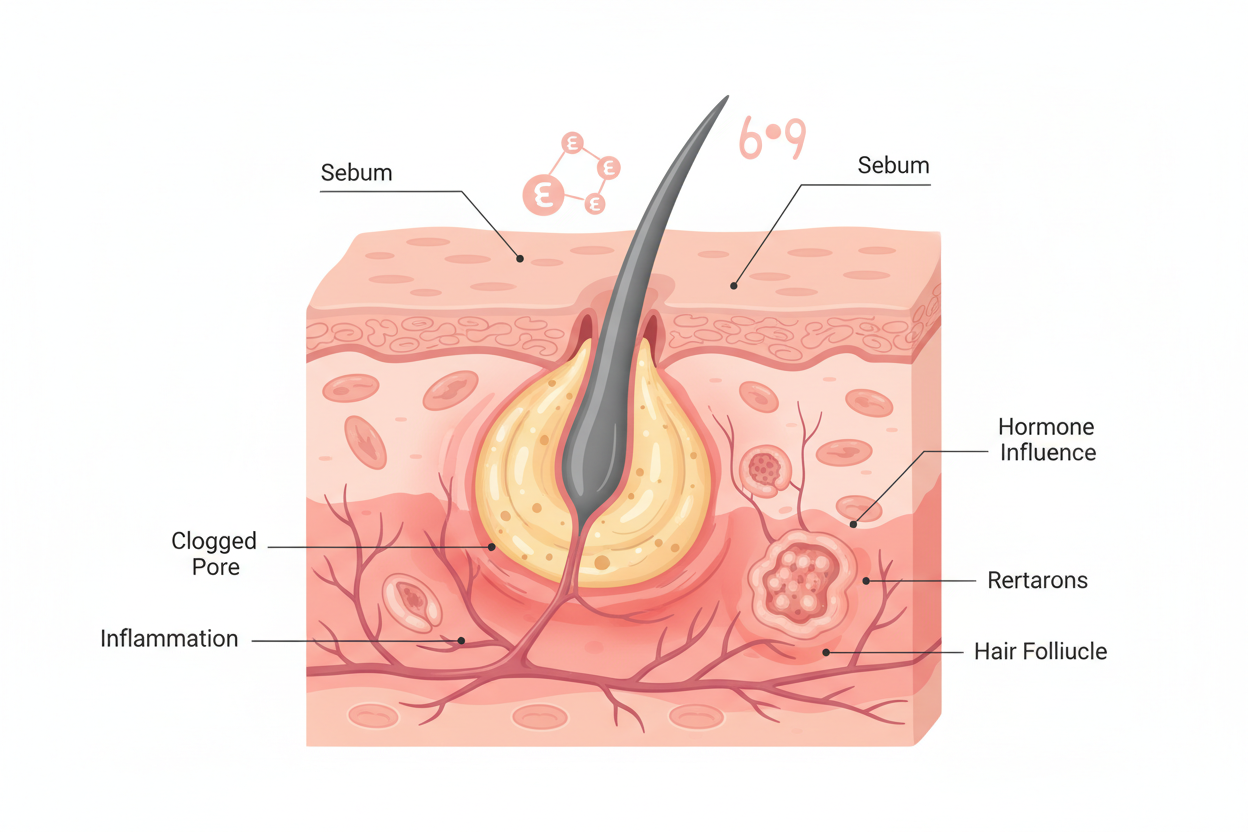
Hormonal acne is driven by androgens stimulating excess sebum production — providing a food source for P. acnes bacteria to colonise the chin and jawline zone. LED therapy does not alter your hormones, but it directly targets both consequences: 465nm kills the bacteria the sebum feeds, and 640nm reduces the inflammatory cytokines that make hormonal acne so painful and persistent.
The Androgen → Sebum → Bacteria Cycle
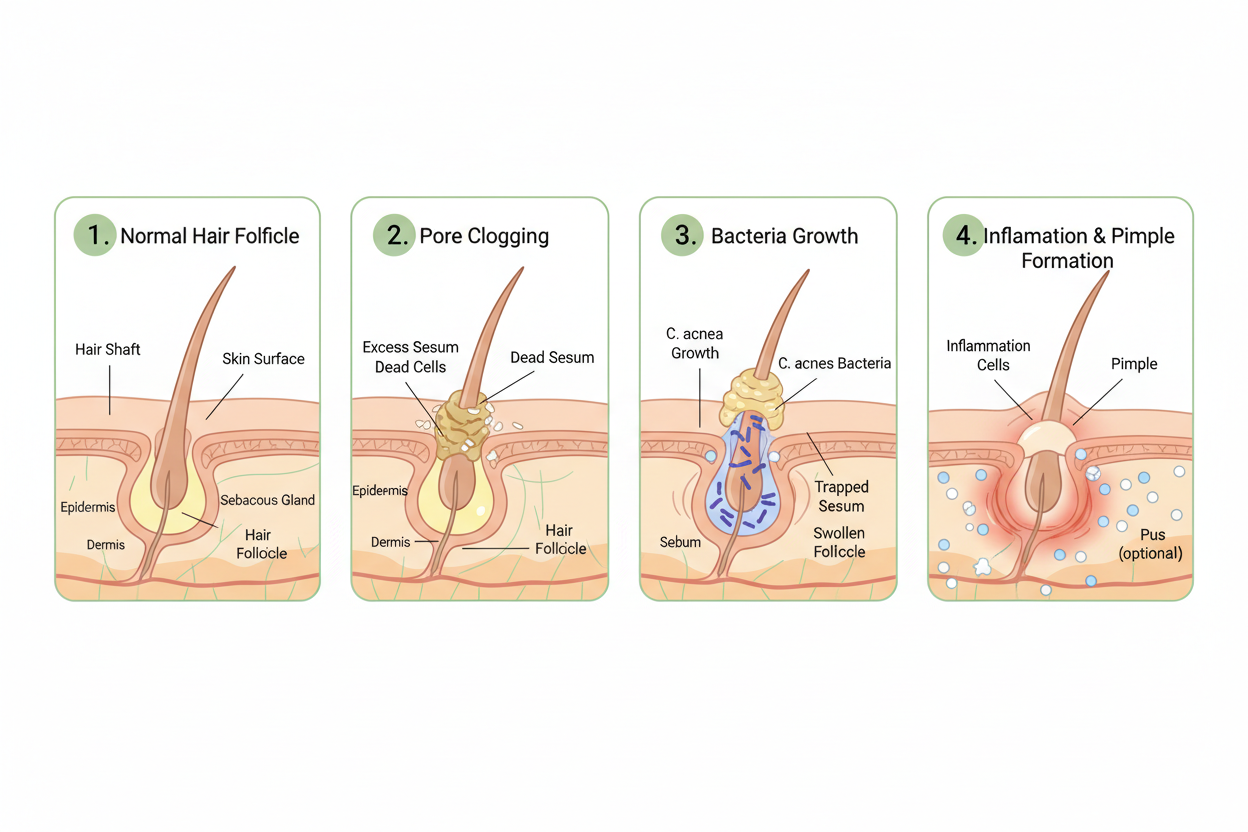
Hormonal acne is not random. It follows a predictable biological pathway: elevated androgens (testosterone, DHT) bind to receptors in sebaceous glands and command them to produce more sebum. That excess sebum fills follicles — providing the nutrient-rich environment P. acnes bacteria need to multiply. The resulting bacterial colony triggers the immune response that creates the deep, painful nodule on your jawline.
The Hormonal Acne Pathway
And where LED therapy intervenesHormonal Acne vs Regular Acne: Key Differences
Chin, jawline, lower cheeks — follows the androgen receptor map of the face. If it's always in the same jaw zone, it's hormonal.
Cyclical — often flares 7-10 days before menstruation when progesterone drops and androgens relatively increase.
Deeper and more inflamed than surface acne. Often no visible head — a painful cystic lump under the skin.
Heals slowly (2-4 weeks per lesion) because the androgen driver keeps sebum elevated, sustaining the bacterial environment.
The Protocol for Hormonal Acne
Questions & Answers
Androgens (testosterone and its derivatives, particularly DHT) stimulate sebaceous glands to increase sebum production. Excess sebum provides the food source that P. acnes bacteria need to multiply inside the follicle. The resulting bacterial colonisation triggers an immune response — the painful, inflamed cystic nodule characteristic of hormonal acne. Hormonal fluctuations during the menstrual cycle, puberty, perimenopause, and polycystic ovarian syndrome (PCOS) all drive this androgen-sebum-bacteria cycle.
Hormonal acne characteristically appears on the lower face: chin, jawline, and lower cheeks. This zone has the highest concentration of androgen receptors in facial skin, making it the most responsive to hormonal sebum surges. Hormonal acne tends to be deeper and more inflamed than surface comedonal acne — because the sebaceous glands in this zone are larger and produce more sebum when androgen-stimulated.
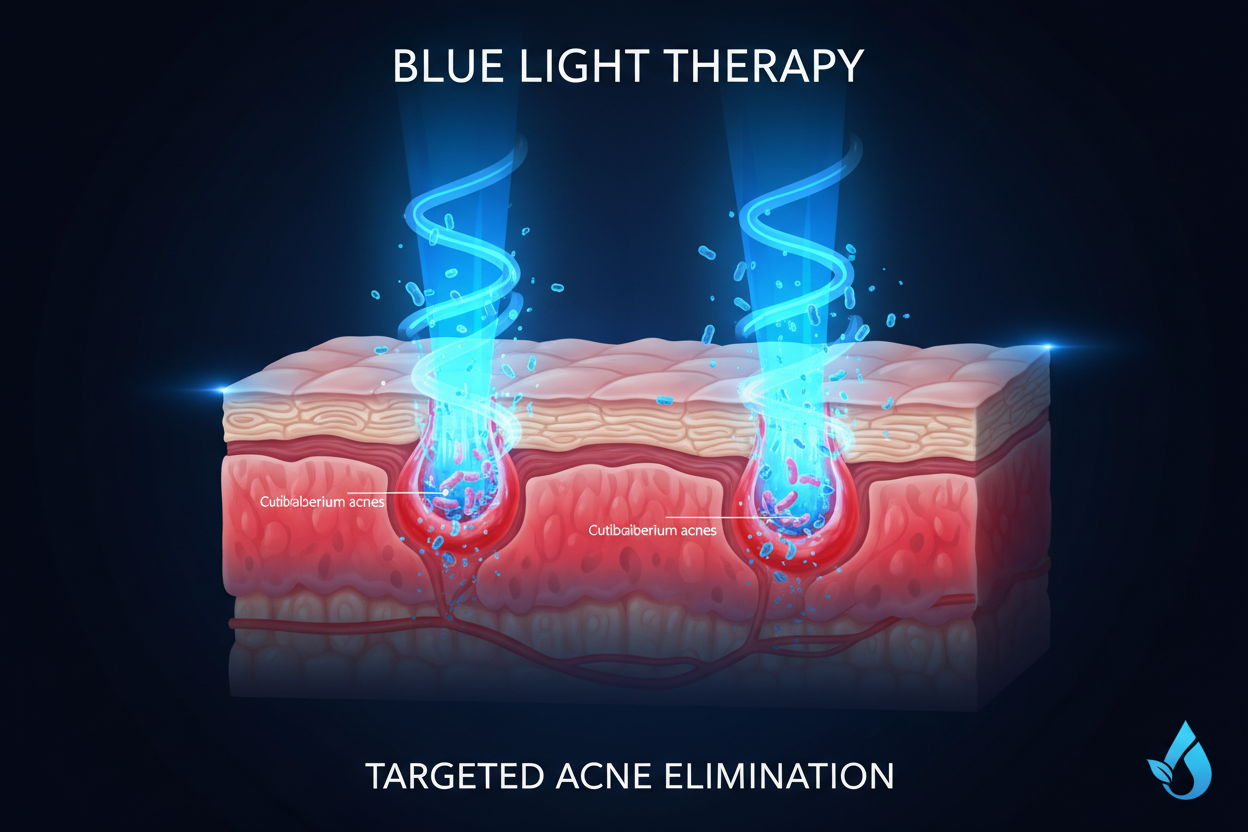
Yes. While red light therapy does not alter hormone levels, it directly addresses both downstream consequences of hormonal acne: 465nm blue light kills the P. acnes bacteria that the excess sebum feeds, and 640nm red light reduces the pro-inflammatory cytokines (IL-1α) that make hormonal acne so painful and slow to heal. Additionally, red light's sebum-regulating effects help reduce the oil surplus that sustains bacterial growth. This addresses the bacterial and inflammatory components without hormonal interference.
Yes. High glycaemic index foods (white rice, sugar, bread) spike insulin, which increases IGF-1 and androgen production — directly worsening hormonal acne. Dairy products also raise IGF-1. A low GI diet with reduced dairy has been shown in multiple studies to significantly reduce hormonal acne severity, particularly in the jawline zone. This is complementary to topical and LED treatment — not a replacement.
Hormonal acne is persistent by nature because the androgen driver recurs with each hormonal cycle. With consistent treatment (LED therapy 3-4x/week, low GI diet, salicylic acid topically), significant improvement is typically visible in 8-12 weeks. Unlike bacterial acne, which can clear faster, hormonal acne requires sustained management rather than a one-time treatment. Many people find that maintaining a consistent LED protocol prevents cyclical flares even without hormonal intervention.
If acne is severe, cystic, and concentrated on the jawline and chin with a clear hormonal pattern (especially if accompanied by other signs of androgen excess like irregular periods or excess body hair), a dermatologist consultation is appropriate. Medications like spironolactone, combined oral contraceptives, or isotretinoin may be recommended for severe hormonal acne. LED therapy works synergistically with these treatments and is safe to use alongside dermatological prescriptions.

Leave a comment
This site is protected by hCaptcha and the hCaptcha Privacy Policy and Terms of Service apply.