

Dua Lipa's
LED Light Therapy:
The Infrared Face Device
She Travels With
Inside the clinical science behind why a global pop star reaches for a flexible infrared LED device — and why touring artists and frequent travellers are making it the most important skincare tool in their luggage.
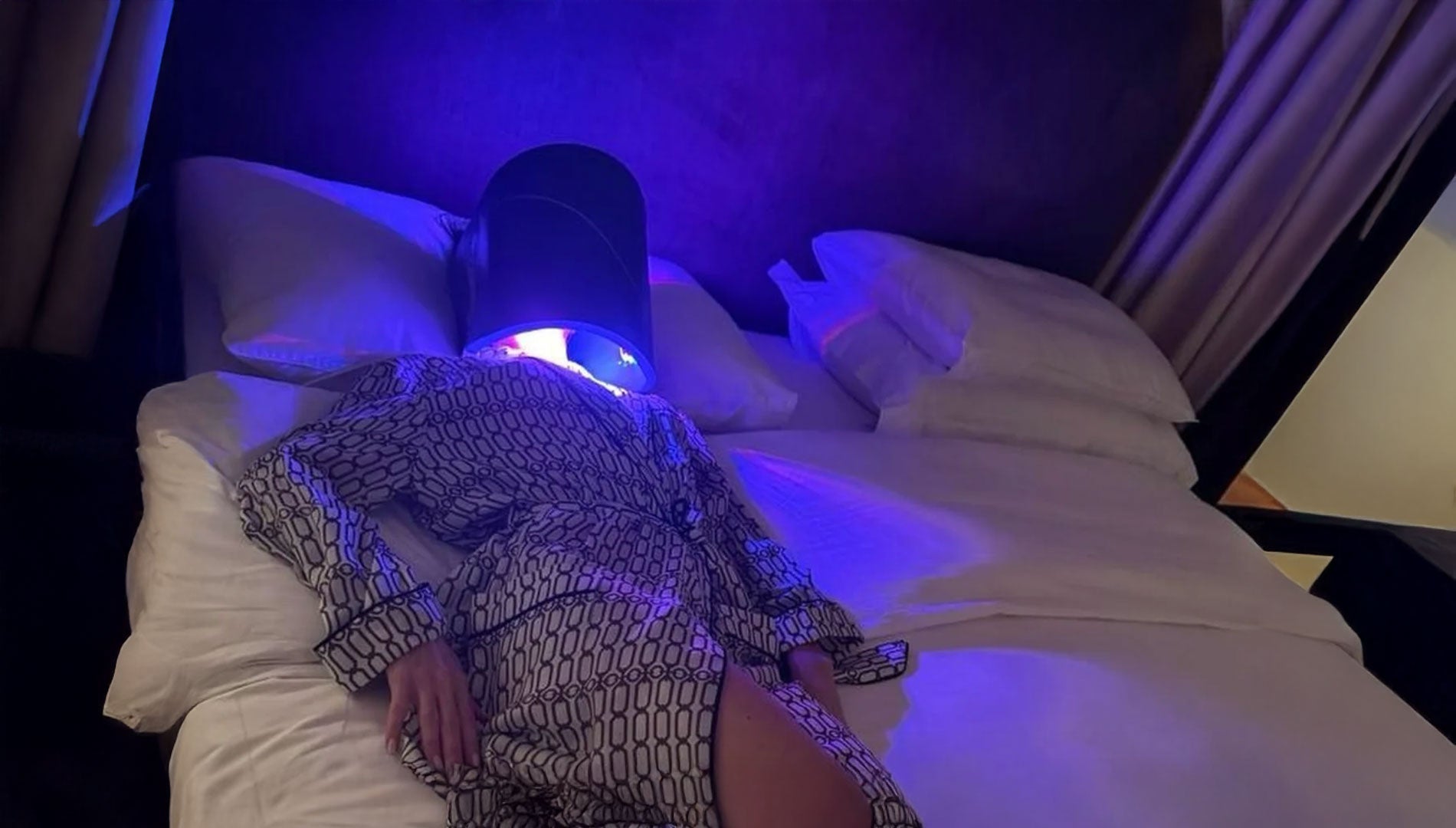
In a wide-ranging beauty interview with Marie Claire, Dua Lipa shared what has become one of the most talked-about skincare revelations in recent memory: a compact infrared face light gifted by her mother, compact enough to fold flat into a tour suitcase. Her observation — that she noticed significant skin improvement and fewer breakouts — isn't just celebrity anecdote. It's a clinically predictable result that biophysics explains precisely.
For a global artist crossing time zones weekly, the skin operates under constant physiological assault. Understanding why LED light therapy works in this context requires understanding what touring actually does to the body — and why a flexible, close-proximity LED device addresses it better than any cream, serum, or traditional mask on the market.
"It's compact enough to fold into my suitcase... I've noticed a significant improvement in my skin."
— Dua Lipa As told to Marie Claire · Original interview at marieclaire.comWhat Touring Actually Does to Skin — and Why It's Hard to Fix
The physiological reality of touring or frequent travel is severe. Cortisol spikes from disrupted sleep and jet lag directly trigger sebaceous glands to overproduce sebum — the primary driver of inflammatory acne. Cabin air at 8% humidity (compared to a comfortable 30–60% on the ground) strips the skin's moisture barrier. And circadian rhythm disruption impairs the skin's overnight repair cycle, when most collagen synthesis and cellular regeneration naturally occurs.
Standard solutions — topical treatments, sheet masks, serums — address surface symptoms but cannot reach the underlying cellular mechanisms driving the problem. Red and near-infrared light therapy works differently: it operates at a wavelength that penetrates the dermis and stimulates cellular energy (ATP) production directly, triggering the biological repair processes that travel disrupts.
Cortisol + Inflammation: Near-infrared light (880nm) penetrates deeply into tissue to reduce systemic inflammatory markers — directly counteracting the cortisol-driven inflammation cycle triggered by sleep disruption and time zone shifts.
Circadian Recovery: Photobiomodulation promotes mitochondrial activity and ATP production, accelerating the cellular repair cycle that jet lag suppresses — helping skin restore overnight even when sleep quality is compromised.
Breakout Prevention: The 465nm blue wavelength targets and destroys P. acnes bacteria — the primary bacterium responsible for inflammatory acne breakouts that cortisol spikes trigger during high-stress travel periods.
Three Wavelengths. Three Problems Solved.
The device Dua Lipa described — compact, flexible, foldable — addresses travel skin issues across three distinct wavelengths simultaneously. Medical-grade devices like the Celluma PRO II combine all three in a single panel, treating the full range of travel skin concerns in one 30-minute session.
Blue Light · Acne
Destroys P. acnes bacteria responsible for stress and travel-induced breakouts. Addresses the root cause cortisol triggers, not just symptoms.
Red Light · Skin
Stimulates fibroblasts to produce collagen and elastin. Accelerates overnight repair and reduces post-inflammatory redness from existing breakouts.
Near-Infrared · Recovery
Deep tissue penetration reduces systemic cortisol-driven inflammation and promotes cellular energy production — the "relaxing, warming feeling" Dua described.
Why the Flexible Design Is the Key Differentiator
Most LED masks on the market are rigid plastic. They look clinical but perform poorly for two reasons: they cannot conform to the contours of the face (creating light-leakage gaps that reduce delivered irradiance) and they are too bulky and fragile to survive a tour schedule.
The device Dua described is notable precisely for its ability to fold completely flat. This isn't just a packing convenience — it's a clinical feature. A flexible panel that contours to the face maintains the zero-gap proximity that maximises photon delivery to the dermis. Due to the Inverse Square Law, even a 1–2cm gap between LED and skin reduces irradiance to the tissue significantly. Flexibility and proximity are the same thing.
How to Replicate the Routine at Home or On the Road
The routine itself is straightforward. Consistency matters more than duration — 30 minutes nightly produces measurably better results than longer, infrequent sessions. The cordless design means no power socket required for the first session in any new hotel room.
Frequently Asked Questions
In an interview with Marie Claire, Dua Lipa described a compact infrared face light gifted by her mother that folds flat into her suitcase and helped reduce her breakouts noticeably. The description matches the flexible panel design and travel-ready format of the FDA-cleared Celluma PRO II — a medical LED device for acne, anti-aging, and pain relief.
Yes. Travel spikes cortisol which triggers sebum overproduction — the root cause of breakouts. Blue light (465nm) destroys P. acnes bacteria, red light (640nm) reduces inflammation and accelerates skin repair, and near-infrared (880nm) lowers systemic inflammation driven by cortisol. Used consistently during travel, all three wavelengths target the biological causes of travel-induced breakouts.
The best portable LED device for travel is one that folds flat (for packing), is cordless (for hotel use without adapters), and holds FDA clearance for medical indications. The Celluma PRO II meets all three — it folds completely flat, runs on a Li-Ion rechargeable battery, and is FDA Class II cleared for acne, anti-aging, and pain management.
A standard session is 30 minutes. The device selects the treatment mode automatically and shuts off when the session completes. Most people use it lying down before sleep — it's compatible with winding down and requires no active attention once positioned.
Rigid masks are bulky, fragile, and create light-leakage gaps at the cheeks, chin, and forehead. Due to the Inverse Square Law, gaps between LED and skin significantly reduce delivered irradiance. A flexible panel conforms to face contours for zero-gap contact, maximising therapeutic light delivery — while also folding flat to fit into a suitcase without risk of damage.

Leave a comment
This site is protected by hCaptcha and the hCaptcha Privacy Policy and Terms of Service apply.