
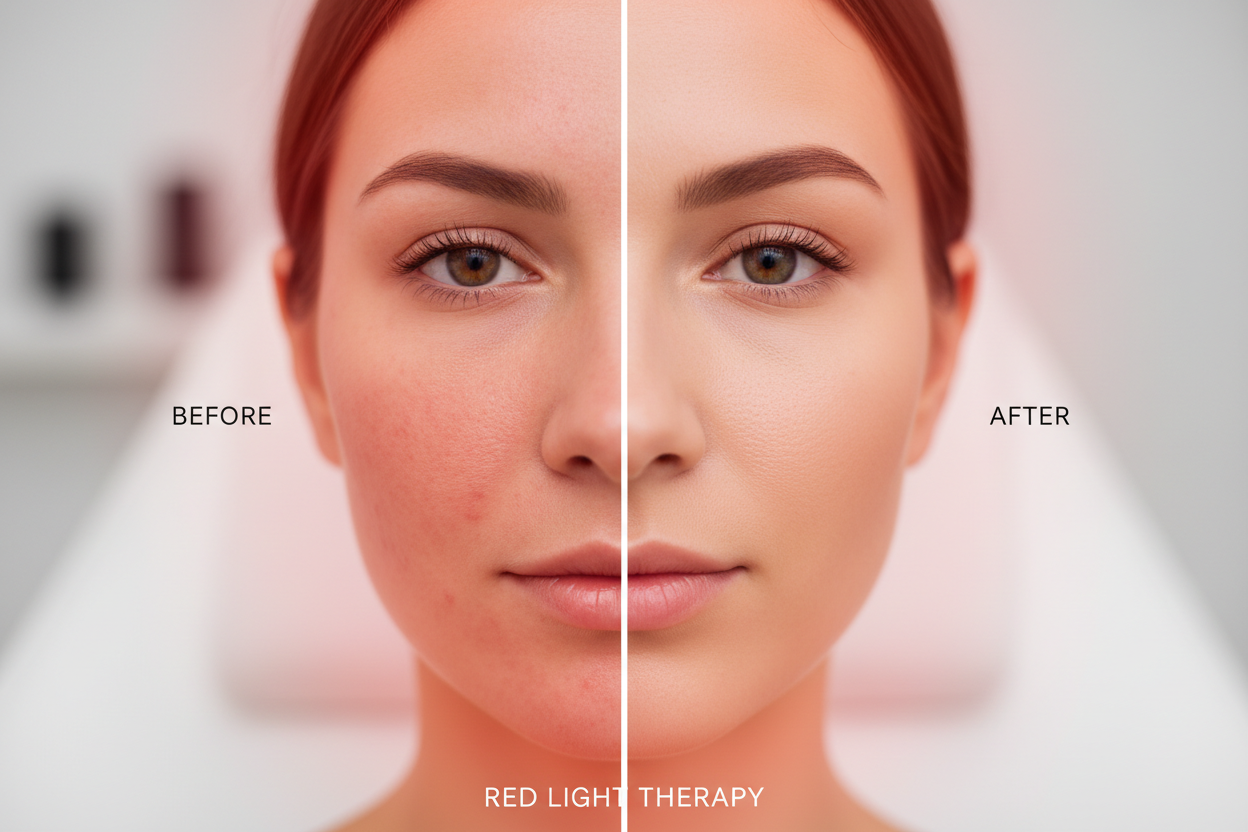
Acne redness has two completely different causes — active redness (pro-inflammatory cytokines during a live pimple) and post-acne erythema (PAE, damaged capillaries after healing). They need different treatments. 640nm red light therapy reduces IL-1α cytokines that cause active redness, and accelerates vascular repair for PAE — addressing both in a single protocol.
Two Types of Acne Redness — Two Different Causes
Caused by pro-inflammatory cytokines (IL-1α, TNF-α) and vasodilation as the immune system attacks P. acnes bacteria. Lasts as long as the infection. Needs anti-inflammatory treatment.
Residual redness after the pimple heals — damaged capillaries that haven't recovered. Lasts 3-6 months. Needs vascular healing and brightening, not anti-inflammatory treatment.
How 640nm Red Light Reduces Active Redness
640nm red light is absorbed by Cytochrome c Oxidase in fibroblast and immune cell mitochondria. The resulting ATP surge activates anti-inflammatory pathways that down-regulate IL-1α — the primary cytokine responsible for the painful, visible redness of active acne. Clinical studies show measurable reduction in erythema scores within 4-6 weeks of consistent LED therapy at this wavelength.
How 640nm Targets Acne Redness
Cytokine reduction mechanism — anti-inflammatory without drugsQuick Redness Reduction: The Priority Stack
Questions & Answers
For immediate reduction: ice (wrapped in cloth, 1 minute at a time) constricts blood vessels and reduces visible redness for 30-60 minutes. For clinical reduction: 640nm red light therapy reduces pro-inflammatory cytokines (IL-1α) within a 30-minute session, visibly reducing active acne redness. Green-tinted colour corrector under foundation provides instant cosmetic coverage. Niacinamide 5-10% reduces redness over days-weeks of consistent use.
Acne redness has two distinct sources: (1) Active acne redness is caused by the immune response — dilated blood vessels (vasodilation) and pro-inflammatory cytokines (IL-1α, TNF-α) flood the area with blood as white blood cells attack P. acnes bacteria; (2) Post-acne erythema (PAE) is the residual redness after a pimple heals, caused by damaged capillaries that have not fully recovered. Active redness needs anti-inflammatory treatment; PAE needs vascular healing and gentle brightening.
Yes. 640nm red light therapy reduces two key inflammatory mediators: pro-inflammatory cytokines (particularly IL-1α) that cause the vasodilation and redness of active acne, and post-acne erythema (PAE) by stimulating vascular repair and collagen synthesis. Clinical studies show measurable reduction in erythema scores after 4-6 weeks of consistent LED therapy. The anti-inflammatory mechanism is photobiological — no drugs, no hormones, no chemicals.
Active acne redness (during the pimple) lasts as long as the infection and immune response persist — typically 5-14 days untreated, 2-5 days with targeted treatment including LED. Post-inflammatory erythema (PAE) after the pimple heals can last 3-6 months untreated on lighter skin tones, and up to 12+ months on darker Fitzpatrick types IV-VI, particularly in Singapore's high-UV environment where UV constantly re-stimulates pigment and capillary damage.
Evidence-supported: (1) Niacinamide 5-10% — reduces sebum, reduces cytokine signalling, fades red marks; (2) Azelaic acid 10-20% — anti-inflammatory and brightening, reduces post-acne redness; (3) Centella asiatica extract — calms inflammation, strengthens capillary walls; (4) Zinc — anti-inflammatory; (5) 640nm red light therapy — reduces IL-1α directly at the cellular level. Avoid: alcohol-based toners, harsh scrubs, and retinol at high concentrations until redness is resolved, as these temporarily worsen irritation.
Cold (ice wrapped in cloth) for active, inflamed acne redness — constricts blood vessels, reduces swelling immediately, and provides mild pain relief. Warm compress for a pimple with a visible head that has not yet come to the surface — gentle warmth can encourage natural drainage without squeezing. Never use a hot compress on inflamed cystic acne — heat increases blood flow and worsens the inflammatory vasodilation that causes redness. After a pimple has fully healed and only erythema remains, temperature has no meaningful effect.

Leave a comment
เว็บไซต์นี้ได้รับการคุ้มครองโดย hCaptcha และมีการนำนโยบายความเป็นส่วนตัวของ hCaptcha และข้อกำหนดในการใช้บริการมาใช้