
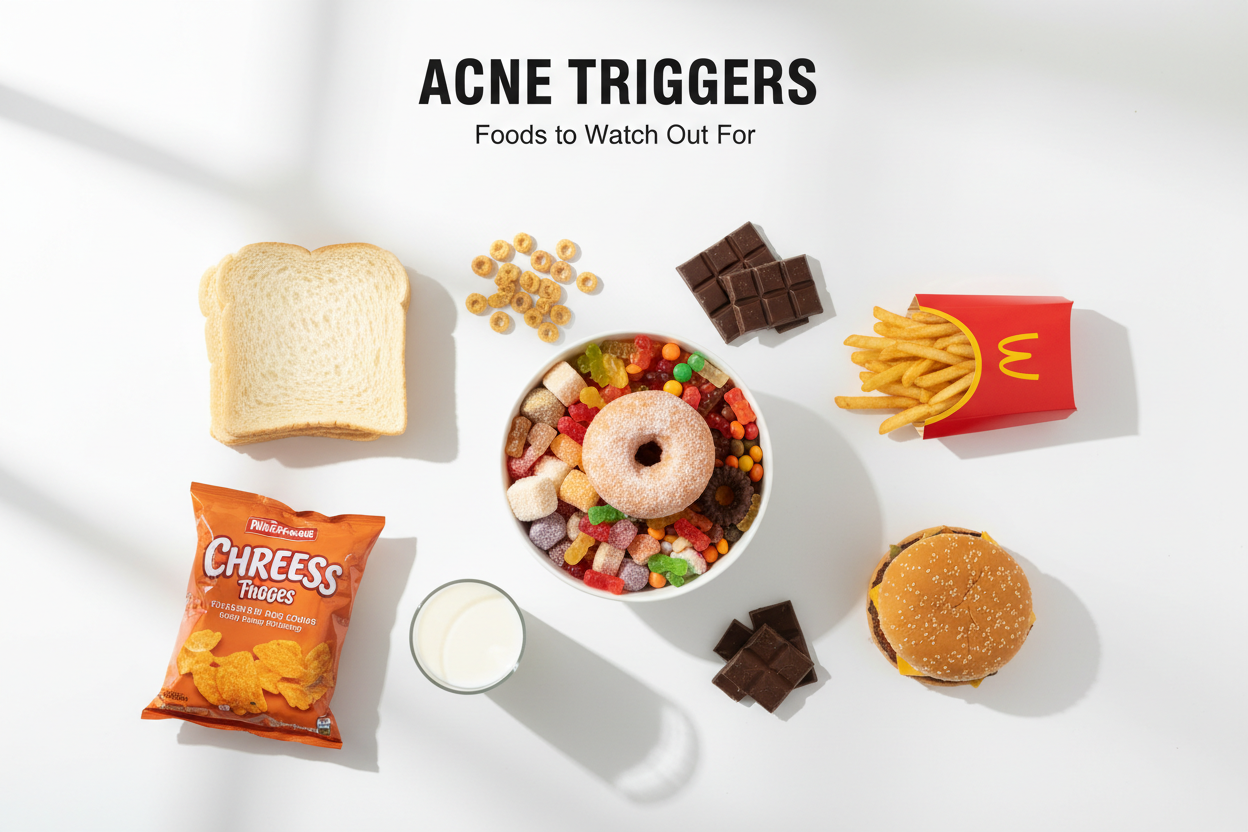
Diet does affect acne — through a specific hormonal pathway. High GI foods and dairy raise IGF-1 and androgens, which stimulate sebaceous glands to produce more sebum. More sebum feeds more P. acnes bacteria. The evidence is strongest for these two dietary categories. However, diet works best as a complement to targeted treatment — not a replacement for addressing the bacteria directly with blue light therapy.
How Diet Triggers Acne: The Hormonal Pathway
Diet affects acne through a specific hormonal cascade, not through "toxins in your food coming out through your skin" (a persistent myth). The real mechanism: high glycaemic index foods spike blood glucose and insulin. Elevated insulin triggers IGF-1 (insulin-like growth factor), which stimulates androgen production. Androgens signal sebaceous glands to produce more sebum. More sebum fills follicles and feeds P. acnes bacteria — triggering the inflammatory cascade.
The Diet → Acne Hormonal Pathway
Why high GI and dairy directly cause breakoutsThe Evidence on Specific Foods
White rice, white bread, sugar, sugary drinks. Multiple RCTs show significant acne improvement on low GI diets vs high GI controls.
Raises IGF-1. Skim milk has stronger association than full-fat. Whey protein supplements (bodybuilding) highly linked.
Salmon, mackerel, walnuts, flaxseed. Reduce inflammatory prostaglandins that worsen acne inflammation.
Oysters, pumpkin seeds, legumes. Zinc has antimicrobial and anti-inflammatory properties relevant to acne.
Diet + LED Therapy: A Synergistic Approach
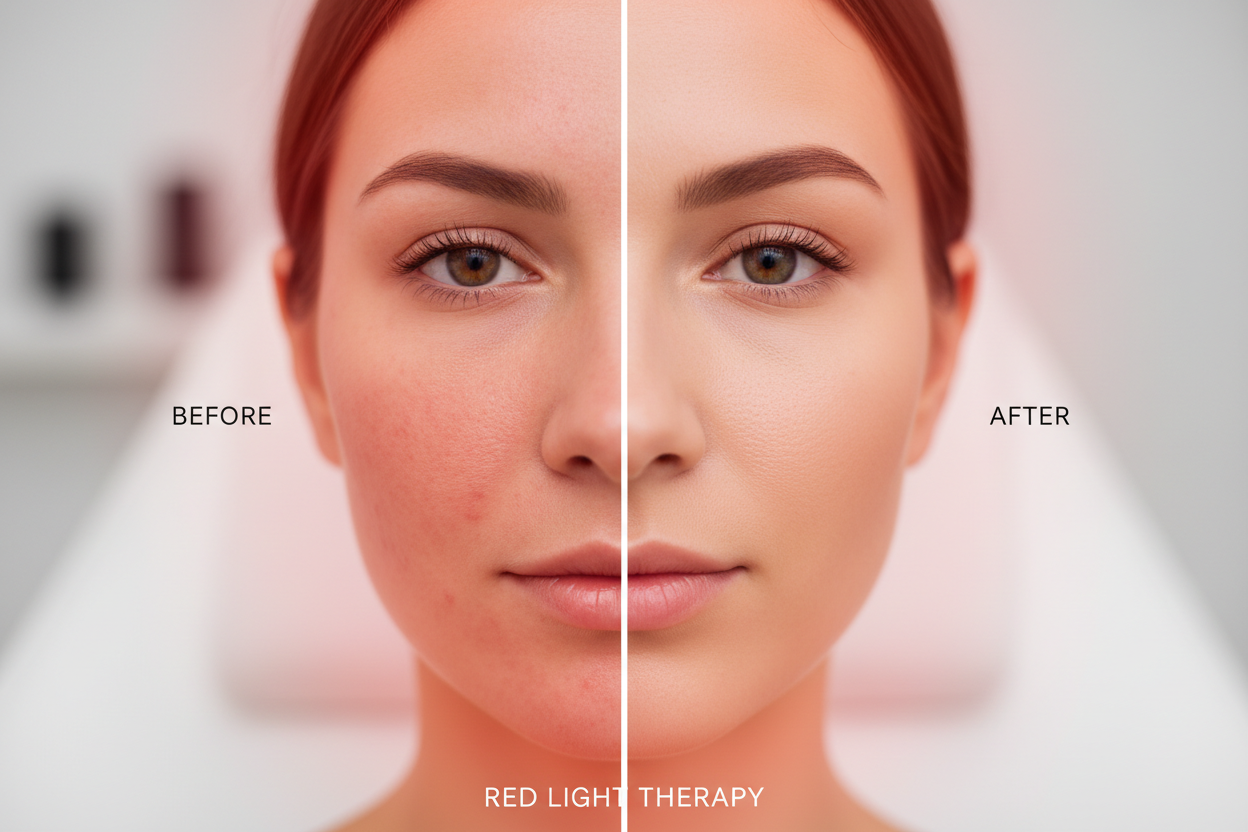
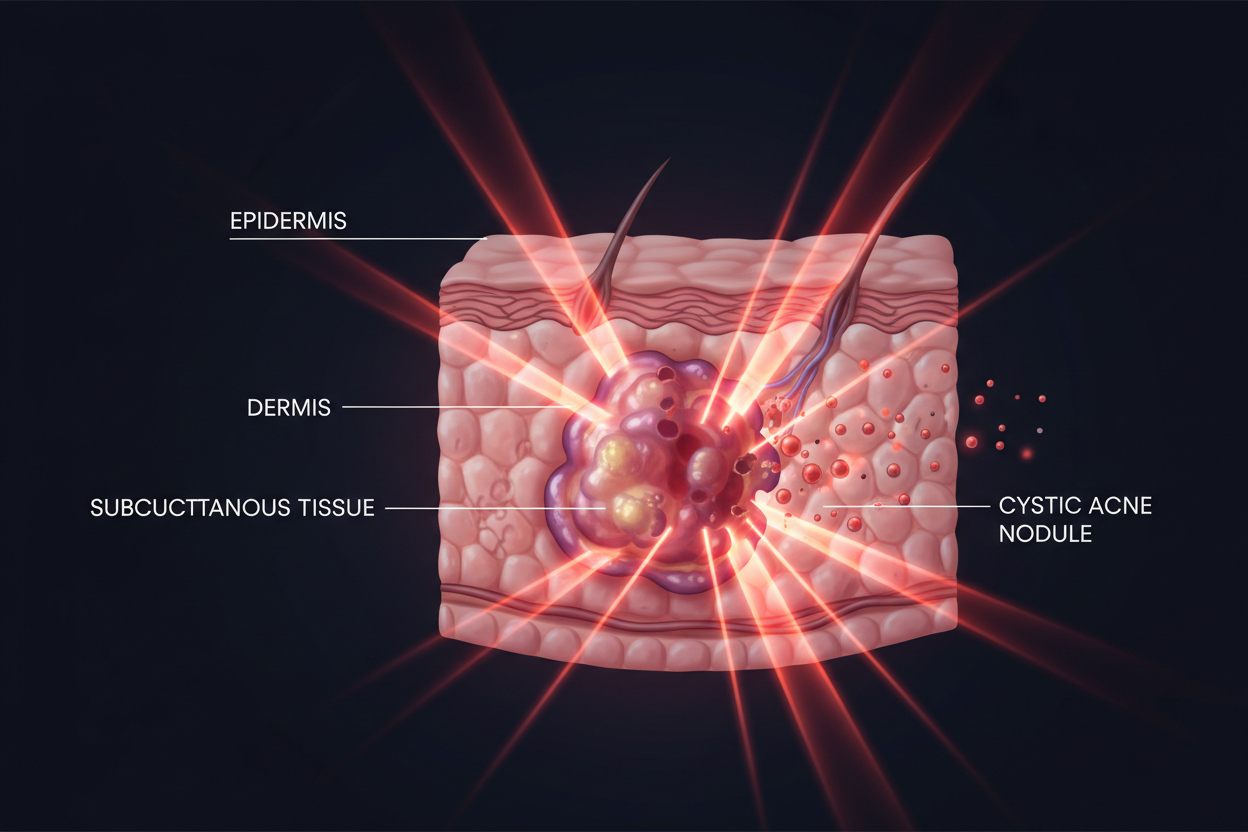
Diet modification and LED therapy target different points in the acne pathway — which is why they work best together. Diet reduces the upstream hormonal driver (IGF-1 → androgen → sebum). Blue + red LED therapy addresses the downstream consequences: killing the P. acnes bacteria that sebum feeds, and reducing the inflammatory cytokines that make acne painful and slow to heal.
A low-GI, reduced-dairy diet combined with 3-4 sessions of LED therapy per week consistently produces faster and more sustained results than either approach alone — because you're blocking the pipeline at both the supply end (sebum production) and the bacterial end.
Questions & Answers
Yes — the evidence is increasingly clear. High glycaemic index foods (white rice, sugar, white bread) raise blood glucose → insulin → IGF-1 → androgens → sebum production. Dairy products (especially skim milk and whey protein) raise IGF-1 independently of GI index. Multiple randomised controlled trials show significant acne improvement on low-GI diets. However, diet is one factor among several — and works best combined with targeted treatment rather than as a standalone intervention.
The strongest evidence links acne to: (1) High glycaemic index foods — white rice, white bread, sugar, sugary drinks, pastries; (2) Dairy products — particularly skim milk and whey protein supplements; (3) Chocolate — likely due to high sugar content and dairy; (4) Fast food — high GI, high saturated fat, inflammatory. Foods with weaker or no consistent evidence: spicy foods, fried foods (per se), shellfish. Individual variation exists — tracking your specific dietary triggers over 4-6 weeks is the most accurate method.
Anti-inflammatory foods: omega-3 fatty acids (salmon, mackerel, walnuts, flaxseed) reduce inflammatory prostaglandins; leafy greens (antioxidants reduce oxidative stress in the dermis); zinc-rich foods (oysters, pumpkin seeds, legumes — zinc has antimicrobial and anti-inflammatory properties); low GI carbohydrates (oats, sweet potato, legumes — prevent the insulin-androgen cascade); green tea (EGCG has mild anti-androgen effects). These are complementary to treatment, not replacements.
Sugar (high GI) raises blood glucose → insulin → IGF-1 → androgen production → sebaceous gland stimulation → increased sebum → more P. acnes food → more acne. The connection is direct and well-documented in multiple studies. This does not mean every piece of cake causes a pimple — the effect is dose-dependent and cumulative over time. Consistently high sugar intake maintains chronically elevated insulin, sustaining the hormonal cascade that drives acne.
Dairy (particularly skim milk) is one of the better-evidenced dietary acne triggers. Milk contains hormones including IGF-1, and drinking it raises blood IGF-1 levels, which stimulates androgen production and sebaceous activity. Skim milk has a higher acne association than full-fat milk, possibly because the fat removal process concentrates the bioactive hormones. A 4-week dairy elimination trial is a reasonable diagnostic approach if dairy is a significant part of your diet.
Yes — they work synergistically. Diet modification reduces the hormonal driver of sebum overproduction, while blue and red LED therapy addresses the bacterial and inflammatory consequences of that sebum. Reducing dietary androgen triggers (high GI foods, dairy) means less sebum → less food for P. acnes bacteria → fewer new lesions. LED therapy simultaneously clears existing bacteria and reduces the inflammation that diet-triggered breakouts cause. The combination produces significantly faster and more sustained results than either approach alone.

Tinggalkan komentar
Situs ini dilindungi oleh hCaptcha dan berlaku Kebijakan Privasi serta Ketentuan Layanan hCaptcha.