

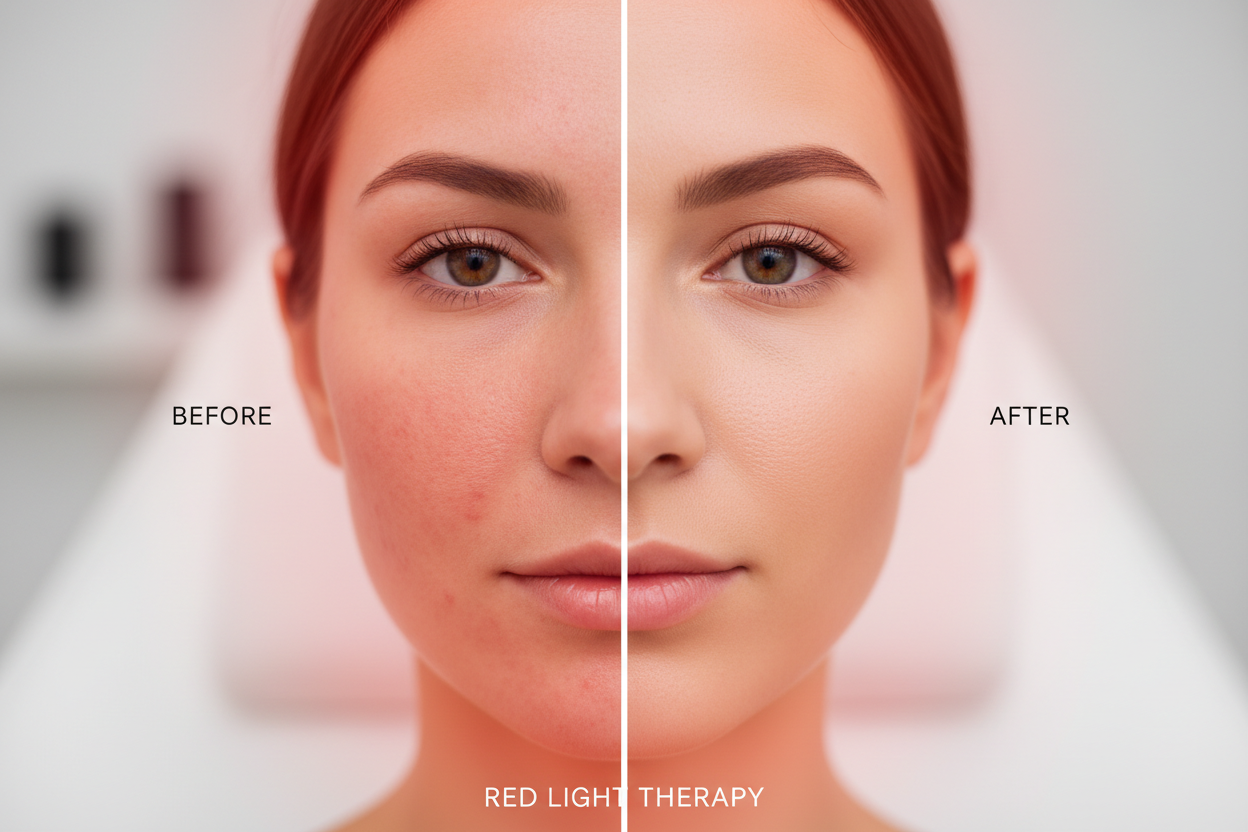
The most common skincare routine mistake for acne is doing too much — too many actives, too many steps, over-cleansing, and skipping moisturiser. The best routine for acne-prone skin is gentle, consistent, and targeted: one BHA, one moisturiser, SPF 50, and blue + red LED therapy 3-4x per week after cleansing.
The Complete Acne-Prone Skincare Routine
Morning Routine — 4 Steps Maximum
Simple. Consistent. Effective.Evening Routine — Where LED Fits
LED after cleansing, before any serums or treatmentWhere LED Therapy Fits in the Routine
The most common question: when do I use my LED device? Always after cleansing, on completely bare skin — before any serum, moisturiser, or SPF. Any product layer between the LED and your skin scatters photons and reduces efficacy. Apply your targeted serum immediately after the 30-minute session — post-session vasodilation slightly improves absorption.
Clean, dry skin. No product. Removes all barriers between photons and cells.
Targeted treatment serum, then moisturiser. Vasodilation improves penetration.
Mineral SPF (zinc oxide) specifically scatters 465nm and 640nm light. Always cleanse first.
Emollients and oils create a refractive barrier at the skin surface. Scatter photons.
Questions & Answers
Morning: gentle pH-balanced cleanser → toner (optional, avoid alcohol) → niacinamide 5-10% serum → lightweight oil-free moisturiser → SPF 50 non-comedogenic. Evening: double cleanse if wearing SPF/makeup → salicylic acid 2% cleanser → targeted treatment (benzoyl peroxide or retinol 0.5%) → light moisturiser. Blue + Red LED therapy sits after cleansing, before any serums or treatments, 3-4 nights per week. Key rule: fewer active ingredients, applied consistently, outperform complex multi-step routines.
Yes — absolutely. Skipping moisturiser because you have oily or acne-prone skin is one of the most common and damaging mistakes. When the skin barrier is dehydrated, it overproduces sebum to compensate — creating more oil for P. acnes bacteria to feed on. A lightweight, non-comedogenic, oil-free moisturiser (hyaluronic acid, ceramides) maintains the skin barrier without adding occlusive oils. Well-moisturised skin also heals acne lesions significantly faster than dry, barrier-compromised skin.
Avoid comedogenic occlusive: coconut oil, isopropyl myristate, cocoa butter, petrolatum in high concentrations, lanolin. Avoid irritating actives in combination: do not use retinol and benzoyl peroxide together (they cancel out each other's effectiveness). Avoid SLS-containing cleansers (strip barrier, cause rebound oil). Avoid alcohol-based toners (same). Check the comedogenic rating of every new product at cosDNA or similar databases before adding to your routine.
3-4 sessions per week, 30 minutes each, is the clinically validated protocol for acne treatment. Use it after cleansing on clean, bare skin — no moisturiser or SPF, which would scatter the photons. Apply your targeted treatment serum immediately after the LED session (post-session vasodilation slightly improves penetration). Maintenance is 1-2 sessions per week once acne is under control. Daily use is not recommended — the Arndt-Schulz biphasic dose response defines an inhibitory ceiling.
Yes — retinol (vitamin A) reduces acne by increasing cell turnover (preventing dead skin cell accumulation that blocks pores), reducing sebum production, and having mild anti-inflammatory effects. Start with 0.25-0.5% retinol 2-3 nights per week, and increase gradually over 8 weeks to avoid purging and irritation. Do not use retinol on the same night as salicylic acid or benzoyl peroxide. Retinol is particularly effective for comedonal acne (blackheads and whiteheads) rather than inflamed papules and cysts.
Yes — every single day. UV exposure darkens post-inflammatory hyperpigmentation (PIH) acne marks, making them take months longer to fade. It also increases oxidative stress in acne-prone skin, worsening inflammation. Choose a non-comedogenic, oil-free mineral SPF (zinc oxide or titanium dioxide) at SPF 50 or above. Mineral SPF does not cause acne and sits lightly on the skin. Chemical SPF actives like oxybenzone can be comedogenic for some skin types.

Tinggalkan komentar
Situs ini dilindungi oleh hCaptcha dan berlaku Kebijakan Privasi serta Ketentuan Layanan hCaptcha.