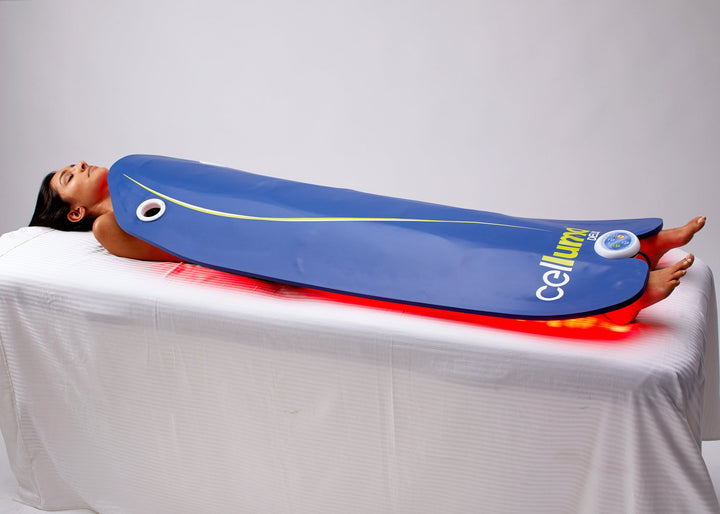
Featured image: Image from the Celluma collection.
The Celluma Journal · Updated
Regular movement, enough food and sleep, and attention to persistent fatigue provide a useful foundation for everyday energy. Mitochondria adapt to the demands placed on the body, but no universal “biohacking stack” is needed. Red light therapy belongs within a programme for a specific supported treatment goal, rather than as a replacement for these basics.
1. Build an aerobic routine you can sustain
Choose activity that suits your starting point: walking, cycling, swimming or another form of aerobic exercise. In a human exercise-training study, different training approaches produced distinct changes in muscle and mitochondrial function. That supports exercise as a meaningful biological stimulus, not a requirement for everyone to begin intense intervals.
2. Include strength work; 3. Progress gradually
Strength and endurance serve different everyday purposes. Make room for both when appropriate, and progress from a level you can recover from. A routine that leaves you repeatedly exhausted is not automatically a better mitochondrial routine. If activity causes disproportionate or prolonged symptom worsening, get advice before increasing it.
4. Eat enough; 5. Keep nutrition varied
Your body needs energy and nutrients to carry out its normal functions. Prioritise regular, varied meals that fit your needs, with sources of protein, fruit or vegetables and other nourishing foods. You do not need a restrictive fasting schedule to use an LED device or make positive changes to your everyday health.
Ordinary foods also provide the raw materials used throughout the body. There is no need to turn every meal into an attempt to manipulate a named molecular pathway. If a deficiency is suspected, identify it and address it with appropriate guidance instead of adding many supplements at once.
6. Protect your sleep; 7. Create room for recovery
Keep a reasonably consistent sleep opportunity and look for patterns that disrupt it. Consider when you use caffeine, how late you work and whether discomfort or snoring affects your nights. Fatigue has many possible causes, including sleep disorders and medicines. Persistently poor sleep deserves attention in its own right.
Recovery also needs space in your week. Alternating demanding and lighter days can make a routine easier to maintain. A brief evening wind-down, a walk or a manageable reduction in commitments may be more useful than adding a complicated performance ritual.
8. Be selective about supplements
CoQ10, PQQ and NAD-related products are often marketed together as mitochondrial essentials. A biological role or an intriguing early study is not proof that a supplement improves energy in every healthy person. Check the evidence for the product, your actual need and any medicine interactions before spending money on a stack.
If you are taking several products, keep a list of their ingredients and doses. This helps a pharmacist or clinician assess overlaps. Supplements are not a prerequisite for Celluma, and there is no established requirement to take them immediately before a light session.
9. Use light therapy for a defined goal
If you choose Celluma for wrinkles, acne, a supported pain application or another available programme, make that the purpose of your routine. Consistent use of a suitable mode is more meaningful than hoping for an undefined cellular upgrade. Read what “cellular energy” means in red light therapy before interpreting broad energy claims.
Position the model and use its timer as directed. There is no established post-session window in which exercise or supplements become mandatory to capture an ATP surge. Plan sessions around a routine you can comfortably repeat.
10. Investigate a persistent change in energy
Write down when fatigue began, whether it is worsening, what affects it and any accompanying symptoms. Share that pattern with a clinician if tiredness persists, is unexplained or interferes with daily life. Calling it mitochondrial decline can obscure a treatable cause.
For a supported skin or body treatment goal, the Celluma range offers different coverage and programme combinations. The team can help you choose a practical fit without turning your whole day into a treatment schedule.
Frequently asked questions
Can I diagnose low mitochondrial function from tiredness?
No. Fatigue is a symptom with many potential explanations. Its cause cannot be identified from a short online checklist or assumed from age alone.
Do I need high-intensity exercise?
Not everyone needs or tolerates high-intensity training. Start with appropriate activity and progress according to your health, fitness and recovery rather than a universal biohacking plan.
Are cold plunges or fasting essential?
No. Neither is necessary for a Celluma routine. Evaluate those choices separately according to your goals and circumstances instead of treating them as prerequisites for light therapy.
Can red light therapy replace sleep or nutrition?
No. Select a device for a supported treatment purpose and maintain the basics that help you function well. A light session does not supply nutrients or replace lost sleep.