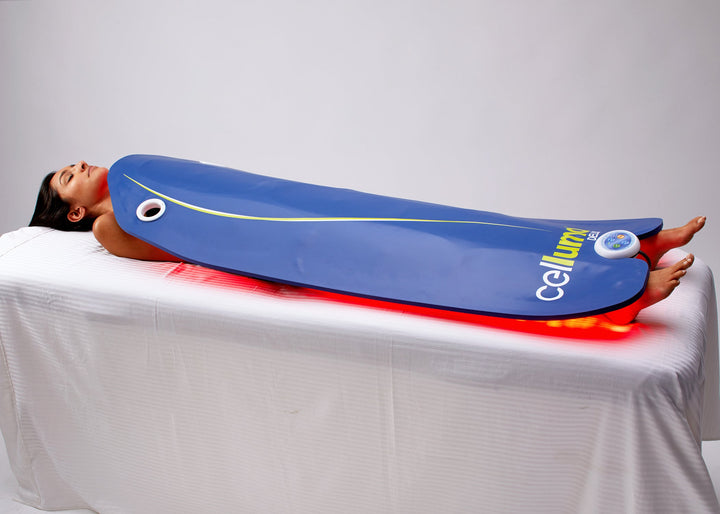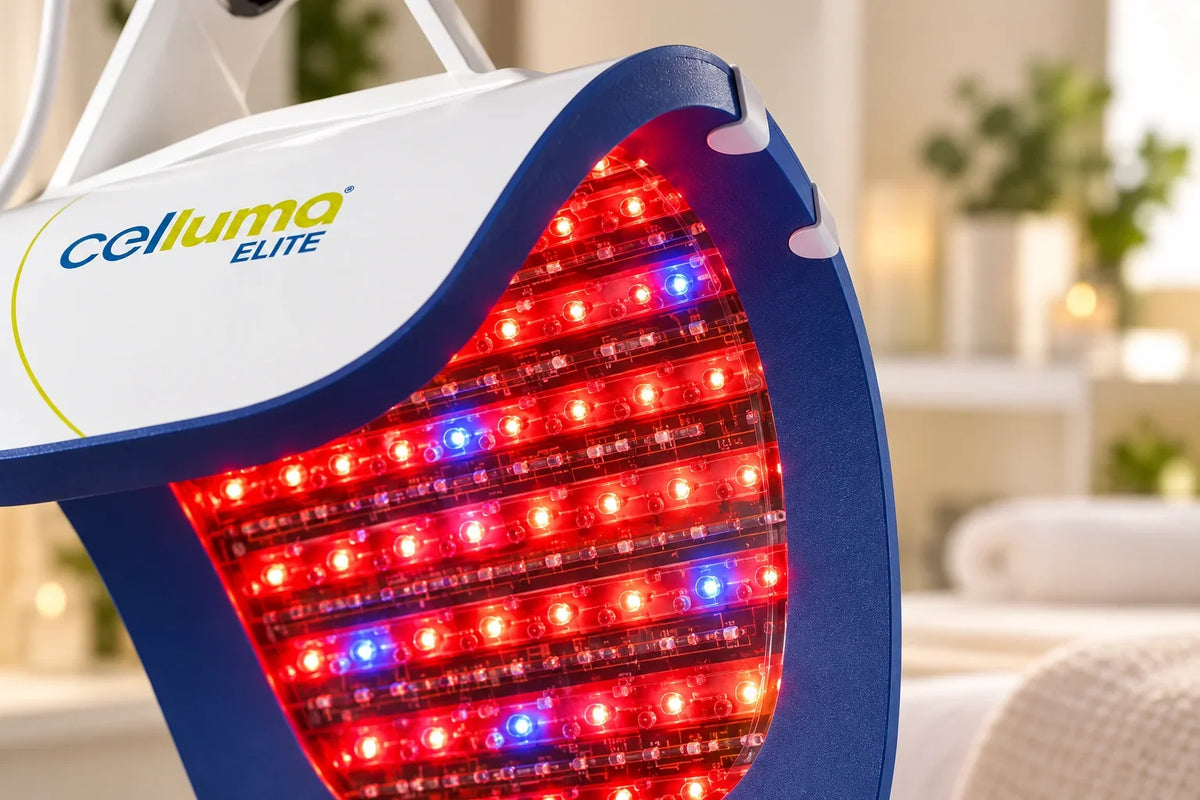
Featured image: AI-enhanced photograph.
The Celluma Journal · Updated
Red light therapy can influence the processes cells use to manage energy and respond to stress. This is one reason researchers study photobiomodulation for skin and other targeted applications. The practical benefit depends on the device, dose and condition being treated. A change in cellular energy is a scientific mechanism; a smoother complexion or improvement in a specific symptom is a clinical outcome that needs its own evidence.
What does “recharging your cells” actually mean?
“Recharge” is an analogy for changes in cell activity. It does not mean a light panel fills the whole body with energy in the way a charger fills a phone battery. Most human cells contain mitochondria, structures that help convert the energy in food into a usable chemical form. MedlinePlus explains their role in cellular energy production.
The molecule most often mentioned is ATP, or adenosine triphosphate. Cells continually make and use it for essential work. Muscle contraction, movement of substances across membranes and building new molecules all require energy. That background makes mitochondrial biology relevant to light research, without making every low-energy day a mitochondrial disorder.
How light can change cellular activity
During photobiomodulation, tissue absorbs some of the light delivered to it. Researchers investigate how this affects mitochondrial activity, chemical signalling and the response to cellular stress. Cytochrome c oxidase, an enzyme in the mitochondrial respiratory chain, is one proposed light-sensitive target. A review of mitochondrial redox signalling describes several interacting pathways.
These responses are sensitive to treatment conditions. Light of an appropriate wavelength still needs a suitable dose, treatment area and exposure schedule. A laboratory result obtained in isolated cells cannot tell an individual how much extra energy they will feel after a facial session. Nor does it establish a universal percentage increase in ATP.
Choose a visible or functional goal
A useful starting question is: what would you like to improve, and how will you recognise progress? If your goal is facial wrinkles, evaluate evidence and device instructions for wrinkles. For acne, check that the model offers an Acne programme. Hair treatment requires a dedicated Hair programme and an appropriate hair-loss diagnosis. The word “mitochondria” is not a substitute for these distinctions.
This makes the decision simpler. Compare a device’s intended use, treatment coverage and routine before comparing dramatic claims about cellular energy. Our guide to FDA terminology explains how to check the difference between a general scientific explanation and a cleared device indication.
What about fatigue or brain fog?
Feeling tired does not show that your mitochondria need a light treatment. Sleep disruption, medicines, illness and many other factors can contribute to fatigue. MedlinePlus recommends investigating fatigue that persists or is unexplained. A skin or pain device treats its specified indications; evidence for those uses does not establish a treatment for chronic fatigue, memory problems or neurological disease.
If your main goal is a supported skin application, keep your assessment focused on that goal. Record your starting point, follow the relevant programme and review changes over a sensible treatment course. If your main concern is ongoing exhaustion, arrange a clinical assessment rather than trying to diagnose ATP levels from how you feel.
Make the science useful in your routine
Celluma’s preset programmes put a defined light-delivery routine behind a specific treatment goal. You select an available mode and follow that model’s instructions. Use the current user manual for positioning, session length, eye guidance and frequency. More minutes or more sessions are not automatically more effective.
To explore the biology further, read what ATP does in the body. To choose your next step, browse the Celluma collection and ask the team to match the available programmes and treatment area to your priorities.
Frequently asked questions
Does red light therapy give instant energy?
A cellular response during exposure is different from feeling more alert. A facial red light session has a local treatment goal. An immediate or lasting boost in whole-body energy has not been established.
Is ATP the same as caffeine?
No. ATP is a molecule cells use to transfer energy. Caffeine is a stimulant with a different action. Discussing ATP in light therapy does not imply the same experience as drinking coffee.
Is mitochondrial support an FDA-cleared treatment?
Clearance concerns a particular device and its listed indications. General statements about mitochondrial support do not create a separate clearance for longevity, fatigue or cognitive enhancement.
How should I judge whether my routine is helping?
Track the outcome you selected the device for, using comparable photographs or a consistent symptom record. Use the programme as directed and review progress against that specific goal.