
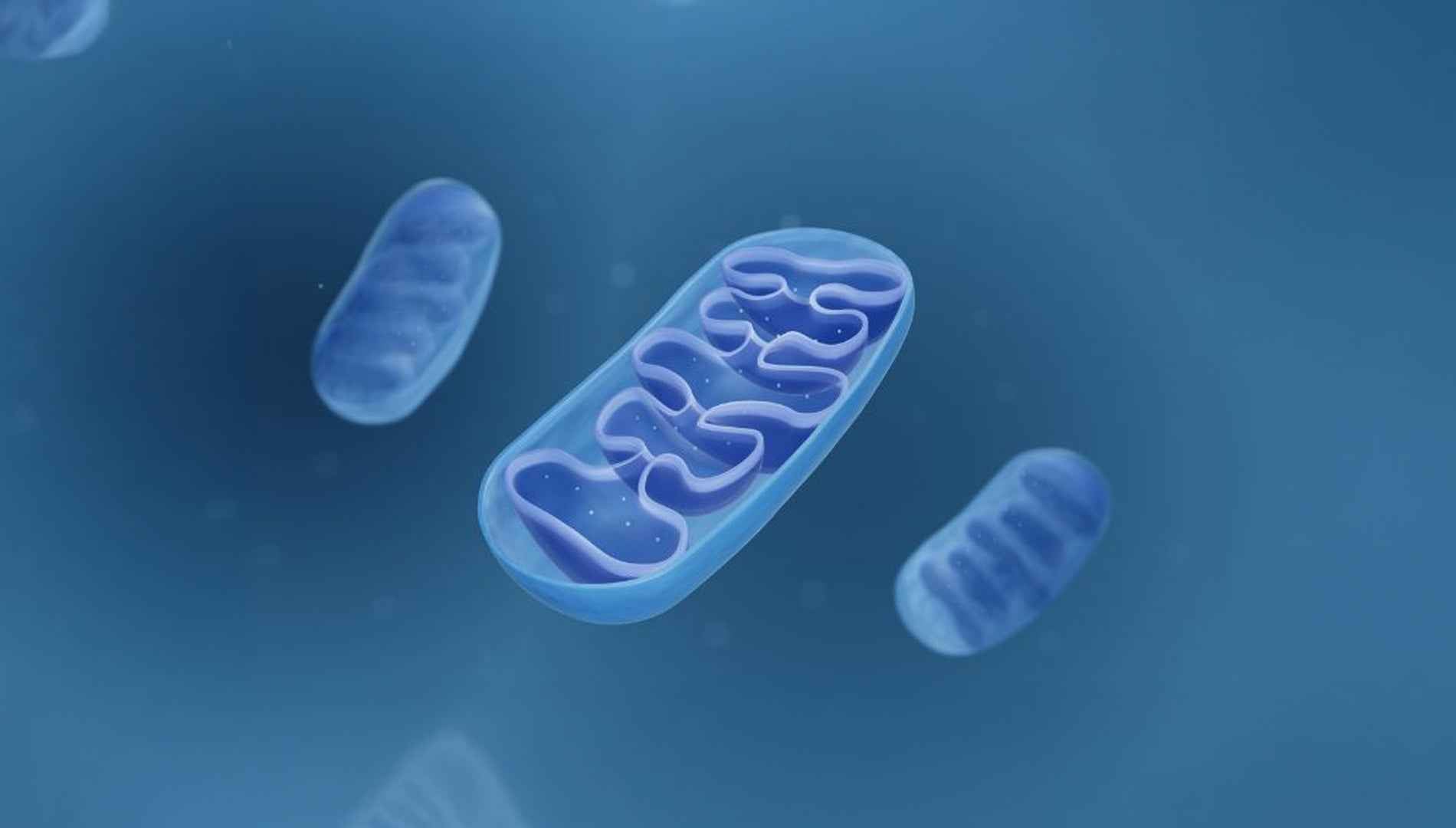
Mitochondria are the specialized power plants inside your cells. Their sole purpose: produce ATP (Adenosine Triphosphate) — the fuel powering all biological life. Aging is intrinsically linked to mitochondrial dysfunction and dropping ATP levels. Medical-grade red light at 640nm acts to restore this energy by targeting Cytochrome c Oxidase in the respiratory chain, jumpstarting the cell's ability to repair, synthesise collagen, and defend itself.
Mitochondria are specialised, membrane-bound structures found in almost every human cell. Depending on a tissue's specific energy requirements, a single cell can contain thousands of them.
Muscle cells are densely packed with mitochondria to continuously fuel physical movement. Dermal (skin) cells focus their mitochondrial energy entirely on barrier protection, collagen synthesis, and deep tissue repair — making mitochondrial health the direct upstream driver of how your skin ages.
Why ATP is Your Biological “Cash”
Without a steady, uninterrupted supply of Adenosine Triphosphate (ATP), cellular life simply ceases. The human body turns over approximately its own body weight in ATP every single day just to sustain baseline physiological function. This energy funds three critical biological sectors:
⚡ Mechanical Work
Powers vital physical functions: muscle contractions, nerve impulse firing, and your overall basal metabolic rate. Every heartbeat is an ATP expenditure.
🧬 Biosynthesis
Enables the construction of Collagen, Elastin, nucleic acids, and all proteins for tissue regeneration. No ATP = no collagen synthesis, regardless of topical products.
🛡️ Regulation
Maintains cellular homeostasis, powers ion pumps, and acts as an intracellular signalling molecule to deploy immune responses to injury and infection.
The Biochemistry of Energy Release
ATP is often compared to a fully charged battery. The energy is stored within the high-energy phosphoanhydride bonds connecting its three phosphate groups. When a cell needs fuel, it breaks the terminal phosphate bond in a process called Hydrolysis — releasing a large, usable burst of cellular energy:
ATP Hydrolysis Equation
Adenosine Triphosphate + Water → Adenosine Diphosphate + inorganic Phosphate + usable cellular energy (~7.3 kcal/mol under standard conditions)
Aging and the Energy Crisis
As we chronologically age, our “biological bank account” steadily depletes. Mitochondria lose their metabolic efficiency due to persistent Oxidative Stress and accumulated DNA damage — producing less ATP while simultaneously leaking more Reactive Oxygen Species (ROS) that compound the damage.
Mitochondrial Efficiency Decline by Age
💡 Mitochondrial Hack: Photobiomodulation
Topical skincare cannot solve an intracellular energy crisis. However, medical-grade light therapy utilises precise 640nm red and 880nm near-infrared wavelengths to physically penetrate the cell and target Cytochrome c Oxidase within the mitochondria.
This interaction displaces the Nitric Oxide blockade on CCO, restoring the respiratory chain, surging ATP bioavailability, and returning the cell to a highly productive, youthful state — at any age.
Bioenergetics Q&A
ATP (Adenosine Triphosphate) is the universal energy currency of the human cell. Every biological function — muscle contractions, nerve impulses, collagen synthesis, immune responses — is powered by the energy released when ATP is hydrolysed (ATP + H₂O → ADP + Pᵢ + Energy). The body turns over approximately its own body weight in ATP every day.
Mitochondria accumulate DNA damage and chronic Oxidative Stress as cells age, making them progressively less efficient at producing ATP. By age 50, mitochondrial efficiency can decline by up to 50%. This directly causes slower collagen synthesis, reduced tissue repair, increased fatigue, and diminished immune responses — all funded by ATP.
640nm red light is absorbed by Cytochrome c Oxidase (CCO) in the mitochondrial electron transport chain. It displaces Nitric Oxide that inhibits CCO, restoring oxygen binding, re-establishing the proton gradient, and triggering an ATP surge via ATP synthase. The mechanism is photochemical — it restores the cell's own production capacity.
ATP hydrolysis is the chemical reaction ATP + H₂O → ADP + Pᵢ + Energy. It breaks the high-energy phosphoanhydride bond connecting the third phosphate group, releasing ~7.3 kcal/mol of usable cellular energy. This reaction is the fundamental mechanism by which cells convert stored chemical energy into the work of sustaining life.
(1) Mechanical Work — muscle contractions, nerve impulses, cilia movement; (2) Biosynthesis — construction of Collagen, Elastin, nucleic acids, and all proteins for tissue regeneration; (3) Regulation — maintaining homeostasis, powering ion pumps (Na⁺/K⁺-ATPase), and signalling immune responses.
Dermal fibroblasts need ATP to power the TGF-β pathway for Collagen Type I and III synthesis. When mitochondrial dysfunction reduces ATP availability, fibroblast output slows — contributing to the ~1% annual collagen loss from age 25. Reduced ATP also impairs the skin barrier repair cycle and allows ROS-driven collagen fragmentation by MMP enzymes to proceed unchecked. Photobiomodulation directly restores fibroblast ATP.



Leave a comment
Trang web này được bảo vệ bằng hCaptcha. Ngoài ra, cũng áp dụng Chính sách quyền riêng tư và Điều khoản dịch vụ của hCaptcha.