
The LED Industry Audit:
Is Your Device Wasting Your Money?
“Brightness” is a marketing tactic. “Energy” is a clinical fact. Understanding the difference is the key to preventing wasted investment — and avoiding devices that actively fail to deliver.
The primary failure of unregulated LED devices is spec-padding — inflating irradiance (mW/cm²) at source while ignoring what reaches the tissue. Triggering ATP production and collagen synthesis requires specific wavelengths (640nm/880nm) at a sustained dose for 30 minutes. If a device uses off-peak LEDs or a rigid panel that cannot conform to skin, up to 90% of energy is lost to scattering and distance. The result is light without therapy.
4-Second Audit: Ask your device manufacturer three questions: (1) What is the FDA 510(k) K-number? (2) What is the irradiance measured at the skin surface? (3) What named clinical indications are on the clearance? If any answer is missing, you are buying a consumer gadget, not a medical device.
When you invest in red light therapy in Singapore or globally, you are buying a biological result — not a light bulb. But the lack of regulation in the “beauty gadget” sector has created a surge of devices that use misleading technical specifications to mimic the appearance of medical-grade hardware without delivering medical-grade outcomes.
⚠️ The 4 Pillars of Industry Deception
01. False Wavelength Targeting
Mitochondria operate on a strict “Lock and Key” mechanism — Cytochrome c Oxidase absorbs efficiently only at specific wavelengths. Consumer devices frequently use off-the-shelf LEDs peaking at 620nm or 670nm. While they appear red to the eye, they miss the CCO absorption peak at 640nm. The photons are scattered or pass through without triggering the photochemical cascade. Celluma's 640nm precision is calibrated directly to the chromophore target.
02. Irradiance Inflation
Manufacturers routinely measure irradiance (mW/cm²) directly at the LED chip — not at the skin surface during actual use. A device claiming 150mW/cm² may deliver 20–40mW/cm² at the tissue due to distance, optical diffusion, and panel design. High-power panels without Pulse Width Modulation (PWM) can additionally cause a Biphasic Dose Response — where excessive irradiance inhibits healing and increases oxidative stress rather than stimulating repair.
03. Inverse Square Law Violations
Physics is unambiguous: doubling the distance between a panel and skin reduces irradiance to one-quarter of its value. Rigid plastic masks and wall-hanging panels create air gaps over curved anatomy — cheekbones, forehead, jaw — where the Inverse Square Law systematically reduces therapeutic dose in the areas that typically need treatment most. A flexible medical device that conforms directly to the tissue is the only design that maintains clinical irradiance across all contours.
04. Missing Class II Clearances
Without FDA, CE, TGA, or Health Canada Class II clearance, a brand has no legal obligation to report device malfunctions, prove the device performs as claimed, or list the specific indications the device treats. “FDA registered” — the most common consumer brand claim — means only the facility is in a database. It is not a safety review, and it is not a clinical endorsement. If the brand cannot provide a verifiable K-number, the device is unreviewed.
🧪 Biological Yield Calculator
Estimate how much energy your device actually delivers to skin tissue — and whether it crosses the clinical biostimulation threshold.
Clinical Dose Calculator
Fluence = Irradiance × Absorption × Time. Threshold: 4–6 J/cm² (anti-aging) • 6–10 J/cm² (pain)Frequently Asked Questions
Four checks: (1) Verify the exact wavelength — 640nm red and 880nm NIR, not a range like 620–700nm; (2) Find the FDA K-number at accessdata.fda.gov — no K-number means no independent efficacy review; (3) Check the design — rigid panels create air gaps over curves and lose irradiance to the Inverse Square Law; (4) Confirm session duration — genuine biostimulation requires 30 minutes, not 3–10 minutes. If your device fails any of these, it is delivering light but not therapy.
Spec-padding is measuring irradiance (mW/cm²) at the LED chip surface rather than at the skin during actual use. A device claiming 150mW/cm² may deliver only 20–40mW/cm² at tissue surface. Since clinical outcomes depend entirely on irradiance at tissue depth, source-level specs are clinically meaningless. Always ask: “What is the irradiance measured at the skin surface during normal use?”
640nm for red (anti-aging, collagen, acne) and 880nm for near-infrared (pain, deep tissue, inflammation). These are the absorption peak wavelengths of Cytochrome c Oxidase. Even 20nm deviation significantly reduces photochemical response. Devices advertising “600–700nm broad red” cannot guarantee chromophore activation at a specific wavelength and cannot reliably deliver therapeutic outcomes.
No — they are completely different. FDA registered means the manufacturing facility is in a database. It says nothing about efficacy or safety for therapeutic use. FDA Class II 510(k) cleared means an independent reviewer confirmed the device is safe and effective for specific named indications. Always ask for the K-number, verify it at accessdata.fda.gov, and confirm the listed indications match what you are treating.
Three simultaneous failures: (1) Wrong wavelength — LEDs not calibrated to 640nm CCO peak; (2) Air gaps — rigid masks create distance over curved skin, reducing irradiance to 25–40% of rated output; (3) Insufficient dose — 3–10 minute sessions cannot deliver the 4–6 J/cm² fluence required for fibroblast activation. All three failures compound each other.
Fluence (J/cm²) = Irradiance at skin (mW/cm²) × Session duration (seconds) ÷ 1000. Use the calculator on this page to estimate your device's delivery based on device type and session length. The clinical anti-aging threshold is 4–6 J/cm². Flexible contact devices consistently reach this threshold; rigid and wall panels often do not when accounting for actual skin-surface irradiance.
Don't Gamble with Your Biology
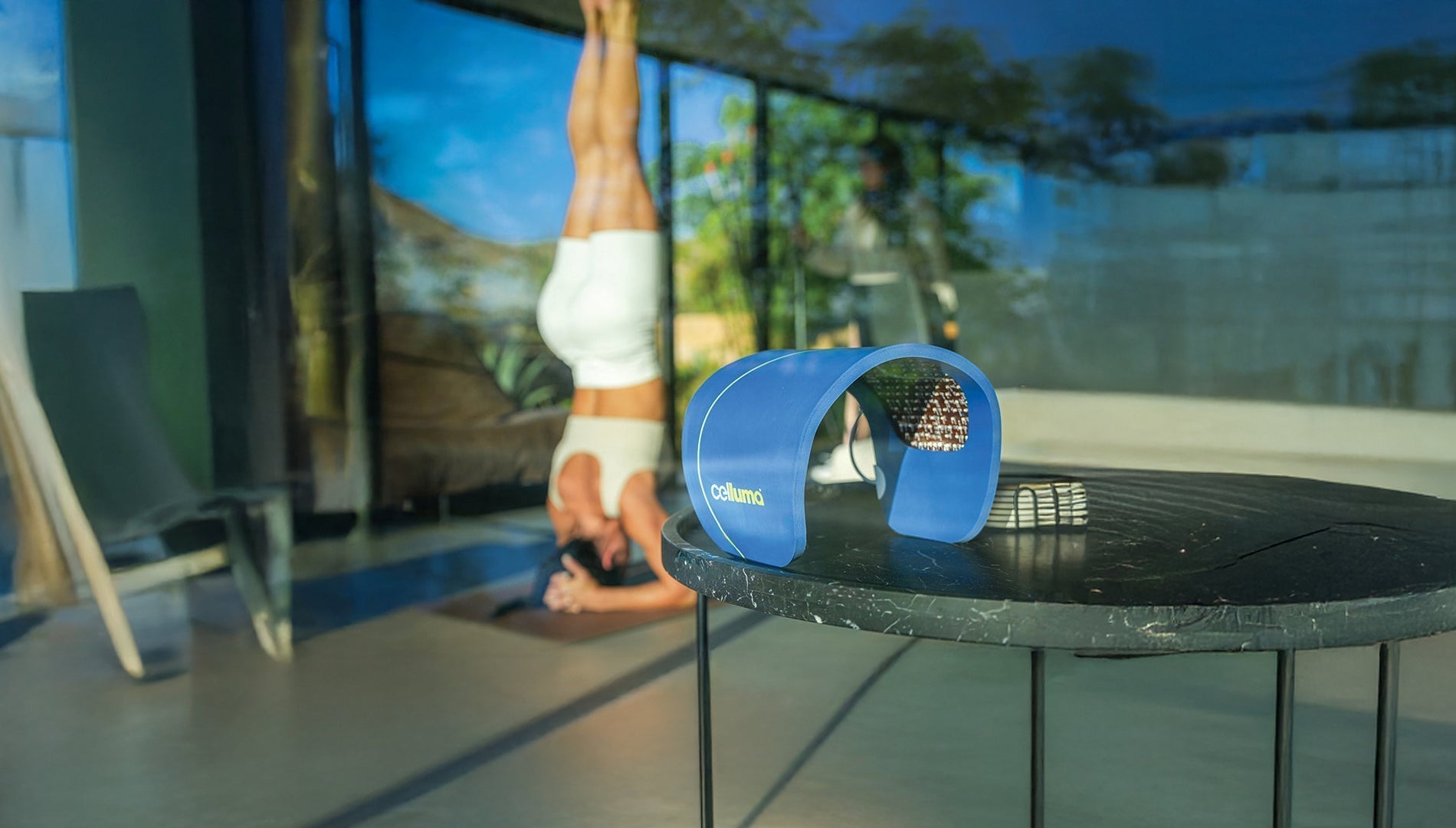
Switch to the medical-grade standard trusted by 10,000+ clinical professionals globally. FDA Class II cleared, flexible panel, 30-minute protocol.

Leave a comment
Trang web này được bảo vệ bằng hCaptcha. Ngoài ra, cũng áp dụng Chính sách quyền riêng tư và Điều khoản dịch vụ của hCaptcha.