
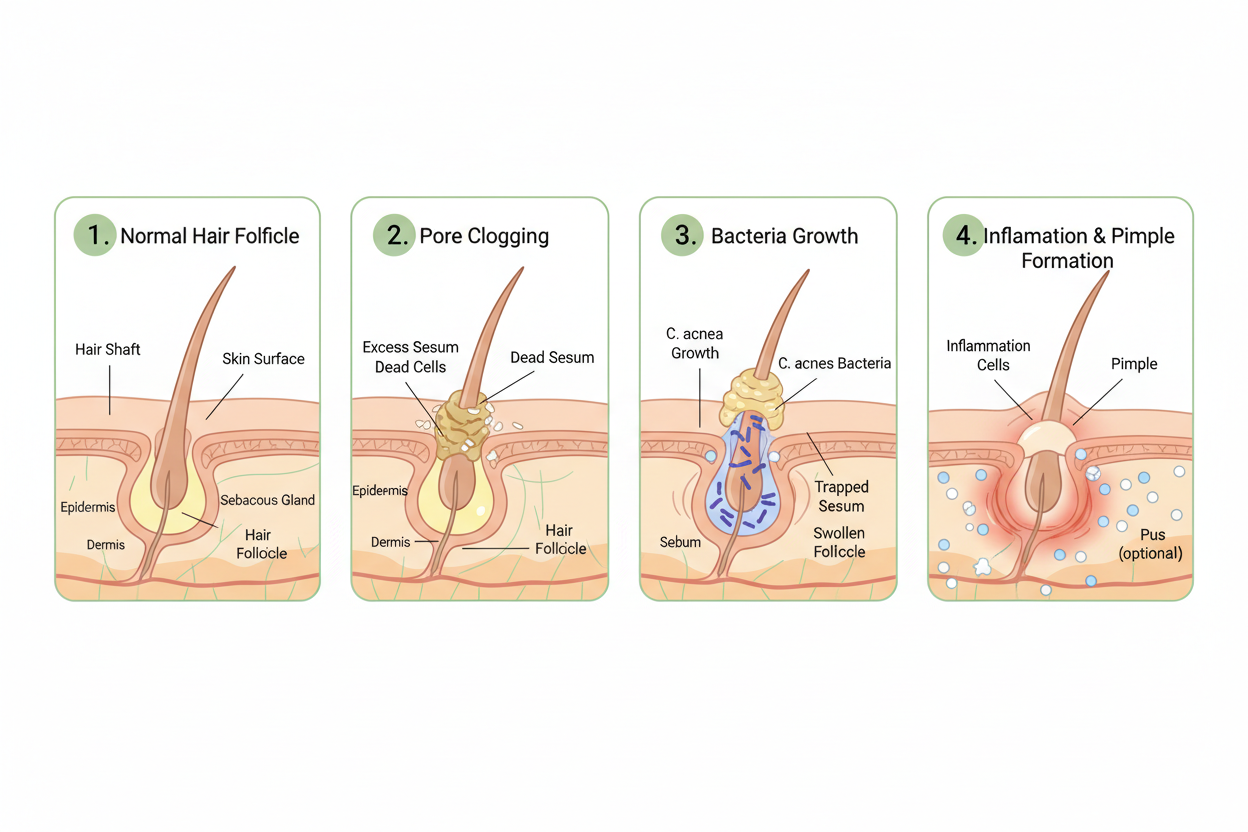
The same spots keep breaking out because P. acnes bacteria survive in your sebaceous glands between breakouts — they're never fully eliminated, just temporarily suppressed. Addressing the bacterial population consistently, combined with reducing sebum production and inflammation, is the only way to break the cycle. Blue light therapy at 465nm kills the bacteria that topicals can't fully reach.
Why Acne Keeps Coming Back: The Bacteria Are Still There
When a pimple "clears," the surface inflammation resolves — but the P. acnes bacterial colony in the sebaceous gland frequently survives. This is why the same spot breaks out again weeks later. Surface treatments only reach the top layers of the skin; the bacteria in the sebaceous duct repopulate and restart the inflammatory cycle.
Bacteria live in the sebaceous gland between breakouts. Surface treatments clear the pimple but leave the bacterial population intact to re-colonise.
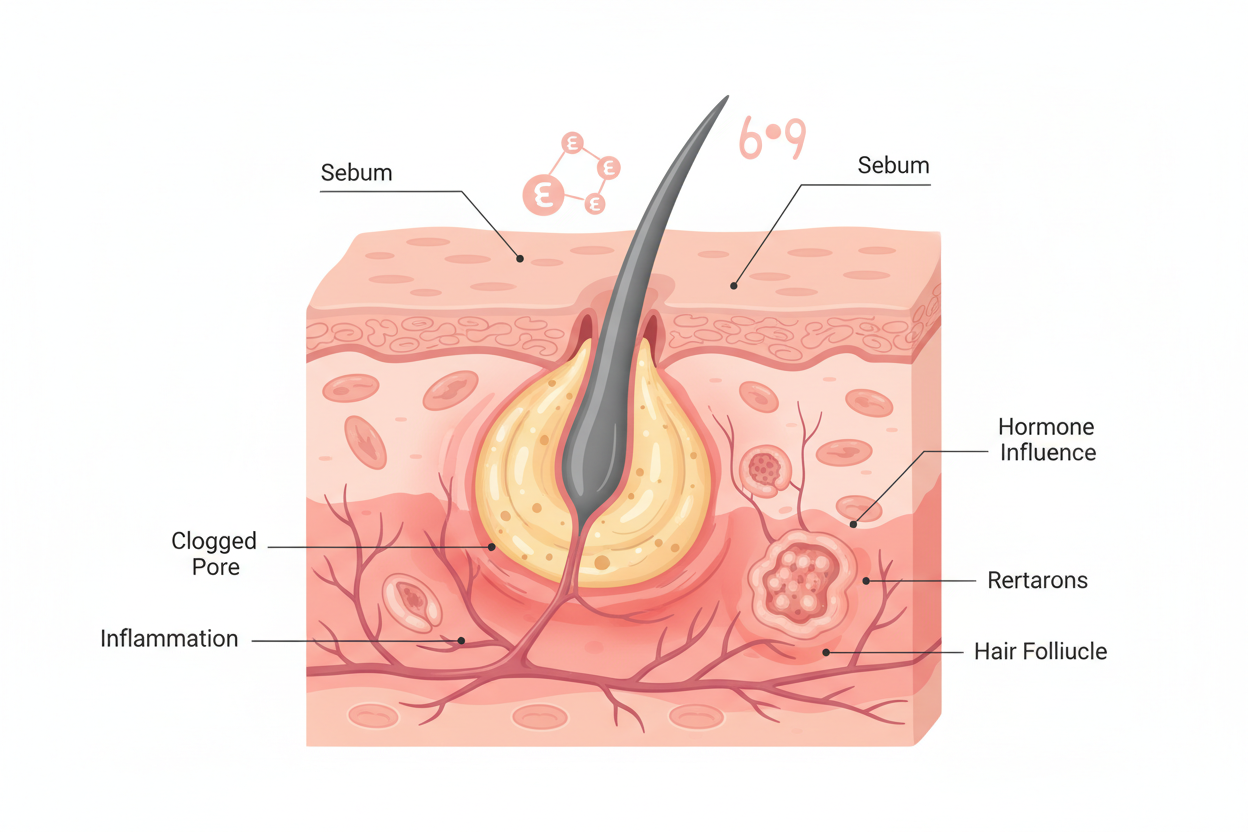
Overactive sebaceous glands provide the food source P. acnes needs to multiply. Hormones, stress, and diet all increase sebum.
When P. acnes multiply, the immune system activates, releasing cytokines that cause the redness, swelling, and pain of an inflamed pimple.
Surface treatment clears the lesion. Surviving bacteria recolonise. New lesion forms. The cycle repeats in 2-4 weeks.
Zone Mapping: What Your Breakout Location Means
Breaking the Cycle: The Dual-Wavelength Approach
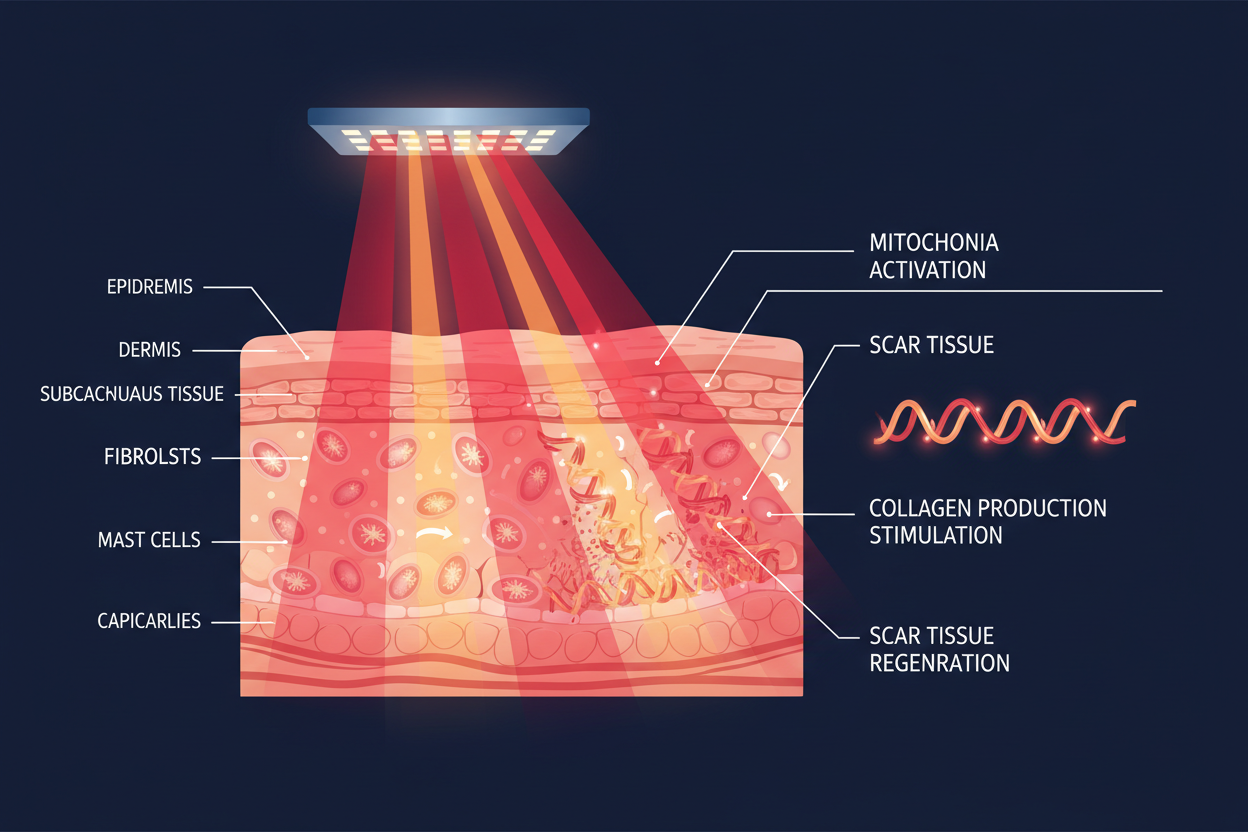
Breaking the acne cycle requires addressing both the bacteria and the inflammatory environment simultaneously. Targeting only one leaves the other to sustain the cycle. Celluma's multi-mode design delivers both 465nm blue (bacterial extinction) and 640nm red (inflammation reduction and barrier repair) — the clinical combination that addresses the full cycle.
How LED Therapy Breaks the Acne Cycle
Dual wavelength approach targeting both root causesQuestions & Answers
Pimples recur in the same location because the sebaceous gland feeding that follicle is persistently overactive or repeatedly colonised by P. acnes bacteria. The bacteria survive in the sebaceous gland and return once the surface inflammation clears. Zones of the face (chin, jawline, forehead) have higher concentrations of sebaceous glands, making them prone to repeated colonisation. Eliminating the bacterial population — not just the surface pimple — breaks the cycle.
Sudden breakouts almost always have a trigger: stress (cortisol increases sebum production), dietary change (high GI foods raise insulin which boosts androgens), new skincare product with comedogenic ingredients, climate change (Singapore's humidity increases pore congestion), hormonal fluctuation (menstrual cycle, contraceptive change), or sleep deprivation (raises inflammatory cytokines). Tracking your breakouts against these variables for 4 weeks usually reveals the trigger.
Cheek acne is commonly associated with: phone screen bacteria transferred to facial skin, dirty pillowcases (change weekly), comedogenic makeup or sunscreen, and habit of resting your face on your hands. Unlike chin and jawline acne (which is typically hormonal), cheek acne often has external contamination triggers. Cleaning your phone screen daily and switching to non-comedogenic products often produces significant improvement.
Not washing enough can contribute, but over-washing is equally problematic. Washing more than twice daily strips the skin's natural barrier lipids, triggering compensatory sebum overproduction — which feeds more P. acnes bacteria. The correct approach is gentle, twice-daily cleansing with a non-soap, pH-balanced cleanser that removes bacteria and excess oil without disrupting the acid mantle.
Yes — cortisol (the stress hormone) directly stimulates sebaceous glands to increase sebum production. More sebum provides more food for P. acnes bacteria. Stress also elevates systemic inflammatory markers, making existing acne more inflamed and slower to heal. This is why breakouts often worsen during exam periods, work deadlines, or emotional upheaval. Red light therapy's ability to reduce pro-inflammatory cytokines (IL-1α) directly addresses the inflammation component of stress acne.
Consistent use of blue and red LED therapy addresses both the bacterial cause (465nm kills P. acnes) and the inflammatory environment (640nm reduces IL-1α cytokines that drive sebaceous overactivity). Multiple clinical studies show significant reduction in acne recurrence with sustained 3-4x per week LED protocols. Blue light is specifically effective at maintaining a low P. acnes population in the sebaceous follicles — preventing the bacterial colonisation that triggers new lesions.

Leave a comment
เว็บไซต์นี้ได้รับการคุ้มครองโดย hCaptcha และมีการนำนโยบายความเป็นส่วนตัวของ hCaptcha และข้อกำหนดในการใช้บริการมาใช้