
Red Light Therapy for Eczema: The Anti-Inflammatory Mechanism That Calms Skin at the Cellular Level
Eczema is driven by cytokine-mediated inflammation. Red light therapy (640nm + 880nm) downregulates IL-4, IL-13 and TNF-alpha — calming flares without steroids or UV.
Eczema — clinically known as atopic dermatitis — is not simply dry, irritated skin. It is a chronic inflammatory disease driven by a dysregulated immune response in which the body's own cytokines attack the skin barrier, creating a self-perpetuating cycle of inflammation, itch, and damage. Understanding this mechanism is what makes red light therapy a logical and clinically supported intervention — and distinguishes it from topical treatments that manage symptoms without addressing the underlying immune cascade.
The Inflammatory Mechanism Behind Eczema
Eczema flares are orchestrated by specific inflammatory signalling molecules called cytokines. In atopic dermatitis, the immune system overproduces Th2-pathway cytokines — particularly IL-4, IL-13 and IL-31. IL-31 is the primary driver of itch. IL-4 and IL-13 disrupt the skin barrier by suppressing the production of filaggrin, the structural protein that holds epidermal cells together and prevents water loss and allergen penetration.
The result is a compromised skin barrier that allows irritants in, triggers further immune activation, releases more inflammatory cytokines, and deepens the barrier damage. TNF-alpha and IL-6 amplify the systemic inflammatory load. The skin becomes chronically inflamed, hypersensitive, and structurally weak.
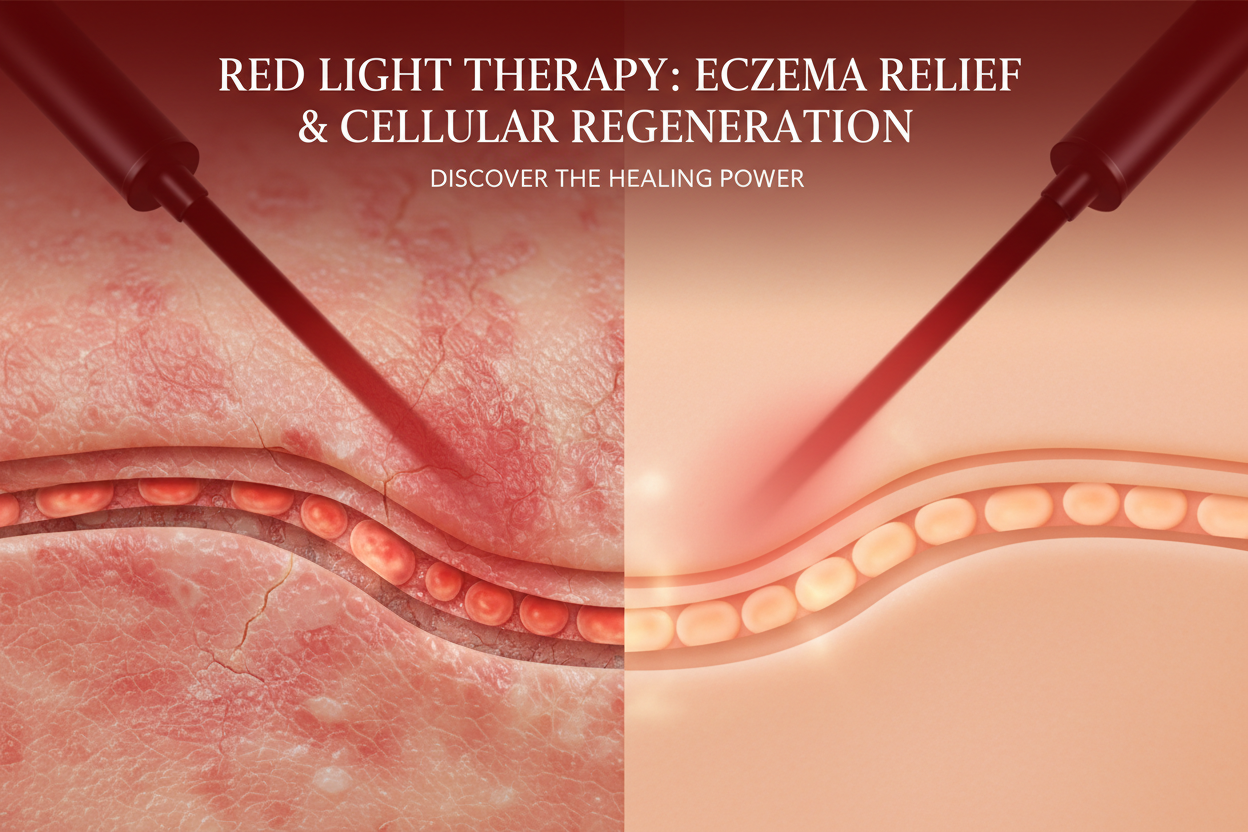
Red light therapy (640nm + 880nm) intervenes at the cytokine level. By activating Cytochrome c Oxidase in skin immune cells and fibroblasts, it produces an ATP surge that modulates NF-κB — the master regulator of inflammatory gene expression. This downregulates IL-4, IL-13, IL-31 and TNF-alpha, reducing both the itch signal and the barrier-disrupting inflammation. Simultaneously, fibroblast activation improves collagen and filaggrin-supporting structural proteins, helping to repair the compromised barrier over time.
Why Both 640nm and 880nm Matter for Eczema
Targets surface inflammatory cells, reduces visible redness and itch signals. Activates fibroblasts to produce structural proteins that repair the skin barrier. Most effective for surface eczema symptoms.
Reaches deeper inflammatory tissue and modulates systemic cytokine production at a deeper level. Reduces TNF-alpha and IL-6. Important for chronic eczema where inflammation extends below the epidermis.
Why Red Light Therapy Is Safe for Sensitive Eczema Skin
Eczema-prone skin is particularly reactive to heat, UV, and chemical exposure — the very mechanisms used by many other light-based treatments. Red light therapy at 640nm and 880nm is non-thermal (no heat damage), non-ionising (no UV radiation), and non-ablative (no tissue removal). The mechanism is photochemical — a molecular event in the mitochondria, not a thermal or radiation event in the tissue.
This makes it one of the few light-based interventions suitable for the compromised, hypersensitive skin of active eczema. There is no purging period, no photosensitivity risk, and no exacerbation of barrier damage.
Protocol: Using Celluma for Eczema
What to Expect and When
Celluma Devices for Eczema
Frequently Asked Questions
Yes. Clinical studies show red light therapy reduces the inflammatory cytokines (IL-4, IL-13, IL-31, TNF-alpha) that drive eczema flares. By activating Cytochrome c Oxidase in skin immune cells, it produces ATP that modulates NF-κB — the master regulator of inflammatory gene expression. This reduces both the itch signal and the barrier-disrupting inflammation. Results are cumulative and most measurable at 4–8 weeks of consistent use.
Red light therapy activates Cytochrome c Oxidase in mitochondria, producing an ATP surge that modulates the NF-κB inflammatory pathway. This downregulates Th2 cytokines including IL-4, IL-13 and IL-31 — the primary drivers of eczema itch and barrier disruption. It also reduces TNF-alpha and IL-6, which amplify the systemic inflammatory load. The mechanism is photochemical, not thermal — no heat damage to already-compromised skin.
Yes. Red light therapy at 640nm and 880nm is non-thermal (no heat), non-ionising (no UV), and non-ablative (no tissue removal). This makes it one of the few light-based interventions suitable for the hypersensitive, compromised skin of active eczema. There is no purging period, no photosensitivity risk, and no exacerbation of barrier damage. FDA-cleared devices like Celluma have demonstrated safety and efficacy through clinical trials.
Itch reduction is typically noticeable within the first 1–2 weeks of daily sessions. Visible redness and flare frequency begin improving at 3–6 weeks. Measurable skin barrier repair (improved moisture retention, reduced sensitivity) occurs at 8–12 weeks of consistent use. Daily sessions during active flares, reducing to 3–5 times per week for maintenance, produces the best outcomes.
Red light therapy is a powerful adjunct to eczema management, not an immediate replacement for prescribed treatments. It addresses the underlying inflammatory mechanism rather than just suppressing symptoms. Many consistent users report reduced reliance on topical steroids over time as their baseline inflammation decreases — but this transition should always be managed with medical guidance from a dermatologist.
Both 640nm (red) and 880nm (near-infrared) are beneficial for eczema. 640nm targets surface inflammation in the epidermis and upper dermis (4–6mm) — most effective for visible redness, itch signals, and fibroblast-driven barrier repair. 880nm penetrates deeper (6–30mm) to address the systemic cytokine production that drives chronic inflammation below the surface. Celluma delivers both simultaneously in one 30-minute session.
Yes — and flares are actually when red light therapy is most beneficial. The anti-inflammatory mechanism targets the exact cytokine cascade that causes flares. Daily sessions during a flare help reduce the intensity and duration. The non-thermal, non-UV mechanism means there is no risk of exacerbating the sensitised skin the way heat or UV-based treatments might.
Yes. Facial eczema responds well to red light therapy. The Celluma MYSTIQUE mask delivers 640nm + 880nm to the full face and scalp simultaneously, making it particularly suitable for facial atopic dermatitis and seborrhoeic eczema affecting the hairline and scalp. The flexible panel maintains zero-gap contact with facial contours for maximum light delivery.
Experience Clinical Results.
FDA-cleared devices for real conditions.
Explore Celluma — calibrated to the exact wavelengths your cells respond to.


Leave a comment
เว็บไซต์นี้ได้รับการคุ้มครองโดย hCaptcha และมีการนำนโยบายความเป็นส่วนตัวของ hCaptcha และข้อกำหนดในการใช้บริการมาใช้