
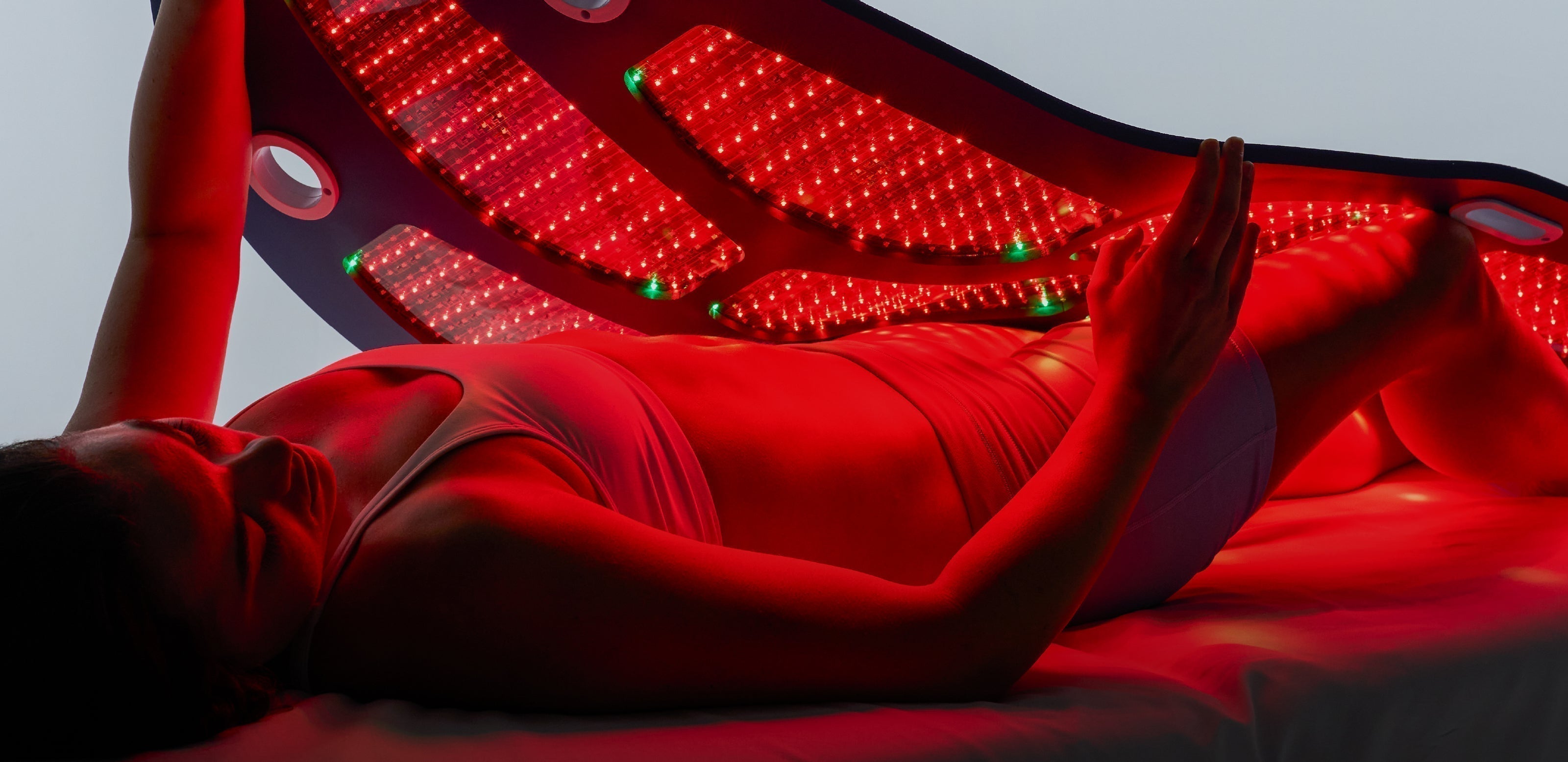
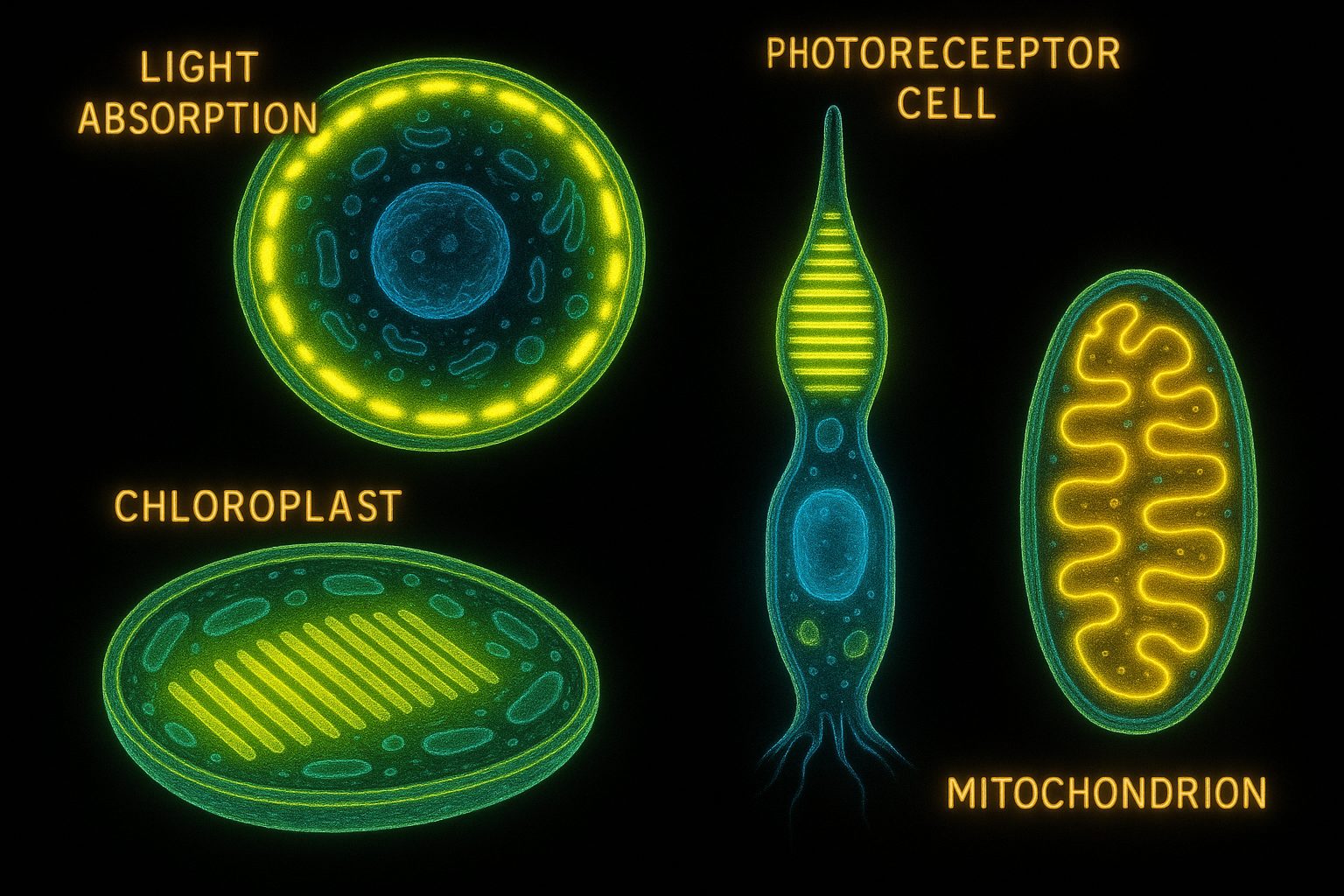
Chromophores are the biological locks inside your cells. Cytochrome c Oxidase in mitochondria absorbs 640nm and 880nm light to surge ATP production. Porphyrins in P. acnes bacteria absorb 465nm blue light to trigger singlet oxygen bacterial extinction. When a photon's energy — governed by the Planck-Einstein relation (E = hc/λ) — exactly matches a chromophore's absorption peak, the lock opens and healing begins.
This biological “Lock and Key” mechanism is the exact reason why medical-grade LED light therapy is profoundly effective — and entirely distinct from ambient sunlight. Instead of broad-spectrum UV rays, Photobiomodulation delivers therapeutic wavelengths in precise clinical doses that match known cellular absorption peaks.
The consequences of wavelength imprecision are total. A consumer device emitting 700nm instead of the clinically validated 640nm produces photons whose energy does not match the Cytochrome c Oxidase absorption peak — so cells receive no energetic signal, no ATP surge, no collagen synthesis. The light glows red. Nothing happens inside your dermis.
The Three Pillars of Photobiomodulation
Decades of peer-reviewed clinical research have verified three specific wavelengths that precisely correspond to known human cellular chromophores. Not “approximately” — exactly. Here is what each one does and why it cannot be substituted:
The Physics of the Lock and Key
Why does wavelength accuracy matter so precisely? It is governed by the Planck-Einstein relation — one of the foundational equations of quantum physics:
The Planck-Einstein Relation
A chromophore only absorbs a photon if its energy (E) exactly matches the molecule's energy gap. If the wavelength (λ) is off by even a few nanometres, the photon passes through without triggering any biological response.
📊 Interactive Chromophore Simulator
Drag the slider across the light spectrum to see which wavelengths open biological chromophore locks — and which miss entirely:
The Lock and Key Simulator
Slide to explore the spectrum (400–900nm) · three wavelengths open biological locksWhy Precise Wavelength is Non-Negotiable
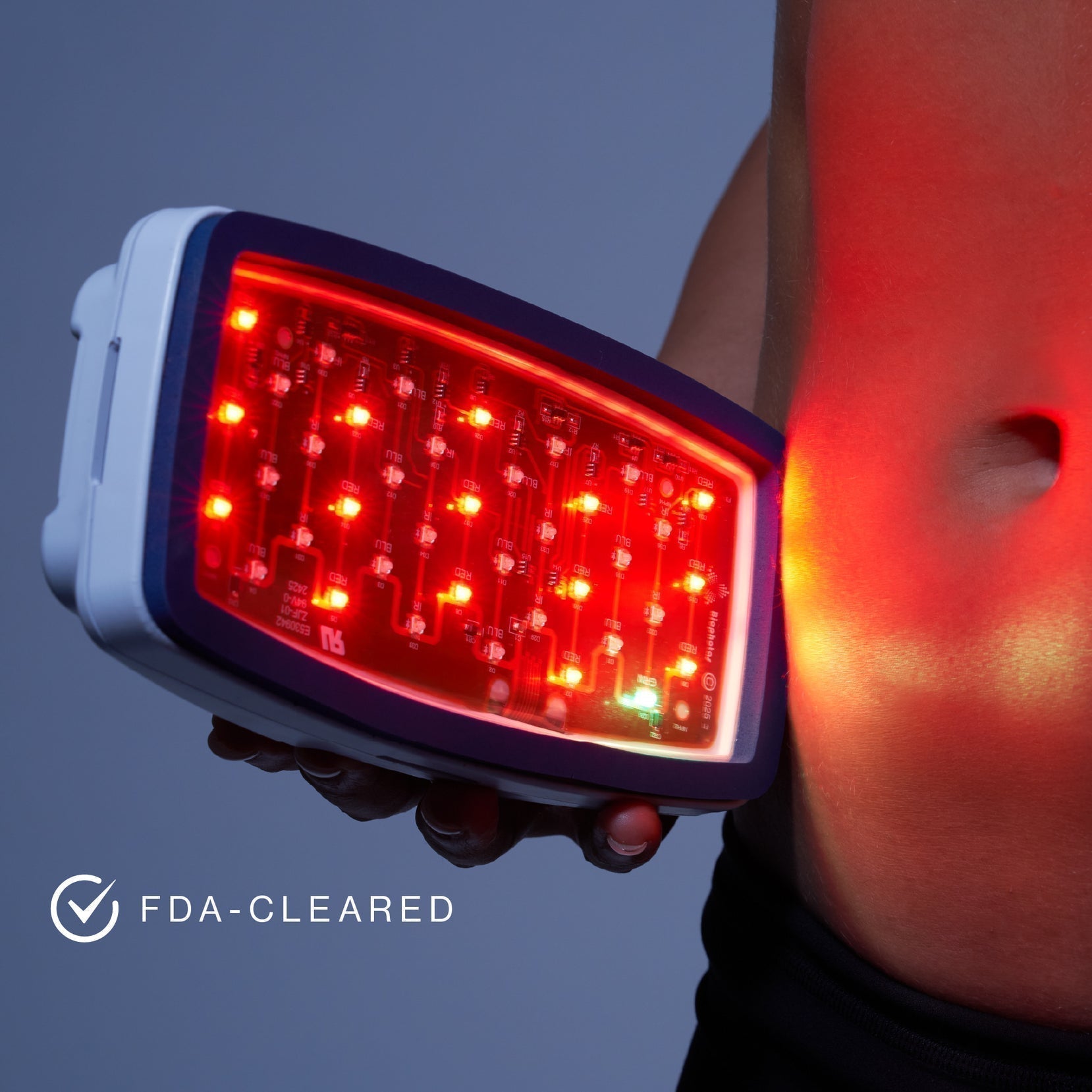
Not all LEDs are clinically equal. If a generic consumer device emits light at 700nm instead of the clinically validated 640nm, the chromophores simply will not absorb it — the photon energy does not match the CCO molecular gap. You might see a bright red glow, but your cells receive no energetic signal to repair. This is exactly why FDA Class II Medical Device clearance is essential — it guarantees absolute wavelength accuracy and irradiance sufficiency at the tissue surface.
Chromophore & Wavelength Q&A
Chromophores are light-absorbing molecules within cells that act as biological “locks.” Cytochrome c Oxidase in mitochondria absorbs 640nm and 880nm light to surge ATP. Porphyrins in P. acnes bacteria absorb 465nm to trigger bacterial extinction. When a photon's energy exactly matches the chromophore absorption peak, it triggers the photochemical healing response.
Governed by the Planck-Einstein relation (E = hc/λ), photon energy is determined entirely by wavelength. A device emitting 700nm instead of 640nm produces photons that don't match the CCO absorption peak — cells receive no signal to repair. This is why FDA Class II clearance, which validates wavelength accuracy, is the essential differentiator.
465nm is absorbed by porphyrins produced by P. acnes bacteria. This triggers a photodynamic reaction producing Singlet Oxygen (¹O₂) inside the bacterial cell, causing oxidative cell wall destruction. Human skin cells, which don't produce bacterial porphyrins, are completely unaffected.
640nm is absorbed by Cytochrome c Oxidase in dermal fibroblast mitochondria. It displaces Nitric Oxide inhibition on CCO, restoring the electron transport chain and triggering an ATP surge that powers the TGF-β pathway for Collagen Type I and III synthesis. Penetration depth: 4–6mm into the dermis.
880nm is invisible to the eye and penetrates 6–10mm — reaching subcutaneous muscle, joint capsules, and connective tissue. It stimulates mitochondrial activity at depth, down-regulates IL-1β and TNF-α, increases local nitric oxide for vasodilation, and accelerates recovery from chronic pain, sports injuries, and post-surgical trauma.
No. Consumer LED bulbs lack wavelength precision and irradiance sufficiency. The Lock and Key mechanism requires photons at exactly 640nm, 465nm, or 880nm at sufficient fluence (4–10 J/cm² at tissue surface). Off-target wavelengths produce no photochemical cellular response. FDA Class II clearance verifies both wavelength accuracy and irradiance sufficiency.

Leave a comment
เว็บไซต์นี้ได้รับการคุ้มครองโดย hCaptcha และมีการนำนโยบายความเป็นส่วนตัวของ hCaptcha และข้อกำหนดในการใช้บริการมาใช้