
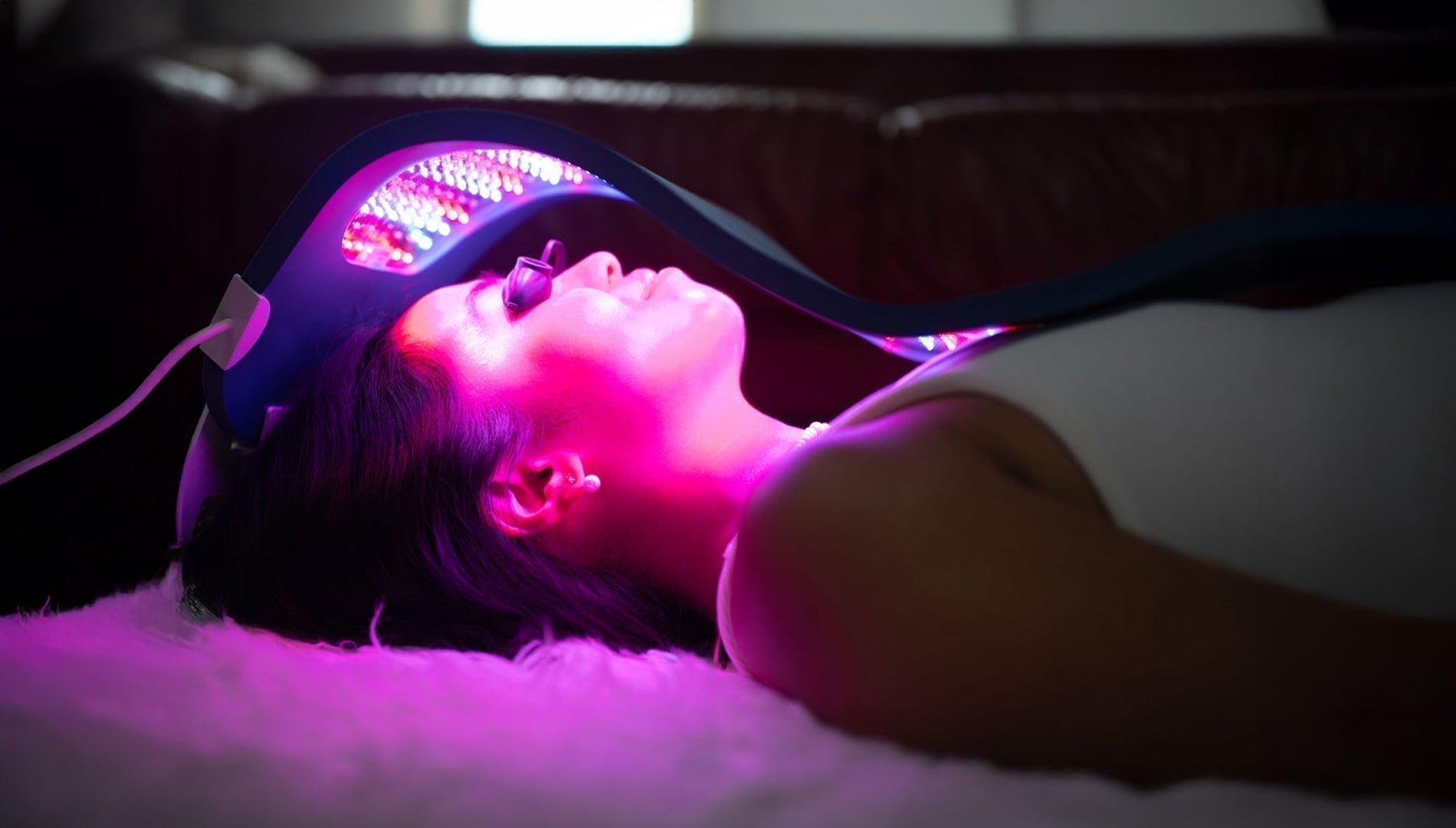
How Red Light Therapy Activates Fibroblasts
to Build Collagen, Elastin
& Reverse Wrinkles
Every wrinkle is a fibroblast problem. Fibroblasts are the cells in your dermis that build collagen and elastin. As they age, slow down, or operate in an inflamed environment, the structural matrix of your skin deteriorates. Red light therapy directly reactivates them — this is the complete clinical explanation.
Red light therapy (640nm) directly activates fibroblasts — the dermal cells responsible for producing collagen and elastin — by increasing ATP production via Cytochrome c Oxidase. More ATP means fibroblasts build more structural protein. Near-infrared (880nm) also reduces the chronic inflammation that degrades the collagen matrix. Together they address the two root causes of skin ageing: declining fibroblast energy and inflammaging.
The word wrinkle describes a visual event. But the biological event is more specific: a fibroblast that is no longer producing enough collagen and elastin to replace what degrades. Understand the fibroblast — what it is, what it needs, what stops it working — and you understand precisely why red light therapy produces the anti-aging results it does, and why nothing topical can replicate it.
This article goes one level deeper than the standard explanation of "red light increases collagen." It explains the cell doing the building, the structural matrix it maintains, the inflammation that attacks that matrix, and the molecular chain from light to structural protein.
What Are Fibroblasts — and Why Do They Determine How Old Your Skin Looks?
Fibroblasts are specialised connective tissue cells found in the dermis — the deep layer of skin below the epidermis. They are the primary architects of what is called the extracellular matrix (ECM): the structural scaffold that fills the space between cells and gives skin its firmness, elasticity, and volume.
From age 25, fibroblast activity begins to decline. Collagen production falls by approximately 1% per year. By age 45, a person has produced roughly 20% less structural collagen than at their peak. This is not a topical problem. It is a cellular problem — and it is why topical products cannot reverse structural skin ageing.
Fibroblast output declines progressively. Here is the collagen production index relative to peak (age 25):
Peak
Mild loss
Visible ageing
Significant loss
Severe deficit
The Extracellular Matrix — the Three-Protein Structural Scaffold Red Light Rebuilds
Fibroblasts maintain three primary proteins in the ECM. Red light therapy activates fibroblasts to increase production of all three, though collagen and elastin show the most measurable clinical response.
- Dermis dry weight
- Structural support and volume
- Types I & III primary targets of red light
- ~1% annual loss from age 25
- Skin recoil and elasticity
- Cannot be replaced once lost
- Loss = sagging, jowling, laxity
- Red light upregulates elastin gene expression
- Binds water between fibres
- Creates skin plumpness and volume
- Decline = dehydrated, crepe-like texture
- LED improves nutrient delivery to fibroblasts
How Red Light Therapy Activates Fibroblasts — The Molecular Chain
The mechanism is not metaphorical. Each step in the chain from light to collagen is a specific, documented molecular event.
640nm Photons Penetrate to the Dermis
Red light at 640nm has sufficient energy to penetrate 4–6mm below the skin surface — reaching the fibroblast layer in the dermis. This is the depth that no topical product reaches. It is also why proximity matters: even 1–2cm of gap between LED and skin reduces delivered irradiance by more than 75% (Inverse Square Law).
Cytochrome c Oxidase Absorbs the Photons → ATP Surge
Photons are absorbed by Cytochrome c Oxidase (CCO) in the fibroblast mitochondrial respiratory chain. This displaces inhibitory Nitric Oxide, unblocking the electron transport chain and producing a 200–400% increase in ATP production — the fibroblast's energy source for protein synthesis.
ATP Powers Collagen & Elastin Gene Transcription
With more cellular energy available, fibroblasts upregulate the transcription of collagen Type I, Type III, and elastin genes. They also increase secretion of TGF-β1 (transforming growth factor) — a signal that commands neighbouring fibroblasts to also increase structural protein output.
Vasodilation → Raw Materials Delivered
Nitric oxide released during the process dilates local blood vessels, increasing capillary perfusion to the dermis. Fibroblasts receive more proline, glycine, and hydroxyproline — the amino acid building blocks of collagen — directly from the bloodstream.
ECM Remodelling — Collagen Fibres Reorganised
New collagen fibres are not just added in volume — they are reorganised into more structured, cross-linked fibre networks. This is why red light therapy improves both skin density (from more collagen) and skin texture (from better collagen organisation). Fragmented, disorganised collagen — characteristic of aged skin — is replaced with organised, dense new fibres.
Inflammaging: The Hidden Reason Your Collagen Keeps Degrading
Most anti-aging discussions focus on building more collagen. Fewer address the parallel problem: collagen is being actively destroyed faster than fibroblasts can replace it — and the driver is chronic low-grade inflammation, a condition trichologists and dermatologists call inflammaging.
Inflammatory mediators — specifically matrix metalloproteinases (MMPs) — are enzymes that break down collagen and elastin. In chronically inflamed skin, MMP activity is elevated persistently. This means new collagen is synthesised but immediately degraded before it can integrate into the ECM scaffold.
- Elevated MMP activity
- Collagen degraded as fast as built
- Fibroblasts in low-energy state
- Chronic cytokine signalling
- Net collagen loss each cycle
- MMP activity downregulated
- New collagen integrates and persists
- Fibroblasts ATP-energised
- Anti-inflammatory cytokines dominant
- Net collagen gain each cycle
Red Light vs Other Collagen-Stimulating Treatments
| Factor | Topical Retinol / Creams | Red Light Therapy (Celluma) |
|---|---|---|
| Penetrates to Dermis | ✗ Epidermis only | ✓ 4–6mm deep |
| Directly Activates Fibroblasts | ✗ | ✓ Via ATP surge |
| Builds Collagen Type I & III | Indirectly, surface only | ✓ Dermal level |
| Builds Elastin | ✗ | ✓ |
| Reduces MMP (Inflammaging) | Limited | ✓ Near-infrared 880nm |
| ECM Reorganisation | ✗ | ✓ |
| Irritation / Side Effects | Common (retinol) | None known |
| FDA Clearance | Cosmetic only | ✓ Class II Medical |
| Best Strategy | Combine — apply serums post-LED session when fibroblasts are in their peak receptivity window (24–48 hours post-treatment) | |
How to Maximise Your Fibroblast Response — 6 Protocol Tips
The biology is fixed — the session is the session. But several variables within your control meaningfully affect how well your fibroblasts respond to each treatment.
Zero-Gap Contact — No Exceptions
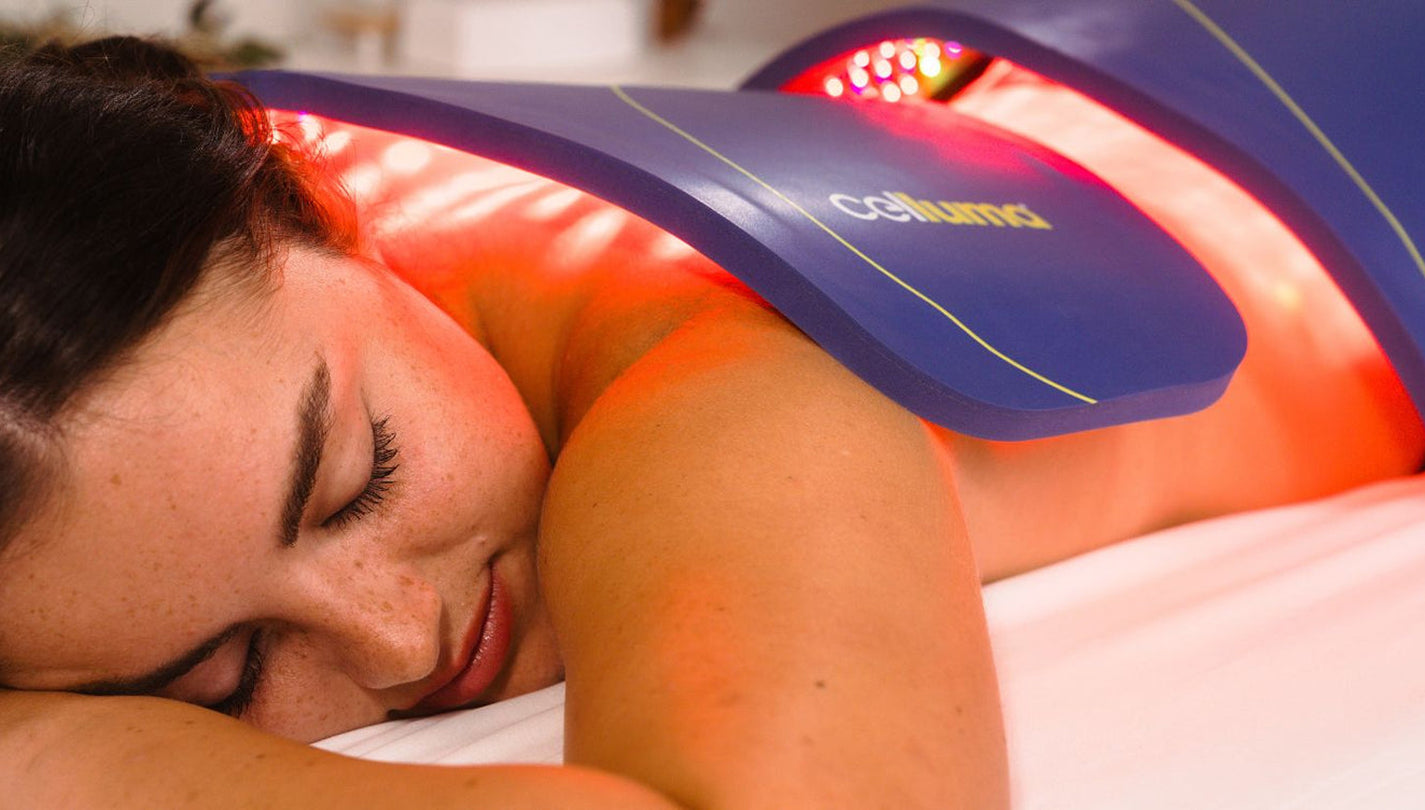
Irradiance follows the Inverse Square Law: doubling the distance reduces energy to one quarter. The flexible Celluma panel must contour flush against the skin. Even 1cm of gap meaningfully reduces fibroblast activation depth.
Clean, Dry Skin Before Each Session
Sunscreen, thick creams, and makeup create a scattering layer that reduces light penetration. Bare, dry skin maximises the photons reaching the dermis.
Apply Actives Post-Session, Not Before
Fibroblast activity peaks 24–48 hours post-treatment. Applying vitamin C serum, peptides, or hyaluronic acid immediately after a session takes advantage of elevated cellular receptivity — not before, which blocks light transmission.
Daily Use Compounds Results
Consistent daily sessions create an overlapping cycle of fibroblast activation. A session started today extends into tomorrow's peak activity window — intersecting with a new session for compounding effect.
Hydrate Systemically
Good systemic hydration improves blood viscosity and lymphatic function — both of which affect how efficiently amino acids and oxygen reach fibroblasts in the dermis post-session.
Reduce Background Inflammation
High-sugar diet, alcohol, sleep deprivation, and chronic stress all elevate MMP activity — degrading the collagen your fibroblasts build. Reducing these inputs amplifies visible LED results.
Which Celluma Device Activates Fibroblasts Best?
All Celluma devices with the anti-aging mode deliver the 640nm + 880nm combination for fibroblast activation and inflammation reduction. The choice depends on coverage area and whether you want to treat additional indications.
Frequently Asked Questions
Red light (640nm) is absorbed by Cytochrome c Oxidase in fibroblast mitochondria, triggering an ATP surge. This cellular energy powers fibroblasts to upregulate collagen Type I and Type III gene expression, increase elastin synthesis, and release TGF-β1 — a growth factor that signals neighbouring fibroblasts to also increase structural protein output.
The extracellular matrix (ECM) is the structural scaffold of the dermis — primarily collagen (75–80% of dermis dry weight, providing structure), elastin (firmness and snap-back elasticity), and hyaluronic acid (hydration). Fibroblasts continuously build and maintain the ECM. As fibroblast activity declines with age, the ECM degrades — producing wrinkles, sagging, and thinning skin.
Yes — FDA-cleared for wrinkle reduction. By activating fibroblasts to increase collagen and elastin synthesis, red light rebuilds the structural dermis that determines wrinkle depth and skin firmness. Clinical trials show measurable wrinkle reduction and collagen density increase at 8–12 weeks of daily 30-minute sessions.
Inflammaging is chronic low-grade inflammation that accelerates collagen degradation. Matrix metalloproteinases (MMPs) — enzymes elevated by inflammation — actively break down collagen as fast as fibroblasts build it. Near-infrared (880nm) downregulates pro-inflammatory cytokines and MMP activity, removing this barrier and allowing new collagen to integrate into the ECM.
Red light activates fibroblasts to upregulate elastin gene expression alongside collagen. Elastin — responsible for skin's snap-back firmness — degrades from age 25 and cannot be replaced by topicals. Photobiomodulation is one of the few non-invasive treatments that stimulates elastin synthesis at the dermal level, improving elasticity and reducing laxity.
Fibroblasts are in the dermis — 4–6mm below the skin surface. Topical creams and serums penetrate only the epidermis — the outermost layer — which contains no fibroblasts. They cannot stimulate collagen or elastin synthesis at the structural level. Red light therapy at 640nm penetrates to the dermis, directly activating the cells that build skin structure.
Daily 30-minute sessions produce the best collagen remodelling results. Fibroblast activity peaks 24–48 hours post-treatment, meaning daily sessions create a continuously compounding activation cycle. Clinical trials used a minimum of 3–5 sessions per week. Consistency over 12 weeks produces clinically measurable collagen density increases.
640nm red light is the primary fibroblast-activating wavelength — it penetrates to the dermis and directly stimulates collagen and elastin gene expression. 880nm near-infrared reduces MMP-driven collagen degradation (inflammaging). Medical-grade Celluma devices deliver both simultaneously — building collagen and protecting it at the same time.
Activate Your Fibroblasts.
Rebuild Your Skin from Within.
Explore FDA-cleared Celluma LED devices — or WhatsApp our clinical team for a personalised anti-aging device recommendation.

Leave a comment
เว็บไซต์นี้ได้รับการคุ้มครองโดย hCaptcha และมีการนำนโยบายความเป็นส่วนตัวของ hCaptcha และข้อกำหนดในการใช้บริการมาใช้