
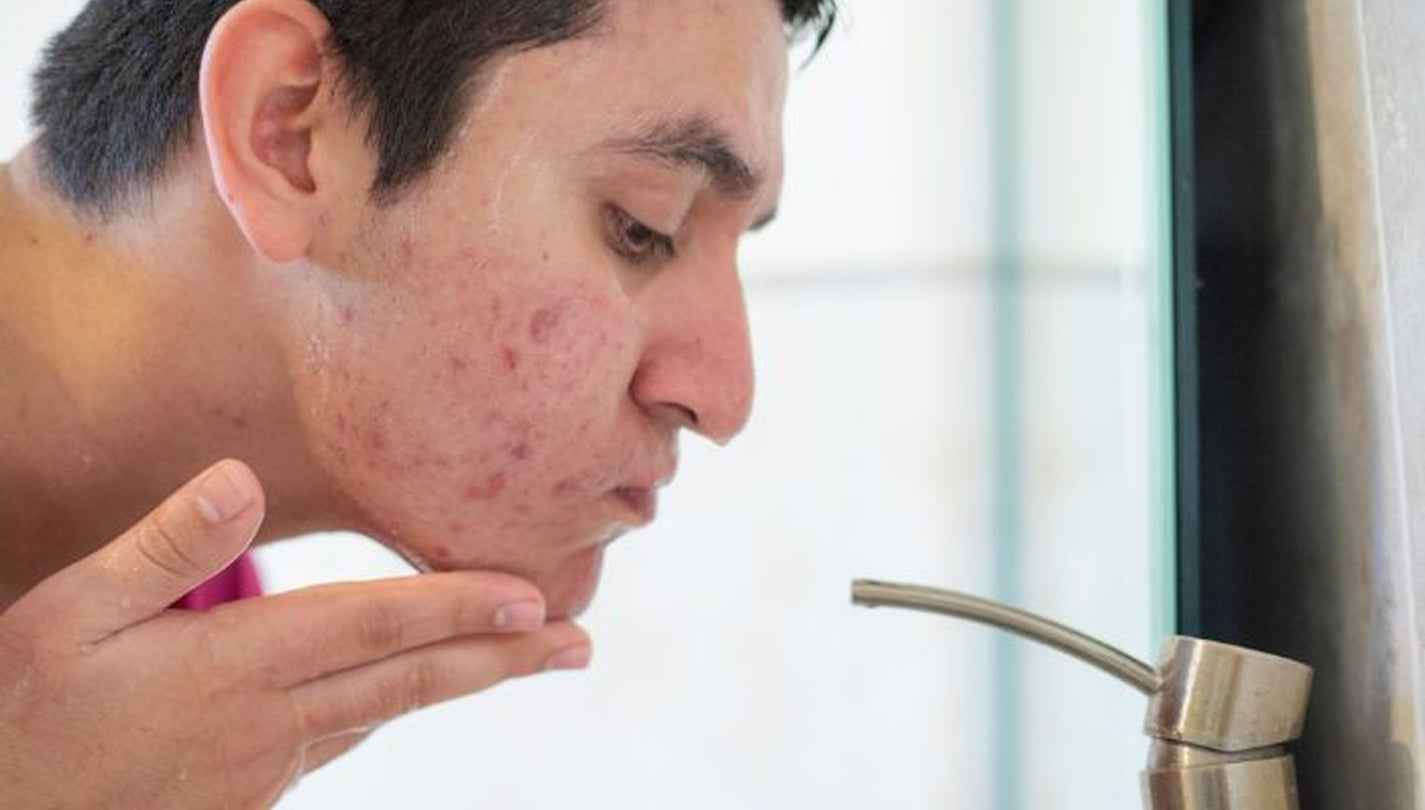
Acne Protocol:
Target & Repair
The professional 7-step clearance strategy for active lesions, deep inflammation, and scar prevention.
Precise 465nm Blue Light targets porphyrins within the pore to generate Singlet Oxygen (¹O₂), which physically eradicates P. acnes bacteria. Paired simultaneously with 640nm Red Light, this protocol clears active outbreaks while forcefully down-regulating the painful inflammatory response — treating both the infection and the immune reaction driving it.
Protocol Summary: 7 steps • 30-minute Celluma session • 3–4× weekly • Results from week 2. The dual-wavelength programme combines photodynamic bacterial extinction (465nm) with ATP-driven inflammation suppression (640nm). This is not a cosmetic glow — it is a photochemical intervention with a named biological mechanism and FDA Class II clearance for acne.
The 7-Step Clear Skin Ritual
-
1Deep Purify Cleanse thoroughly with a gentle, non-stripping cleanser to remove excess sebum, makeup, and pollutants. Creating a clean treatment field is the first prerequisite for maximum photon penetration. Pre-Session
-
2Unclog Pores with BHA Apply a BHA (Salicylic Acid) to actively decongest follicles. BHA is oil-soluble — it penetrates the sebum-filled pore and dissolves the dead cell plug blocking the follicle, creating a clear optical pathway for 465nm photons to reach the anaerobic bacteria below. Pre-Session
-
3Serum Prep (Optional) A thin layer of a water-based clearing serum (niacinamide or azelaic acid) may be applied. Strictly avoid opaque, oily, or mineral-SPF topicals — any product containing Zinc Oxide or Titanium Dioxide will scatter photons and reduce treatment efficacy. Pre-Session
-
4Celluma Treatment — 30 Minutes Select Acne Mode. This dual-wavelength programme initiates bacterial extinction via the porphyrin → Singlet Oxygen photochemical reaction (465nm) while red light (640nm) calms the dermal inflammatory response and promotes tissue repair. Sessions must last exactly 30 minutes for complete cellular saturation. Main Treatment
-
5Barrier Restore Hydrate with a lightweight, oil-free moisturiser to restore the moisture barrier without congesting pores. The skin is in an enhanced absorption state post-session — avoid heavy creams or occlusives, but barrier support is important. Post-Session
-
6Spot Target Apply a clinical spot treatment — niacinamide, zinc sulfate, or salicylic acid gel — directly to active cystic or nodular lesions. Post-session vasodilation improves local ingredient absorption in treated areas. Post-Session
-
7Shield with SPF 50+ Apply non-comedogenic SPF 50+ as the final step. This is not optional — healing post-acne tissue is highly susceptible to UV-induced Post-Inflammatory Hyperpigmentation (PIH). Skipping SPF on treated skin converts clearing lesions into permanent dark spots. Post-Session
The Extinction Chemistry
How does light kill bacteria? It is an instantaneous photochemical reaction.
When 465nm blue light interacts with porphyrins produced by P. acnes bacteria, it generates Singlet Oxygen (¹O₂) — a highly reactive oxygen molecule that is lethal to anaerobic bacteria, destroying the cell membrane from the inside out. The reaction is selective: surrounding skin cells are unaffected because they do not contain the porphyrin chromophores that absorb 465nm.
Protocol Q&A
465nm blue light is absorbed by porphyrins — metabolic byproducts naturally produced by P. acnes bacteria in sebaceous follicles. This absorption triggers a photochemical reaction that generates Singlet Oxygen (¹O₂), which destroys the bacterial cell membrane from the inside out. The process is selective — surrounding skin cells are unaffected because they do not contain the porphyrin chromophores that absorb 465nm light.
Acne involves two problems: bacterial infection and inflammatory response. Blue light (465nm) eradicates P. acnes via the porphyrin-Singlet Oxygen reaction. Red light (640nm) simultaneously activates Cytochrome c Oxidase in fibroblasts to produce ATP — providing energy to down-regulate inflammation, reduce sebum overproduction, and accelerate tissue repair. Treating only the bacteria without controlling inflammation leads to slower healing and higher scarring risk.
BHA is oil-soluble — it penetrates the sebum-filled follicle and dissolves the dead cell and oil plug blocking the pore. This creates a clear optical pathway for 465nm photons to reach the deeper anaerobic pore environment where P. acnes bacteria concentrate. Without this step, surface sebum and keratinised debris scatter and absorb photons before they can reach the bacterial target depth.
Most people see meaningful improvement within 2–4 weeks at 3–4 sessions per week. Active lesions typically reduce in size and redness within 1–2 weeks. For hormonal or cystic acne, a sustained 8–12 week protocol produces significant and lasting clearance. Sporadic use allows the bacterial population to rebound between sessions and prevents the cumulative anti-inflammatory effect that drives long-term improvement.
For those on oral antibiotics, LED therapy can generally be used as a complementary treatment — the blue light targets bacteria via a different mechanism (photodynamic porphyrin reaction, not chemical inhibition). For those on Accutane (isotretinoin), consult your dermatologist before starting, as isotretinoin increases photosensitivity. LED therapy is often used in the post-Accutane recovery phase to support healing and restore collagen.
Yes — the 640nm red light component is particularly important for cystic and hormonal acne. Its deeper penetration (4–6mm) reaches the inflamed dermis and suppresses the immune over-response driving cystic formation. For hormonal acne, the anti-inflammatory effect reduces the sebum-overproduction response triggered by androgens. Results typically require a longer sustained protocol of 8–12 weeks at 3–4 sessions per week.


Leave a comment
เว็บไซต์นี้ได้รับการคุ้มครองโดย hCaptcha และมีการนำนโยบายความเป็นส่วนตัวของ hCaptcha และข้อกำหนดในการใช้บริการมาใช้