
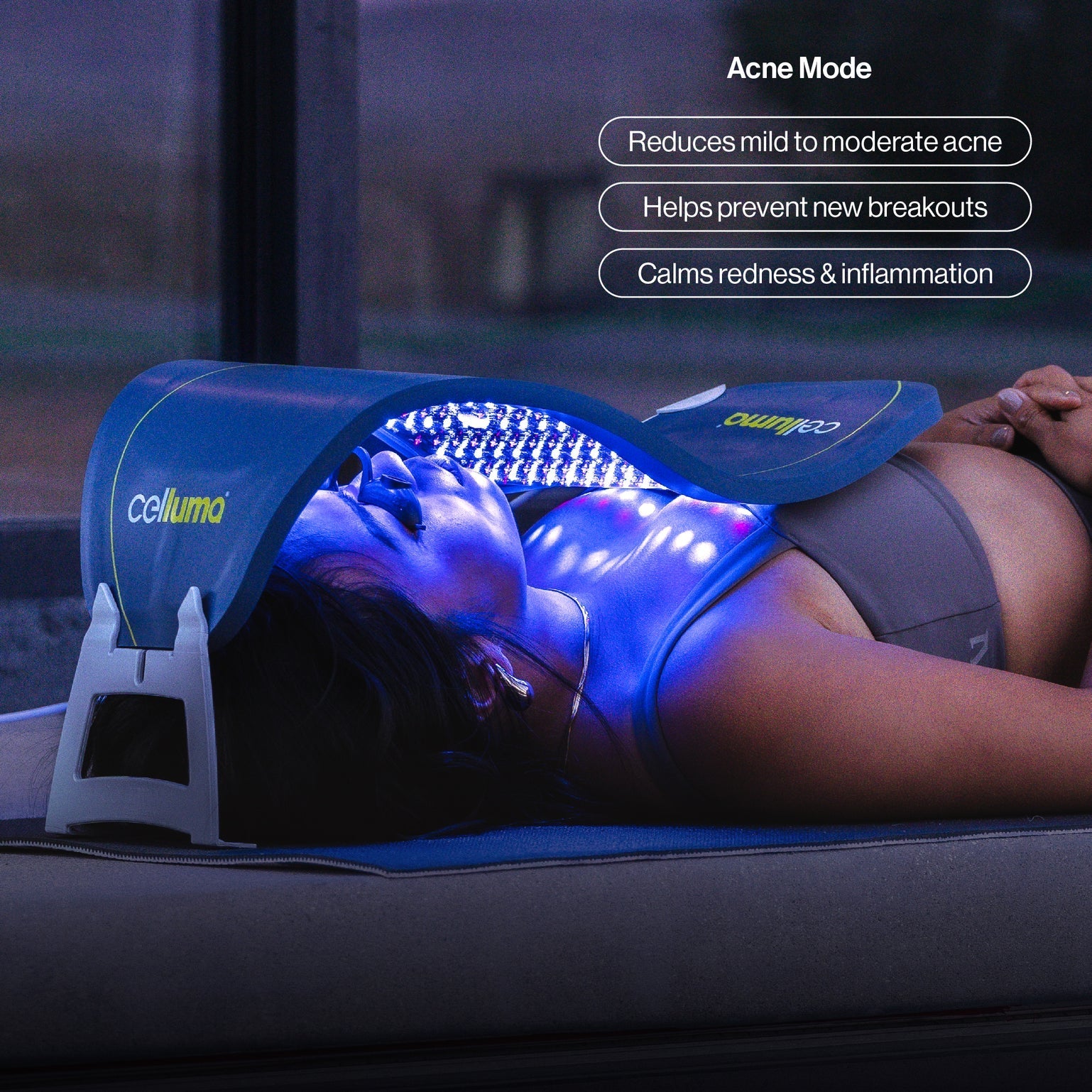
Blue LED at 465nm is FDA-cleared for acne and has an excellent safety profile backed by two decades of clinical use. The photodynamic mechanism is selective to P. acnes bacterial porphyrins — healthy skin cells are unaffected. It is safe for all Fitzpatrick skin types, has no antibiotic resistance risk, and no systemic effects. Use appropriate eye protection during sessions.
Why Blue LED at 465nm Is Considered Safe
The safety of blue LED therapy is rooted in its photochemical selectivity. The Singlet Oxygen generation that destroys P. acnes bacteria only occurs where porphyrins are present — inside the bacterial cells specifically. Human skin cells do not produce these bacterial porphyrins, so the photodynamic reaction simply does not occur in healthy tissue. This selectivity is what makes 465nm blue light categorically different from UV radiation, which causes non-selective DNA damage to all cells it contacts.
Singlet Oxygen only generated inside P. acnes cells (which contain porphyrins). Healthy skin cells contain no bacterial porphyrins.
Unlike lasers and IPL, blue LED is non-thermal at clinical doses. No heat damage to surrounding tissue.
No melanin interaction — safe for Fitzpatrick IV-VI. Unlike UV treatments which carry PIH risk in darker tones.
Independent regulatory validation of safety and efficacy. Not a self-certified claim.
The Complete Safety Profile
Blue LED Safety Profile
FDA-cleared 465nm clinical parametersHow to Verify Your Device Is Genuinely Safe
Questions & Answers
Blue LED light at 465nm is photochemically selective — it is absorbed by porphyrins in P. acnes bacteria but not by healthy human skin cells (which do not produce bacterial porphyrins). The Singlet Oxygen generated by the photodynamic reaction is contained within the bacterial cell. At clinical irradiance levels used by FDA-cleared devices like Celluma, there is no evidence of DNA damage, photothermal injury, or adverse effects on healthy skin tissue in over two decades of clinical use and multiple independent safety studies.
Yes. Blue LED therapy at 465nm is safe for all Fitzpatrick skin types, including types IV-VI (darker skin tones predominant in Singapore). The photodynamic mechanism targets bacterial porphyrins specifically — not melanin. Unlike UV treatments and some laser therapies, which carry risks of post-inflammatory hyperpigmentation in darker skin tones, blue LED has no thermal component and no melanin interaction. FDA-cleared devices like Celluma have been clinically validated across multiple skin types.
Eye protection should be worn during blue LED therapy sessions, as with all LED devices. The high-intensity blue light can cause temporary visual discomfort and potentially affect the retina with prolonged direct exposure. Celluma devices include protective eyewear for this reason. The device should not be directed at open eyes. With appropriate eye protection as specified in the device instructions, blue LED therapy is safe for the surrounding eye area skin.
Yes — the Arndt-Schulz Biphasic Dose Response applies to blue LED as well. The therapeutic window is 4-10 J/cm². Exceeding this through excessively long sessions or very high irradiance devices can push cells into the inhibitory zone, potentially causing oxidative stress rather than the therapeutic photodynamic effect. The clinical protocol of 30 minutes per session, 3-4x per week, is designed to stay within the therapeutic window. Daily multiple sessions are not recommended.
Blue LED therapy for acne is generally considered a preferred option during pregnancy because it is 100% drug-free with no systemic absorption — unlike topical retinoids (contraindicated in pregnancy), oral antibiotics (restricted in pregnancy), and benzoyl peroxide (limited safety data). However, as with all medical devices, pregnant individuals should consult their obstetrician before beginning any new treatment. The photodynamic mechanism is topically localised with no evidence of systemic effects.
FDA 510(k) clearance means an independent reviewer confirmed the device delivers verified wavelengths and irradiance sufficient to produce the claimed therapeutic effect. Uncleared consumer devices: (1) may not emit actual 465nm light despite claiming to — many emit broader spectrum 'blue' light that misses the porphyrin absorption peak; (2) lack the irradiance consistency to deliver the photodynamic threshold; (3) have no independent validation of their safety claims. The FDA clearance number (K-number) is verifiable at accessdata.fda.gov.


Leave a comment
เว็บไซต์นี้ได้รับการคุ้มครองโดย hCaptcha และมีการนำนโยบายความเป็นส่วนตัวของ hCaptcha และข้อกำหนดในการใช้บริการมาใช้