
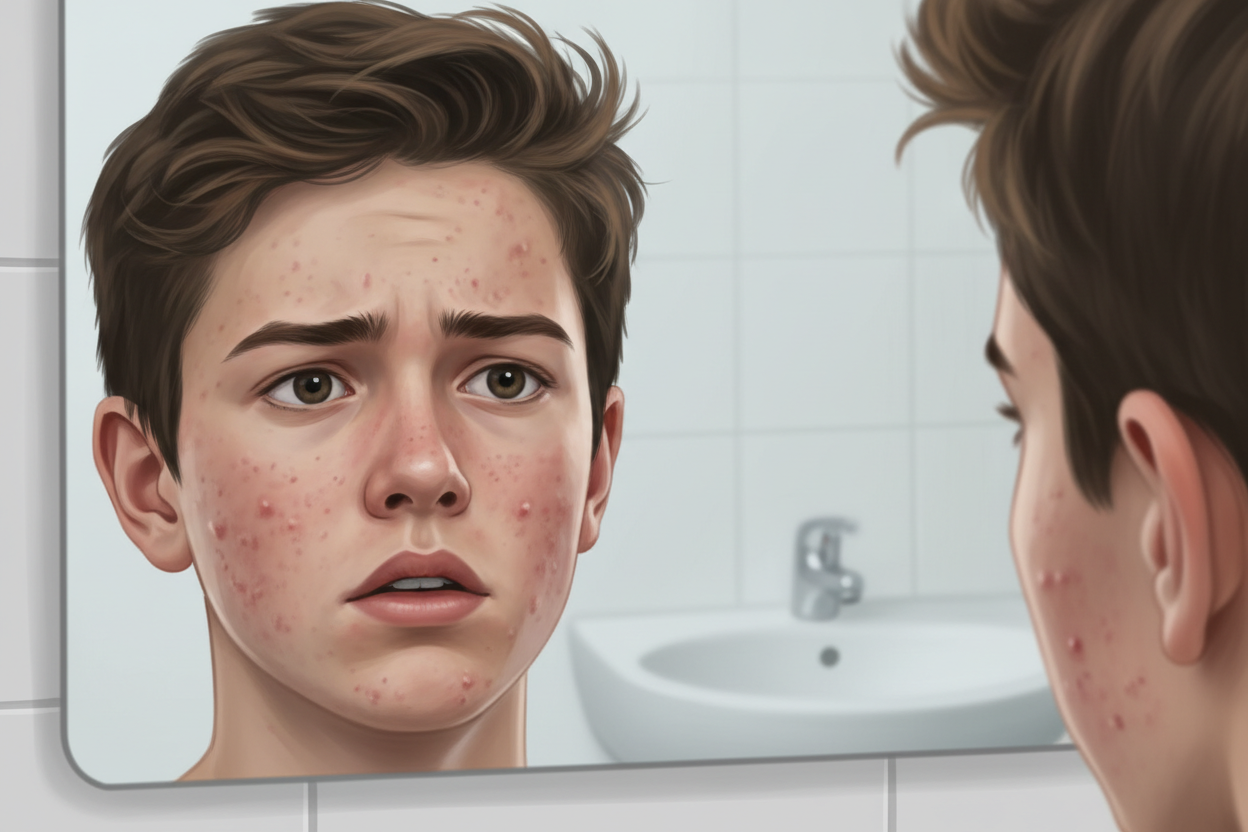
Teenage acne is driven by puberty androgen surge stimulating excess sebum — the food source for P. acnes bacteria. It is not caused by poor hygiene. The safest treatment for young skin: blue LED 465nm (kills bacteria without any chemical contact), salicylic acid 2% (unblocks follicles), and consistent SPF 50 (prevents acne marks from darkening). Drug-free LED therapy is particularly ideal for teens — no antibiotic resistance, no systemic effects.
The Puberty Hormonal Cascade Behind Teen Acne
How Teenage Hormones Cause Acne
And where LED therapy intervenesWhy Drug-Free LED Is Ideal for Teen Skin
The Teen Acne Protocol
Questions & Answers
Puberty triggers a surge in androgens (testosterone in boys, androgens in girls) that dramatically increases sebaceous gland activity. The resulting excess sebum clogs follicles and provides food for P. acnes bacteria. Simultaneously, rapid cell division during puberty means higher rates of dead skin cell accumulation blocking pores. Hormonal acne in teenagers is typically worse during growth spurts and peaks between ages 14-18. It is not caused by poor hygiene — washing more frequently does not reduce it.
The safest and most effective protocol for teen acne: (1) Gentle twice-daily cleanser — pH-balanced, non-stripping; (2) Salicylic acid 2% spot treatment or cleanser — works inside the follicle; (3) Blue LED therapy 465nm — kills P. acnes without any chemical on the skin; (4) Non-comedogenic oil-free moisturiser — essential even for oily teen skin; (5) SPF 50 daily — prevents post-acne marks darkening. Avoid harsh alcohol-based toners, over-cleansing, and very high-concentration actives on young skin.
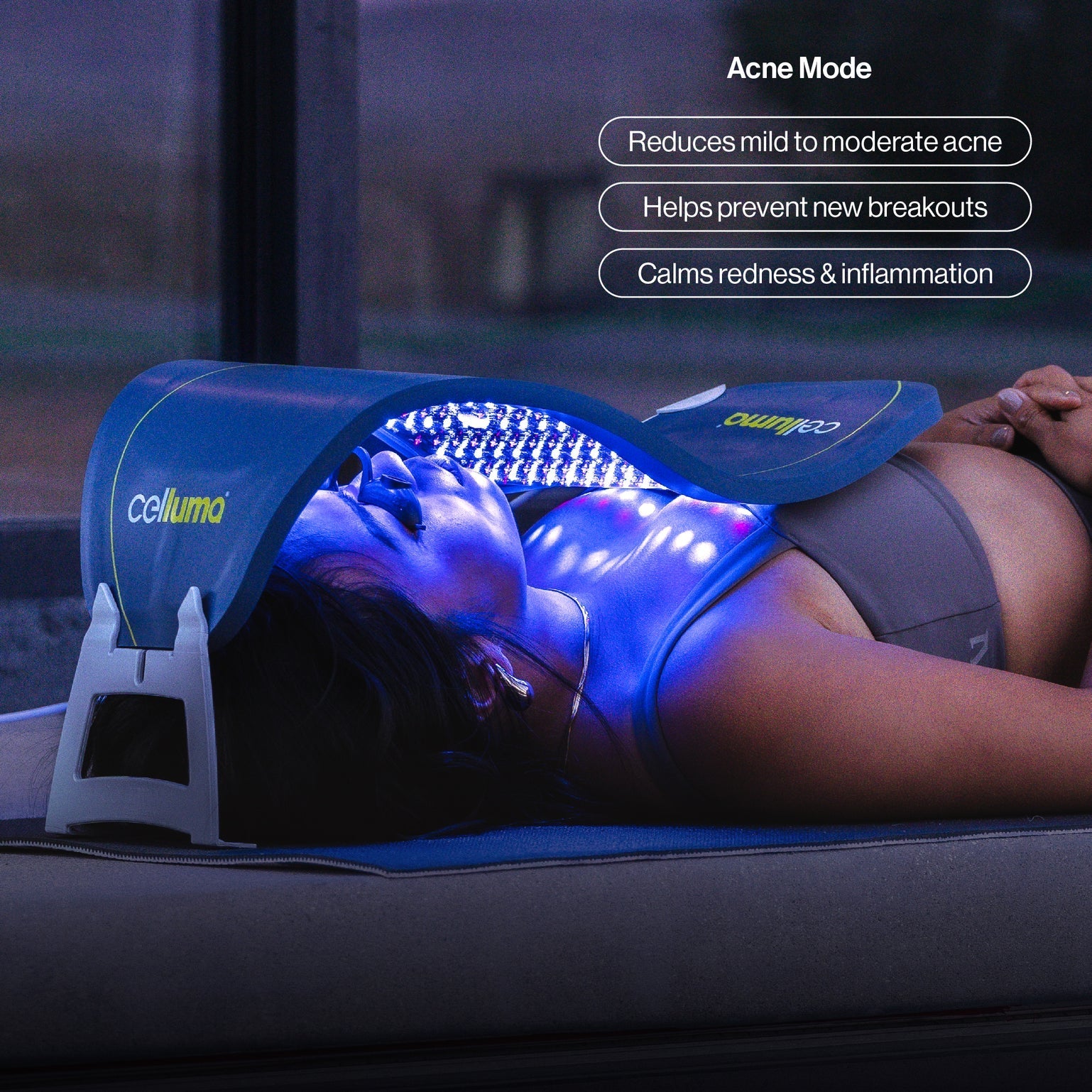
Yes — blue and red LED therapy is one of the safest acne interventions for teenagers precisely because it is 100% drug-free, has no systemic effects, does not generate antibiotic resistance, and does not disrupt the skin barrier. Unlike oral antibiotics (which affect the gut microbiome during a developmental period) or strong topical retinoids (which require monitoring in young skin), LED therapy has no age-specific safety concerns and is safe for consistent long-term use. Eye protection should be worn during sessions.
A dermatologist consultation is appropriate if: (1) acne is severe with many large cysts or nodules; (2) acne is causing significant scarring; (3) acne is severely impacting mental health or school attendance; (4) OTC treatments haven't produced improvement after 8-12 weeks of consistent use. Mild to moderate teen acne responds well to consistent home protocols including LED therapy. Dermatological options (topical retinoids, antibiotics, isotretinoin) are reserved for severe cases.
Most teenage acne improves significantly after the hormonal surge of puberty peaks (usually between 18-22). However, 'going away on its own' can mean years of unnecessary scarring and psychological impact if untreated. Early, consistent treatment significantly reduces the duration, severity, and scarring risk. Post-inflammatory hyperpigmentation marks from teenage acne can take months to years to fade — preventing them from forming in the first place (by treating active acne) is significantly easier than fading them afterwards.
Yes. Picking and squeezing acne lesions — especially during the inflammatory phase — dramatically increases the risk of permanent atrophic (textural) scarring. When the dermis is damaged during inflammation and the wound is then reopened by picking, the healing collagen is often laid down in a disorganised way, producing a permanent ice pick, boxcar, or rolling scar. This is particularly risky in the inflamed, reactive skin of puberty. The most effective anti-scarring strategy is treating acne early to prevent the deep inflammation that leads to scarring in the first place.

Leave a comment
Laman ini dilindungi oleh hCaptcha dan tertakluk pada Dasar Privasi dan Terma Perkhidmatan hCaptcha.