
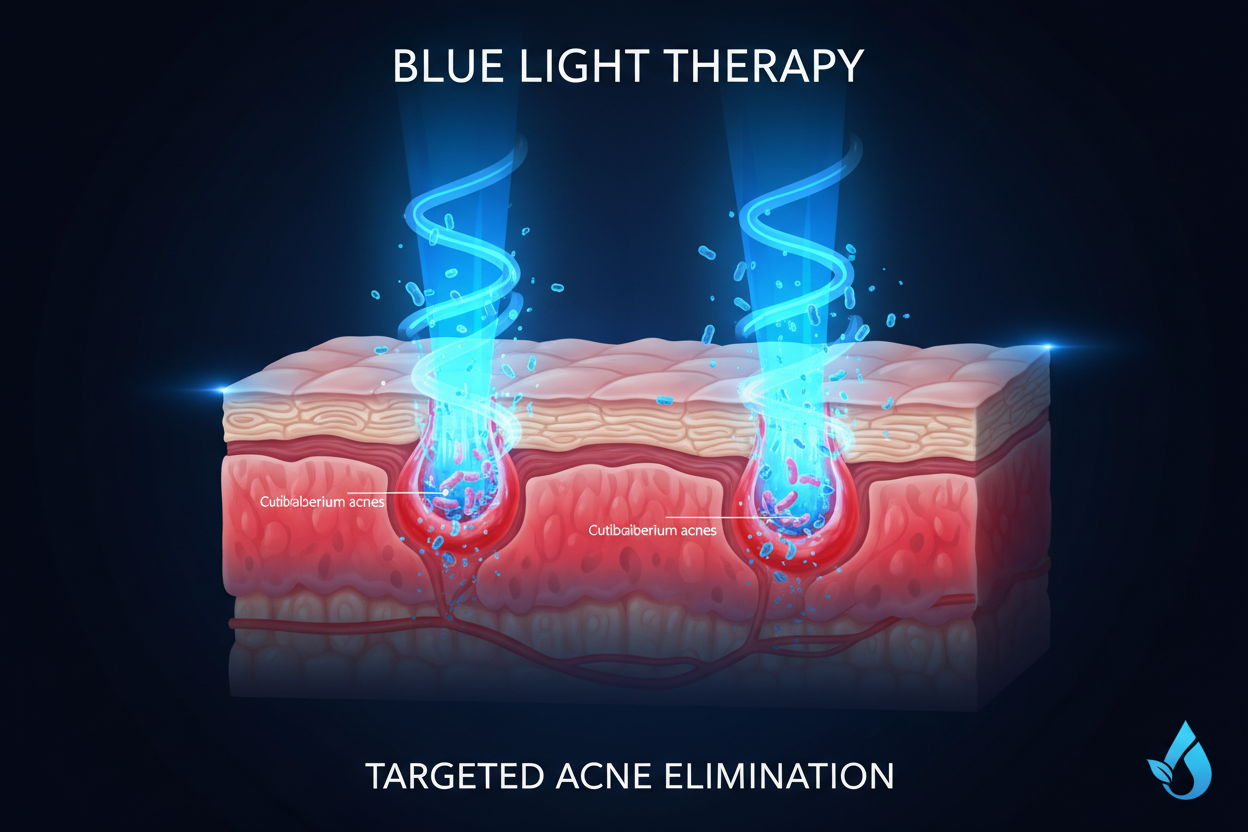
Most overnight pimple remedies from social media either do nothing or actively damage your skin barrier. Toothpaste, lemon juice, and baking soda all cause harm. What actually works: blue light therapy at 465nm begins destroying P. acnes bacteria in 30 minutes, combined with 2% salicylic acid spot treatment for visible reduction by morning.
The Truth About Overnight Home Remedies
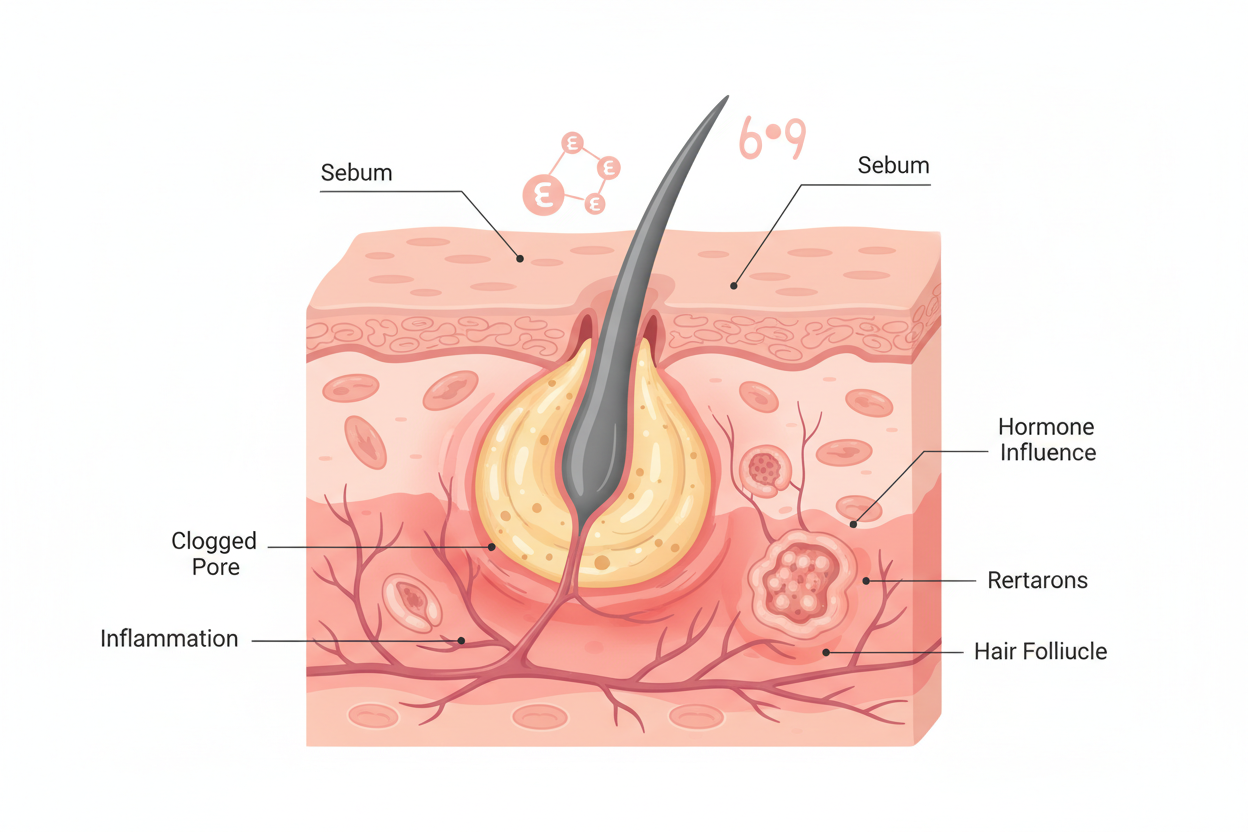
Social media is full of "overnight acne cures" — most of which range from ineffective to genuinely harmful. Before trying anything from your kitchen, understand what a pimple is: a bacterial infection (P. acnes) inside a blocked sebaceous follicle, triggering an immune response. To reduce it overnight, you need to address at least the bacteria or the inflammation. Most kitchen remedies do neither.
The Most Powerful Overnight Option: Blue Light Therapy
Of all the options available at home, 465nm blue LED light therapy is the only one that directly targets and destroys the P. acnes bacteria causing the pimple — in a single 30-minute session. The photodynamic reaction is immediate: photons are absorbed by porphyrins inside the bacteria, Singlet Oxygen is generated, and the bacterial cell wall is destroyed from within. No chemicals. No skin barrier disruption. No resistance risk.
Apply it on clean, dry skin (no moisturiser or SPF — these scatter photons) and follow immediately with a salicylic acid spot treatment. By morning, visible reduction in redness and size is typical.
The Overnight Protocol
What to do right now for morning resultsRealistic Expectations
No treatment — clinical or home — will make a deep inflammatory pimple fully disappear overnight. Here is what is realistic: a surface whitehead treated with blue light + salicylic acid will be significantly reduced by morning, often nearly flat. A mid-depth pustule will be visibly less swollen and red. A deep cystic nodule will reduce in pain and inflammation but will still be visible — these take 1-2 weeks even with clinical treatment.
Questions & Answers
Evidence-supported home remedies: (1) 2% salicylic acid spot treatment — penetrates pore, reduces sebum, mild antimicrobial; (2) Benzoyl peroxide 2.5-5% — kills P. acnes on surface; (3) Ice wrapped in cloth — reduces swelling and redness for photographs; (4) Tea tree oil diluted 5:1 with carrier oil — has antimicrobial properties but much slower than clinical blue light. Blue light therapy at 465nm (Celluma) is the most powerful 'home remedy' — it begins destroying P. acnes via a photodynamic reaction in a single 30-minute session.
Ice temporarily constricts blood vessels, reducing visible redness and swelling. Wrap in a cloth — never apply bare ice to skin as this causes ice burns. Hold for 1 minute at a time, repeat 3-4x. The effect lasts 30-60 minutes. Ice does not kill bacteria or clear the blocked pore, so it is a cosmetic quick fix, not a treatment. It is most useful the morning before an important event.
Tea tree oil (5% dilution) has mild antimicrobial effects against P. acnes, but works significantly more slowly than clinical treatments. Studies show 5% tea tree gel comparable to 5% benzoyl peroxide in reducing acne count — but both take 12 weeks, not overnight. Never apply undiluted tea tree oil to skin — it causes chemical burns and dermatitis. A diluted spot treatment applied overnight can reduce redness slightly by morning through anti-inflammatory effects.
Do not apply: undiluted essential oils (chemical burns), toothpaste (fluoride and SLS damage skin barrier and cause burns), lemon juice or vinegar (acid burns, disrupts acid mantle), baking soda (alkaline — destroys the protective acid mantle pH), alcohol or hand sanitiser (strips barrier lipids, causes rebound oil surge). All of these cause more damage than the original pimple and significantly increase the risk of post-inflammatory hyperpigmentation.
Best overnight protocol: (1) Cleanse thoroughly; (2) 30-minute blue LED session (kills P. acnes via Singlet Oxygen); (3) Apply 2% salicylic acid or 2.5% benzoyl peroxide spot treatment; (4) Do not touch the pimple again; (5) Sleep on a fresh clean pillowcase; (6) Morning: apply green-tinted colour corrector if needed for cosmetic coverage before SPF. This combination reduces size and redness measurably overnight.
Always leave it. Popping a pimple: (1) pushes bacteria deeper into surrounding tissue, spreading infection; (2) creates an open wound that dramatically increases scarring risk; (3) spreads bacteria to adjacent follicles, creating new pimples; (4) delays healing by 3-5 days compared to untouched acne. If a pimple has a visible white head and is at the surface, a warm compress can encourage natural drainage — but squeezing is never the right answer.

Leave a comment
Laman ini dilindungi oleh hCaptcha dan tertakluk pada Dasar Privasi dan Terma Perkhidmatan hCaptcha.