
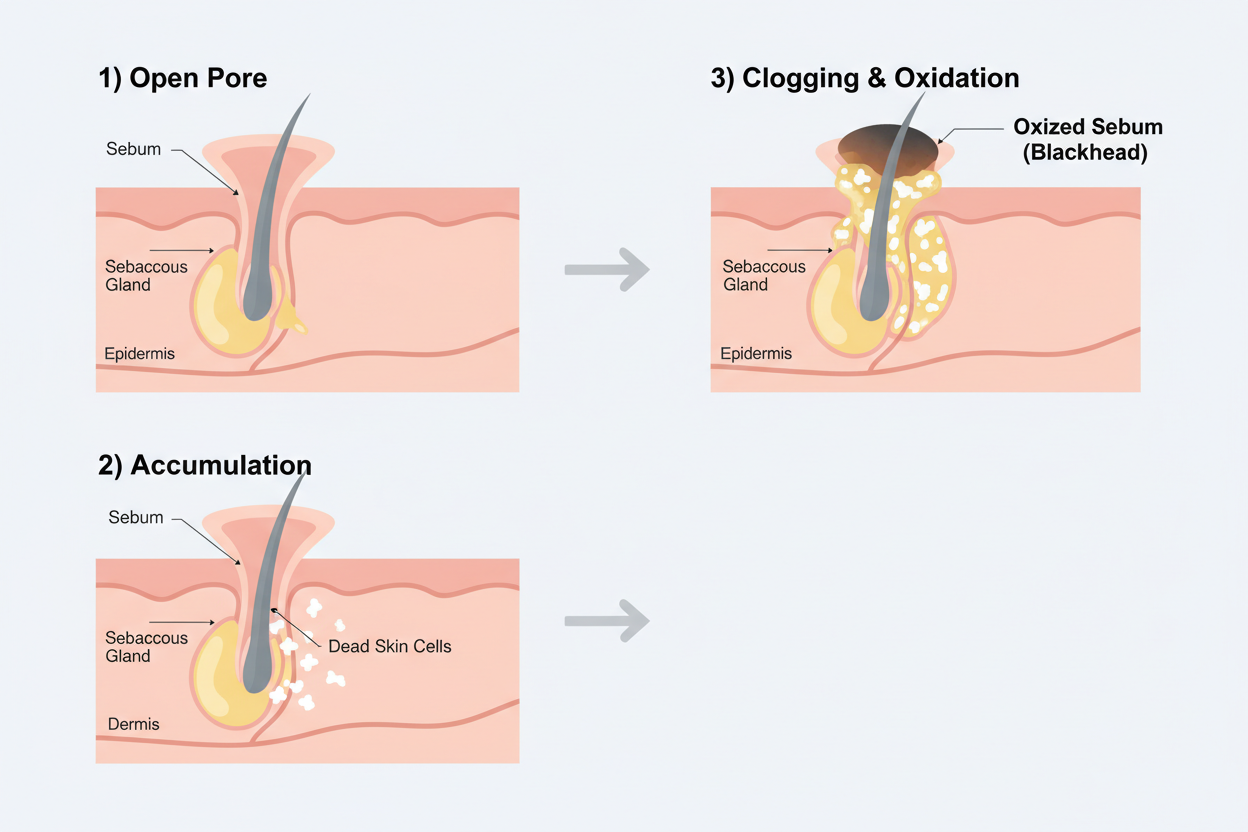
Blackheads are oxidised sebum and dead skin cells blocking a sebaceous follicle — not dirt. Squeezing worsens them. The most effective protocol: 2% salicylic acid to dissolve the follicle plug + 465nm blue LED to eliminate the P. acnes bacteria contributing to congestion. 4-6 weeks for visible improvement.
Blackheads: What They Actually Are
The name 'blackhead' causes one of the most persistent skin myths: people assume the dark colour means the pore is dirty. It isn't. A blackhead (open comedone) forms when a sebaceous follicle fills with excess sebum and dead skin cells, creating a plug. When the top of the follicle remains open and the plug is exposed to air, lipid oxidation turns the melanin content dark. The colour is chemistry — not contamination.
The Blackhead Protocol: Step by Step
Why Pores on the Nose Are the Hardest
The nose has the highest sebaceous gland density of any facial zone, plus naturally larger follicle openings. This makes it the zone most prone to persistent blackheads and the slowest to clear. The same protocol applies — but expect 10-14 weeks rather than 6-8 for significant nose pore improvement. A weekly 10-minute salicylic acid leave-on mask specifically on the nose zone can accelerate progress.
Questions & Answers
Blackheads form when a sebaceous follicle becomes clogged with excess sebum and dead skin cells. Unlike whiteheads (which are closed), blackheads have an open top — the dark colour is not dirt but oxidised melanin and sebum exposed to air (lipid oxidation). P. acnes bacteria are also present in the follicle, contributing to congestion. Overactive sebaceous glands (driven by androgens), thick skin, and insufficient exfoliation are the primary contributing factors.
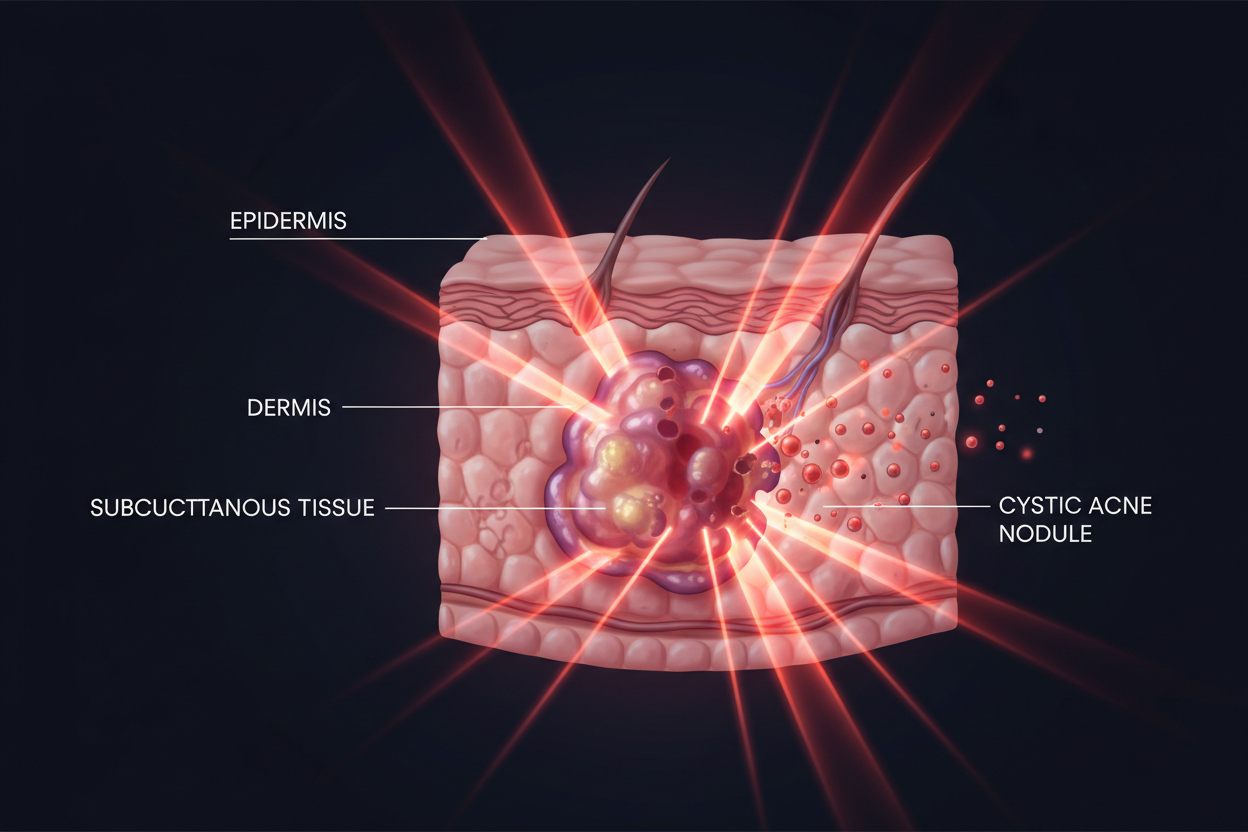
Yes. Squeezing pushes congestion deeper into surrounding tissue, can rupture the follicle wall (converting a blackhead into an inflamed papule or cyst), and introduces external bacteria into the opening. Blackheads that have been repeatedly squeezed develop enlarged, permanently widened pores. The correct approach is chemical exfoliation and LED therapy to dissolve the congestion and address the bacterial component — not mechanical pressure.
Yes — blue light at 465nm kills P. acnes bacteria that contribute to sebaceous congestion and follicle blockage. Reducing the bacterial population decreases the inflammatory environment that worsens blackhead formation and prevents blocked pores from progressing to inflamed acne. For best results, combine blue LED therapy (bacterial control) with salicylic acid 2% (oil-soluble exfoliant that dissolves sebum plugs in the follicle) as a comprehensive blackhead protocol.
Salicylic acid (BHA — Beta Hydroxy Acid) at 2% is the gold standard for blackheads. It is oil-soluble, which means it penetrates into the sebaceous follicle and dissolves the sebum-dead cell plug from inside the pore. Retinol increases cell turnover to prevent new plugs forming. Niacinamide reduces sebum production. Clay masks absorb surface excess oil temporarily. Physical scrubs and pore strips do not address the bacterial component and can cause microtrauma that worsens congestion.
No. Nose strips (like Biore) temporarily remove the topmost portion of existing blackheads by adhesion — but they do not address the cause (overactive sebaceous glands, dead cell accumulation, P. acnes). Blackheads return within days to weeks. Repeated use can damage the skin barrier and enlarge pores permanently. They are a cosmetic temporary fix, not a treatment.
With consistent use of salicylic acid 2% (twice daily) and blue LED therapy (3-4x per week), significant reduction in blackhead density is typically visible within 4-6 weeks. Full clearance of established blackheads and prevention of new ones forming requires 8-12 weeks of sustained protocol. Blackheads on the nose (the most stubborn zone) typically take longer than cheek or chin blackheads due to the higher sebaceous gland density.

Leave a comment
Laman ini dilindungi oleh hCaptcha dan tertakluk pada Dasar Privasi dan Terma Perkhidmatan hCaptcha.