
How Does Red Light Therapy
Actually Reduce Fat?
The Science of Lipid Mobilisation Explained
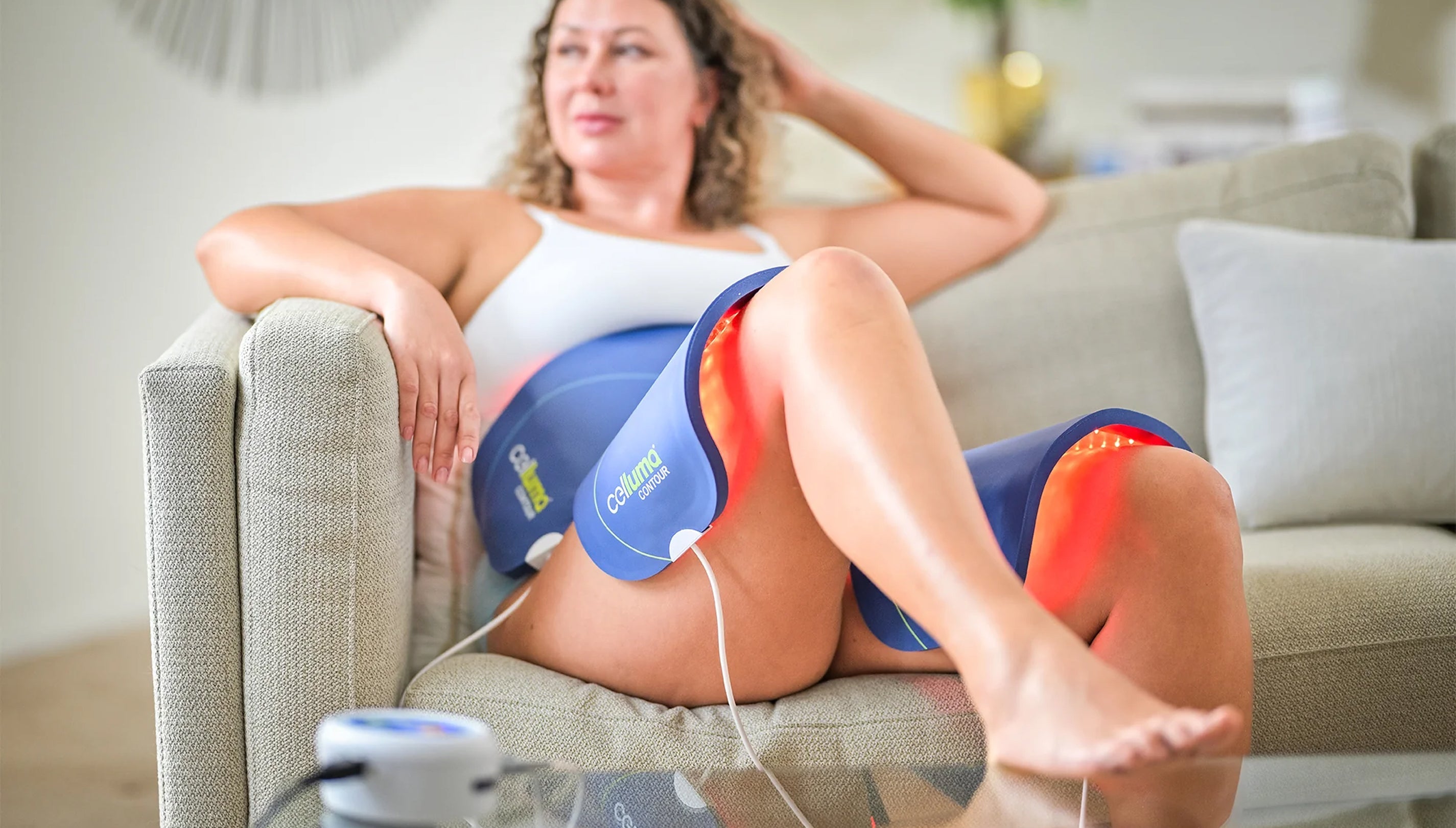
Red light doesn't melt fat, freeze it, or destroy it. It does something more nuanced — and more interesting. This is the complete biological explanation of how specific wavelengths cause fat cells to temporarily release their stored contents, what happens to those lipids next, and why what you do in the hour after your session determines whether the fat disappears or comes back.
Red light therapy triggers lipid mobilisation — not fat destruction. Specific wavelengths (640nm + 880nm) cause fat cell (adipocyte) membranes to temporarily form pores, releasing stored triglycerides into the interstitial space. The lymphatic system transports these freed lipids to the bloodstream where they become available as metabolic fuel. The fat cell remains intact — it temporarily deflates. Post-session aerobic activity is essential to ensure mobilised lipids are metabolised rather than reabsorbed.
The phrase "light burns fat" is used widely in body contouring marketing. It is both misleading and, in a different sense, accurate. Light does not burn fat the way fire burns wood — there is no combustion, no heat, no destruction of cells. But light does initiate a chain of biological events that ultimately results in stored fat becoming available as fuel for your muscles to burn. The mechanism is photochemical, specific, and well-documented. Understanding it explains both why it works and — critically — why post-session behaviour determines whether the results stick.
First — What Red Light Therapy Does NOT Do to Fat
Clearing up the common misconceptions before explaining the actual mechanism:
❌ It does not destroy fat cells. Unlike liposuction (mechanical removal) or cryolipolysis (freeze-death), red light does not eliminate adipocytes. The cells remain intact after treatment and can refill over time — which is why maintenance sessions and lifestyle factors matter.
❌ It does not reduce visceral (deep abdominal) fat. Red light penetrates only 4–6mm subcutaneously. Visceral fat is located around internal organs, far beyond the reach of these wavelengths. The FDA clearance is for subcutaneous fat — waist, hips, and thighs.
The Three Biological Mechanisms — How Red Light Achieves Lipid Mobilisation
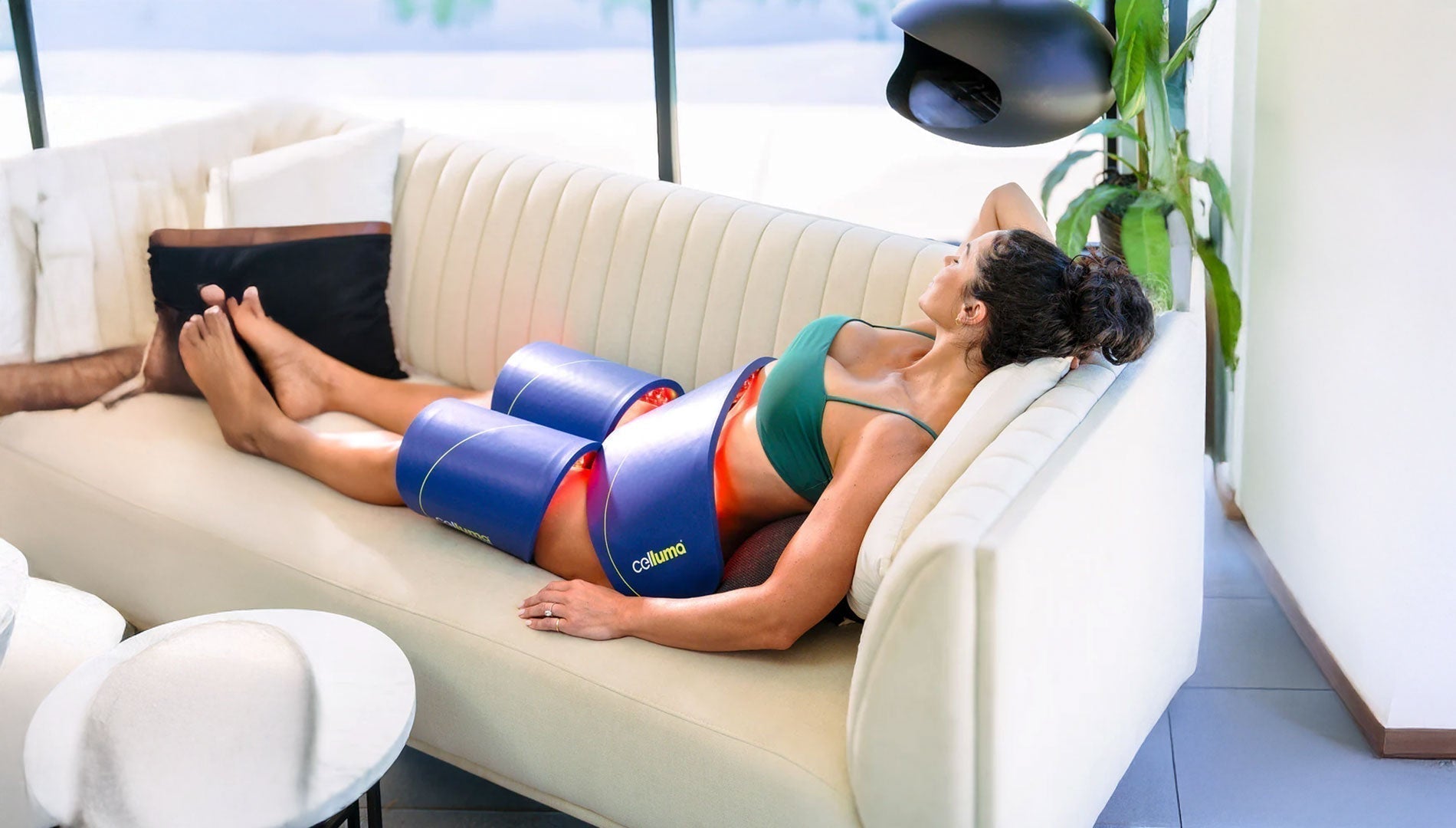
Three separate but complementary mechanisms work simultaneously during a Celluma CONTOUR session to achieve measurable circumferential reduction.
Adipocyte Porosity
Red and near-infrared light activates Cytochrome c Oxidase in adipocyte mitochondria. The resulting ATP and reactive oxygen species cascade signals the cell membrane to form transient pores. Stored triglycerides — large lipid droplets inside the adipocyte — flow out through these pores into the interstitial space. The cell physically shrinks.
Mitochondrial Fat Oxidation
The ATP surge also elevates the metabolic rate of local cells, increasing the rate of beta-oxidation — the intracellular process of using fatty acids as fuel. Cells in and around the treatment area upregulate fat-burning enzyme pathways, creating a metabolically favourable environment for lipid clearance.
Lymphatic Micro-Circulation
Light-induced nitric oxide release triggers vasodilation — widening local capillaries and lymphatic vessels. This improves the transportation infrastructure that moves freed triglycerides from the interstitial space into lymphatic vessels and then to the bloodstream. Without adequate circulation, mobilised lipids stall and reabsorb.
What Happens During a 30-Minute Session — Minute by Minute
Research indicates adipocyte response to red and near-infrared light is not instantaneous — it follows a specific temporal progression within each session.
Where Does the Released Fat Go? — The Complete Lipid Journey
Red Light vs CoolSculpting vs Liposuction — What's Actually Different
- Physically removes fat cells permanently
- Surgical — weeks of recovery
- Risk: asymmetry, numbness, fibrosis
- Skin can sag without tightening
- One-time result — cells cannot return
- Freezes cells to destruction (apoptosis)
- Non-surgical — 1–3 hrs, 2 wk recovery
- Risk: paradoxical adipose hyperplasia
- No skin tightening benefit
- Permanent in treated areas
- Cells release contents — stay intact
- Zero downtime · painless · at home
- No surgery or recovery risk
- Simultaneous collagen stimulation
- Requires maintenance — not permanent
The Peak Results Protocol — Maximising Every Session
The four variables that determine whether results compound or reset between sessions:
- 1 · TimingTreat fasted or 2+ hours after eating. Low insulin = adipocytes in release mode, not storage mode. Morning sessions before breakfast are optimal.
- 2 · ContactFlexible panel must be in direct zero-gap contact with skin. Inverse Square Law: even 2cm of air between panel and skin halves the irradiance reaching subcutaneous adipocytes.
- 3 · Full 30 MinNever shorten sessions. Pore formation begins at 4 minutes. Peak lipid mobilisation is at 20–30 minutes. A 10-minute session misses the majority of the therapeutic window.
- 4 · Move After20 minutes of moderate aerobic activity within 1 hour post-session. This is the step that converts mobilisation into measurable circumferential reduction. Non-negotiable.
Frequently Asked Questions
Red light triggers lipid mobilisation — 640nm + 880nm wavelengths cause adipocyte membranes to form transient pores, releasing stored triglycerides into the interstitial space. The lymphatic system transports them to the bloodstream as available fuel. Fat is not burned by the light itself — it is mobilised and then consumed by post-session physical activity. Without movement after your session, mobilised lipids may be reabsorbed.
Red light does not destroy fat cells — it temporarily makes their membranes porous (adipocyte porosity), releasing stored triglycerides. Fat cells remain intact. This produces measurable circumferential reduction (waist, hips, thighs) — FDA-cleared — but cells can refill without maintenance sessions and a healthy lifestyle. Unlike liposuction or cryolipolysis, which eliminate adipocytes, LED contouring is a metabolic intervention, not structural removal.
CoolSculpting permanently destroys fat cells by freezing them to apoptosis — with clinical recovery time and risk of paradoxical fat hardening. LED body contouring makes fat cells release their contents without destroying them — zero downtime, no surgery risk, plus simultaneous collagen stimulation for skin tightening. LED results require maintenance; CoolSculpting results in treated areas are permanent. Choice depends on whether zero downtime or permanent reduction is the priority.
Post-session mobilised triglycerides are circulating in the bloodstream. Without exercise creating metabolic demand, these lipids reabsorb into adjacent adipocytes within 4–6 hours. 20 minutes of moderate activity (brisk walk, cycling) burns the circulating lipids as fuel — converting mobilisation into actual fat reduction. This step is not optional: it is the mechanism that makes results measurable.
Adipocyte pore formation begins at approximately 4 minutes of exposure. Lipid mobilisation peaks at 20–30 minutes — which is why Celluma CONTOUR uses a 30-minute session. Shortened 5–10 minute sessions miss the peak mobilisation window entirely. This is why "high-power quick sessions" are clinically inferior to calibrated full-length sessions for body contouring outcomes.
No — red light therapy affects subcutaneous fat only. 640nm + 880nm penetrates 4–6mm beneath the skin, reaching the subcutaneous adipocyte layer in the waist, hips, and thighs. Visceral fat (surrounding internal organs, deep in the abdominal cavity) is far beyond this range. FDA clearance is specifically for subcutaneous circumferential reduction — not visceral fat or overall body fat percentage.
Yes — fasted treatment produces better mobilisation. Low insulin levels (fasted state, or 2+ hours post-meal) signal adipocytes to release stored fat. High insulin from a recent meal promotes fat storage — partially countering the adipocyte porosity effect. Morning sessions before breakfast, followed immediately by 20 minutes of light aerobic activity, create the optimal hormonal environment for measurable circumferential reduction.
The clinical protocol is 3 sessions per week for 4 weeks (12 sessions total) for initial measurable results. Most users notice tape-measure circumferential reduction within sessions 4–6. Results compound with each session. Maintenance of 1–2 sessions per week sustains results. Measure with a tape measure at the same time each day — not the scale, which does not reflect circumferential reduction.
The Science Is Real.
Zero Surgery. Measurable Results.
Explore Celluma CONTOUR — the only FDA-cleared LED device for waist, hip and thigh circumferential reduction via clinically validated lipid mobilisation.

Leave a comment
Laman ini dilindungi oleh hCaptcha dan tertakluk pada Dasar Privasi dan Terma Perkhidmatan hCaptcha.