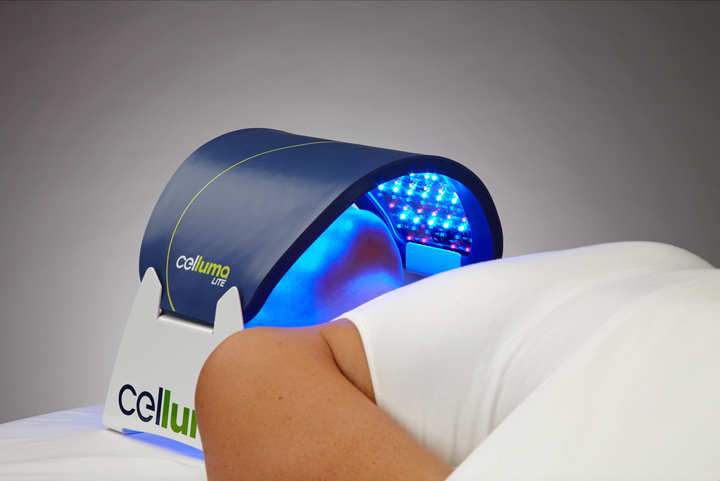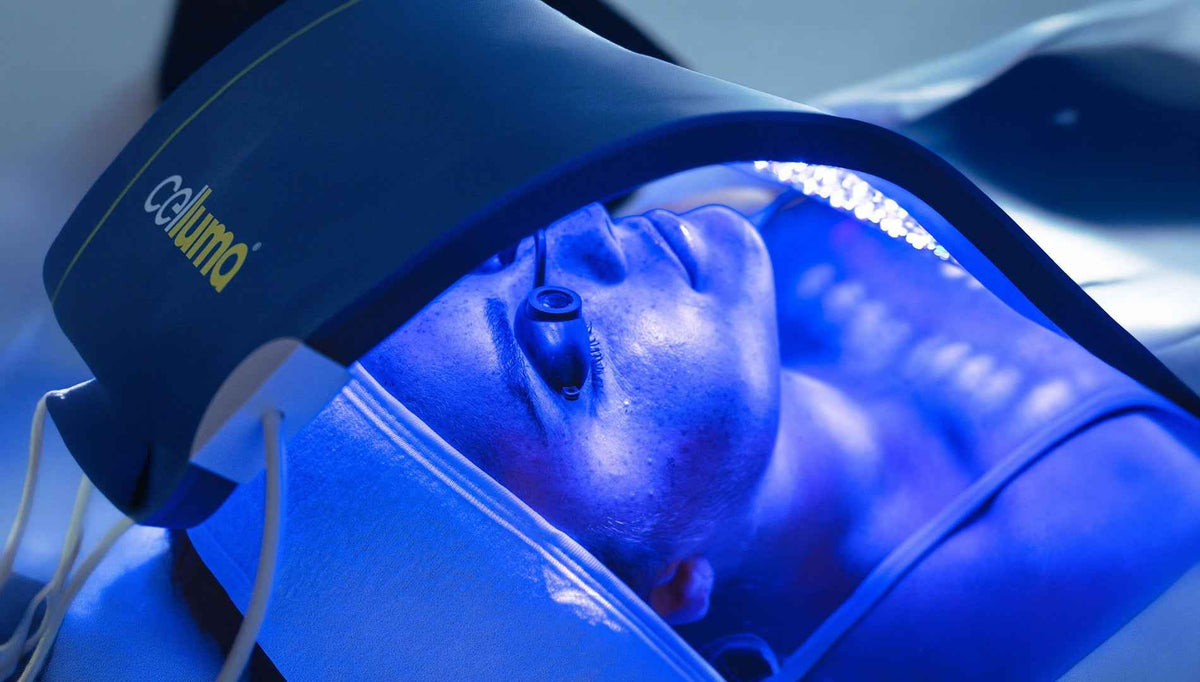
Featured image: Editorial illustration from the Celluma collection.
The Celluma Journal · Updated
Blue and red light therapy can improve suitable mild-to-moderate inflammatory acne when used in an appropriate programme. Celluma offers Acne mode on selected models, making the treatment straightforward to repeat. Build it into a clear, manageable routine and assess your active breakouts across the instructed course, alongside suitable skincare and other care you may need.
Why acne involves more than bacteria
Acne develops through a combination of blocked follicles, oil production, inflammation and the activity of acne-associated bacteria. Cutibacterium acnes, formerly called Propionibacterium acnes, is part of that picture. Describing acne simply as an infection misses important reasons that breakouts recur.
This is why the type of acne matters. Inflamed pimples, blackheads, deep nodules and lingering marks are not interchangeable. Severe, painful or scarring acne deserves medical assessment so the treatment plan fits the condition.
What blue and red light contribute
Blue light is studied for its interaction with porphyrins associated with acne bacteria. Red light is included in some programmes for its role in the tissue response. Combining them has been evaluated in clinical acne research.
A controlled home-use LED study also assessed acne lesions under a specified course. These studies support the potential of appropriately designed treatment. They do not mean every blue lamp has the same effect or that the skin is permanently sterilised after exposure.
Select a genuine Acne programme
Choose a Celluma model that includes Acne mode and use that named programme. Examples in the Celluma Asia range include PRO II, LITE II and MYSTIQUE. Models and generations differ, so confirm the mode list before buying.
The programme may use multiple wavelengths with a particular balance. You do not need to design a separate blue-light and red-light schedule yourself. A Wrinkles-only device should not be assumed to offer an equivalent acne treatment.
Keep the routine clear
Follow the current model manual for suitability, skin preparation, positioning and eye protection. Celluma's published skin guidance uses clean, bare and dry skin. Select Acne mode, complete the programme and apply compatible skincare afterwards.
Do not add a strong exfoliant before the session on the assumption that it opens an optical pathway. If you use acne medicines, ask the prescribing clinician how to coordinate the routine. An LED device should not be used as a reason to stop effective prescribed treatment independently.
Assess results over the course
Track the number and appearance of active breakouts using photographs taken in similar light. Note irritation and other changes in the routine, because introducing several new products at once makes results harder to interpret. Follow the course for your model rather than increasing exposure after a difficult skin day.
Expectations should match the concern. Fewer inflamed lesions do not automatically mean that an established scar or a dark mark has been treated. Our acne skincare routine guide and acne-scar guide discuss those related questions separately.
A useful option within a broader plan
LED treatment offers a non-invasive way to deliver a defined programme without applying an antibiotic. That does not make it universally better than medication or suitable for every person. A clear plan can include skincare, professional care and a device when each has a useful role.
Celluma Asia can help you choose a format with the right coverage and demonstrate Acne mode. Explore PRO II or MYSTIQUE, and keep the current instructions as the reference for how you use it.
Frequently asked questions
Does red light alone treat every type of acne?
No. Choose a device and programme intended for the acne application. Blue-and-red programmes have been studied, and different acne types may need additional care.
How soon should I expect clearer skin?
Assess progress across the instructed course rather than after one session. Your acne, programme and other treatment affect the response. Consistent photographs and a short treatment record can help you review progress.
Can I use Acne mode instead of my medication?
Discuss changes with the prescribing clinician. LED may fit within the plan. Keep effective prescribed care in place unless the prescribing clinician advises a change.
Will Acne mode remove existing scars?
Active acne and established scars are different concerns. Do not treat an acne indication as proof of scar removal; seek advice for the type of mark or scar you want to address.