

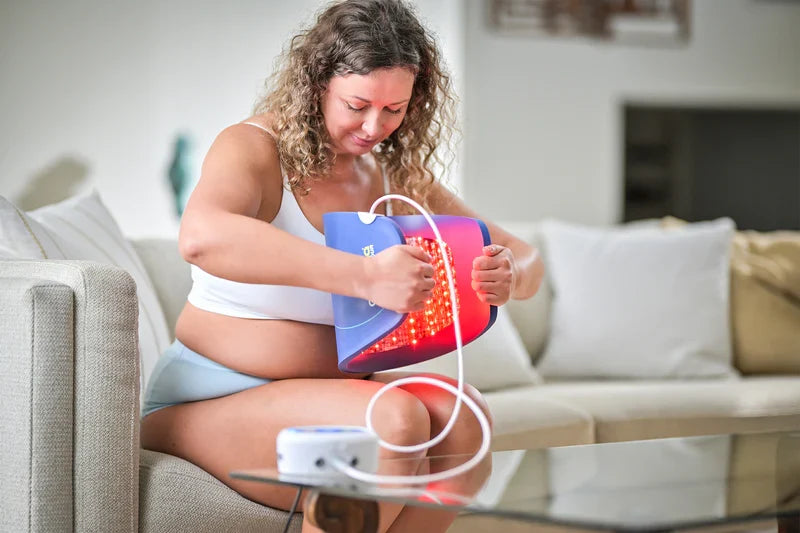
Featured image: AI-enhanced photograph.
The Celluma Journal · Updated
Red light therapy is not a weight-loss treatment. Certain light devices are intended for non-invasive body contouring, including reduction in the circumference of specified areas. That is a local appearance outcome, and it differs from treating obesity or reducing the health risks associated with excess weight.
What a contouring result means
Circumference is the measurement around an area such as the waist, hips or thighs. A change in that measurement does not automatically establish a meaningful change in body weight, body-fat percentage or internal abdominal fat.
The FDA’s body-contouring guidance explicitly distinguishes non-invasive contouring from weight-loss treatment. It also explains that the effects and their duration vary. A treatment should be chosen for a realistic appearance goal rather than a promised metabolic transformation.
How light-based body contouring works
Light-based contouring research has explored several explanations for observed changes. Proposed mechanisms include changes in fat-cell membrane behaviour and cellular metabolism. The review by Avci and colleagues discusses this research and its limitations.
A proposed mechanism is not a minute-by-minute account of what definitely happens in every Celluma session. It does not establish that pores open at a precise minute, that all released material follows a fixed route, or that sitting still afterwards cancels the treatment. Clinical results should be reported as the outcomes actually measured.
Light contouring is different from removing fat surgically
Liposuction removes tissue through a surgical procedure. Other non-invasive technologies use cooling, heating, ultrasound or other mechanisms. Their indications, experience and risks differ. The most suitable option depends on your goal, the specific technology and the expected benefits and risks.
Light-based programmes offer a non-surgical approach for appropriate users. They are not a substitute for surgery when a person’s goal is substantial tissue removal or treatment of excess skin. An informed decision starts with the amount and kind of change sought.
What Celluma’s contouring record says
The FDA clearance for Celluma CONTOUR, K232977, includes reduction of circumference of the hips, waist and thighs. That clearance concerns local circumference reduction. It does not cover weight loss, obesity treatment or improved cardiovascular health.
Use a model that actually includes CONTOUR mode. The selected programme and device generation matter; a red-looking Wrinkles programme is not automatically a contouring treatment. Our Celluma body-contouring routine explains the practical setup.
Measure the outcome you are choosing
If you decide on a contouring course, record a baseline and repeat measurements with the same tape placement, posture and general conditions. Avoid pulling the tape tighter on follow-up or comparing a relaxed baseline with a posed photograph.
Keep diet and activity changes in mind when interpreting results. A tape measure alone cannot show which part of a change came from a device. Repeated measurements under consistent conditions are more useful than one unusually low reading.
Maintain ordinary healthy habits for their own value. Compulsory fasting, “detox” drinks and a precisely timed workout are not established requirements for a contouring result. Follow the actual device instructions instead of adding a demanding ritual.
Explore PRO Plus+, NOVA and other contour-capable formats in the Celluma range. Ask the team to match the programme and coverage to the area you want to treat.
Frequently asked questions
Will red light therapy make me lose weight?
No. A device’s circumference-reduction indication concerns a local contouring outcome, which is different from weight management.
Does light melt or burn fat?
No. Low-level light contouring does not remove fat through surgery or melt it with heat. Researchers continue to investigate the biological mechanisms behind circumference changes.
Must I exercise immediately after every session?
Follow the manufacturer’s actual instructions. A mandatory one-hour fat-burning window has not been established. Choose activity for your health and circumstances rather than as a promised way to lock in a device result.
Are contouring results permanent?
Do not assume permanence. Effects vary, and maintenance may be discussed in the relevant protocol. Ask what was measured and for how long before relying on a lasting-result claim.
Sources and further reading
- US FDA: Non-invasive body contouring technologies
- US FDA: Celluma CONTOUR clearance K232977
- Avci and colleagues: Low-level laser therapy for fat layer reduction (2013)
- Celluma: Body contouring treatment information
- Celluma Asia: PRO Plus+ specifications and programmes
- Celluma Asia: NOVA specifications and programmes


留言
此網站已受到 hCaptcha 保護,且適用 hCaptcha 隱私政策以及服務條款。