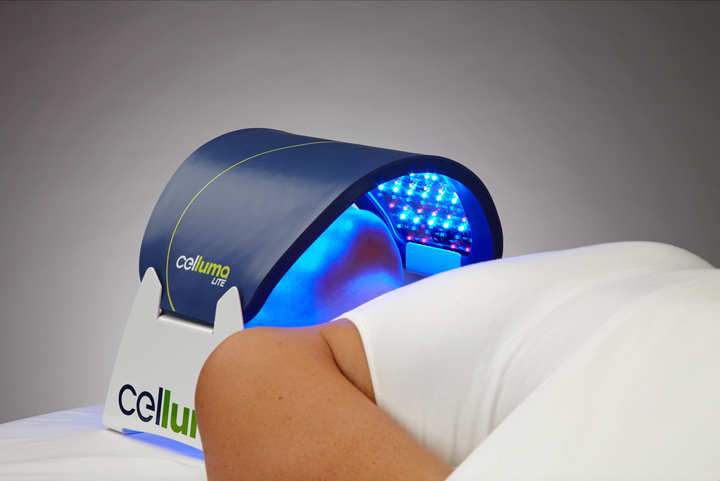
Dark spots after pimples are Post-Inflammatory Hyperpigmentation (PIH) — excess melanin triggered by the acne inflammation. In Singapore's high UV environment, they darken without daily SPF 50. The fastest fading protocol: SPF 50 + niacinamide + vitamin C + red LED 640nm. Visible improvement within 6-8 weeks of consistent use.
PIH vs Acne Scars: Why the Distinction Matters
The terms 'acne marks,' 'dark spots,' and 'acne scars' are used interchangeably online — but they describe different problems needing different treatments. PIH is flat pigmentation with no structural skin damage. It fades on its own (slowly) and responds to brightening treatments. Atrophic scars are textural depressions from collagen loss — they need collagen rebuilding, not brightening. Knowing which you have determines the correct treatment.
Flat dark or red mark. No texture change. Caused by excess melanin. Fades with brightening + SPF + red LED. Most common after acne.
Flat red or pink mark. No pigment change — vascular damage. Fades with anti-inflammatory treatment and red LED for capillary repair.
Textural depression (ice pick, boxcar, rolling). Collagen loss. Requires 640nm red LED for collagen rebuilding — not brightening ingredients.
The PIH Fading Protocol — In Order of Impact
Singapore-Specific Considerations
Singapore's UV Index of 10-13 year-round (compared to 3-5 in the UK or Europe) means PIH darkens and persists significantly longer without consistent SPF. Fitzpatrick types IV-VI skin — predominant across Singapore's Malay, Chinese, Indian, and mixed-heritage communities — also produce more intense PIH from the same acne lesion due to higher melanocyte activity. A Singapore-appropriate PIH protocol must treat daily UV protection as the foundational non-negotiable step, not an optional extra.
Questions & Answers
Post-inflammatory hyperpigmentation (PIH) forms when the inflammatory response of an acne lesion stimulates melanocytes (pigment cells) to overproduce melanin as a 'wound response.' The resulting excess pigment is deposited in the epidermis (surface, easier to fade) or dermis (deeper, harder to fade). People with Fitzpatrick skin types IV-VI — common in Singapore — are more prone to significant PIH because their skin has more active melanocytes.
Yes. 640nm red light therapy reduces PIH through two mechanisms: (1) it reduces the pro-inflammatory cytokines (IL-1α) that initially stimulate excess melanin production — addressing the root cause; (2) it stimulates collagen synthesis in the dermis which helps remodel the skin structure around deeper PIH deposits. Combined with niacinamide (which inhibits melanin transfer) and daily SPF 50, red LED therapy significantly accelerates PIH fading compared to SPF + niacinamide alone.
The fastest evidence-based protocol: (1) SPF 50 daily (mandatory — UV darkens PIH and reverses progress without it); (2) niacinamide 5-10% twice daily (inhibits melanin transfer to keratinocytes); (3) vitamin C serum 10-15% morning (antioxidant brightening, inhibits melanin formation); (4) azelaic acid 10-20% evening (reduces melanin production, anti-inflammatory); (5) red LED 640nm 3-4x per week (reduces inflammatory driver and accelerates collagen remodelling). With all five consistently applied, visible PIH fading typically occurs within 6-8 weeks.
No — PIH is not permanent. Surface epidermal PIH typically fades in 3-6 months with consistent treatment and SPF. Deeper dermal PIH (more common in darker skin tones) can take 12-24 months without treatment, but responds well to sustained LED therapy and azelaic acid protocols. The critical variables are UV protection (without daily SPF 50, PIH fades extremely slowly regardless of other treatments) and avoiding picking or squeezing new acne lesions, which dramatically worsens PIH.
Yes — niacinamide is one of the most evidence-supported ingredients for PIH. It works by inhibiting the transfer of melanin from melanocytes to keratinocytes (the cells that make up the visible skin surface), reducing the visible pigment deposit. At 5%, niacinamide produces measurable PIH reduction within 8 weeks of twice-daily use. It also reduces sebum production and strengthens the skin barrier — making it ideal for acne-prone skin with PIH.
Singapore's UV Index of 10-13 year-round is significantly higher than most countries. UV radiation directly stimulates melanocytes to produce more melanin — darkening existing PIH and slowing its fading dramatically. Without consistent SPF 50, every day outdoors in Singapore reverses the progress of brightening treatments. Additionally, Fitzpatrick types IV-VI skin (predominant in Singapore) have more active melanocytes that respond more strongly to inflammatory signals — producing more intense PIH from the same acne lesion compared to lighter skin tones.


发表评论
此站点受 hCaptcha 保护,并且 hCaptcha 隐私政策和服务条款适用。